
Now Reading: Babar Azam Faces Criticism as PCB Drops Key Players
-
01
Babar Azam Faces Criticism as PCB Drops Key Players


The atmosphere surrounding Pakistan cricket has turned increasingly tumultuous, especially as the Pakistan Cricket Board (PCB) made the shocking decision to drop seven players mid-tour during their Test series in England. This move sent ripples through the cricketing community, drawing criticism from former players and pundits alike.
As the team grapples with a poor performance—having already lost two Tests heavily—Rashid Latif, a former Pakistan captain, did not hesitate to voice his concerns, questioning the authority of Babar Azam as captain.
Rashid Latif Questions PCB’s Decisions
Rashid Latif has emerged as a vocal critic of the PCB’s leadership, expressing disbelief at the recent player purges. Latif took to social media to question the logic behind dropping seasoned players like Sarfaraz Ahmed and Umar Gul while appointing Gary Kirsten and Jason Gillespie in the middle of the England tour. He questioned whether Babar Azam could retain his position if he had no say in team selections.
“If the team had to be run by remote control, then why were Sarfaraz and Umar Gul sent?” wrote Latif. “Is Babar Azam the next target?”
This pointed critique comes as Babar Azam missed the first Test due to an injury and struggled in the second, raising doubts about his capability to lead.
Impact of Dropping Key Players
Dropping essential players mid-series is a rare move in cricket, especially during a high-stakes series such as the one against England. The PCB’s decision raised eyebrows, particularly since it followed a crushing defeat at Headingley, where Pakistan lost by an innings and 103 runs, and another hefty loss at Lord’s by 194 runs.
In a shocking turn, it was also reported that Imam-ul-Haq may have faked an injury, leading to further maneuvers from the management. In response, the PCB has flown in seven inexperienced players as replacements, adding pressure ahead of the pivotal third Test.
The Crucial Third Test Awaits
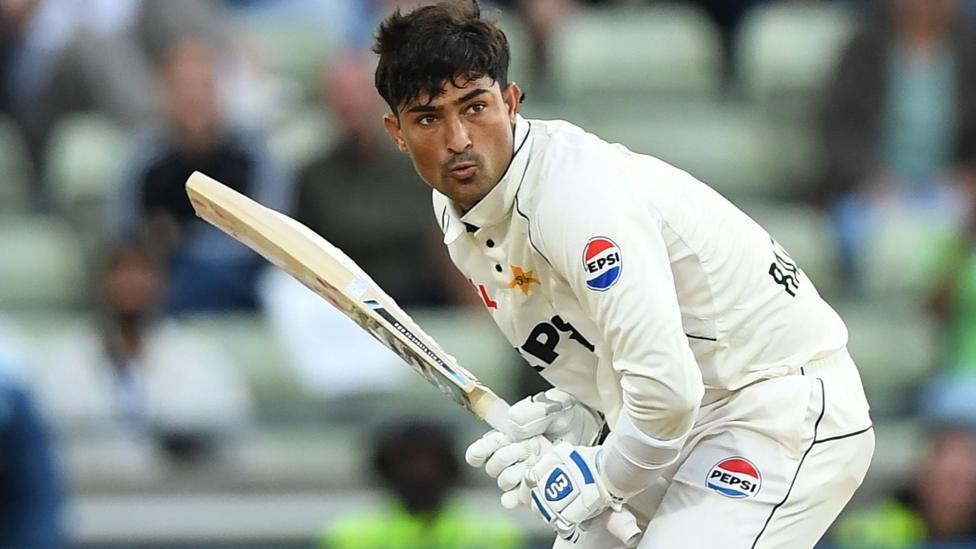
The next Test match, scheduled to take place at Edgbaston starting September 9, has become a do-or-die scenario for the Pakistan team. With the series already lost, this Test is crucial to avoid a humiliating whitewash in England, a feat that has never been achieved by an Asian team.
Historically, Pakistan has struggled at Edgbaston, failing to secure a victory in any of their eight outings at this venue. By contrast, England has a strong record against Pakistan here, having beaten them five times and drawn once. This daunting statistic further intensifies the pressure on Babar Azam and his team.
Pundits Weigh In on Babar’s Captaincy
Pundits are now split in their opinions regarding Babar Azam’s future as captain. Former England captain Michael Atherton highlighted that the PCB’s drastic changes have placed Babar in a precarious situation: “How much control does a captain have when such decisions are made without consultation?”
Fellow former cricketer Tanveer Ahmed has even suggested that it may be time for Babar to either stand firm against the PCB’s actions or consider stepping down from the captaincy altogether.
The Road Ahead for Pakistan Cricket
With the future of Pakistani cricket hanging in the balance, all eyes will be on the upcoming Test at Edgbaston. This is not just a match; it’s a defining moment for Babar Azam, the PCB, and the future of cricket in Pakistan. As the series loses luster for fans, the pressure to perform mounts sharply. Will Babar Azam prove his critics wrong, or is his captaincy hanging by a thread?