
Now Reading: US Open 2026 Marred by Chaos, Leaks and Late-Night Drama
-
01
US Open 2026 Marred by Chaos, Leaks and Late-Night Drama


The 2026 US Open should have been remembered for elite tennis. Instead, it became a tournament defined by broken pipes, late-night chaos, influencer distractions and a main stadium that felt like it was falling apart. Amid the disorder, the tennis still delivered unforgettable drama, but the event itself left a messy impression.
A tournament of spectacle and strain
By the end of another comically late night in Flushing Meadows, workers were again dealing with water pouring from a broken pipe in one of the tournament shops. Beneath a hole in the ceiling, staff tried to protect merchandise from damage, a scene that summed up the tone of the fortnight.
Arthur Ashe Stadium, one of the sport’s grandest stages, was surrounded by signs apologising for its appearance and promising a new chapter. Yet inside, the reality was far less polished. Leaks appeared repeatedly in the media centre, plastic sheets hung from ceilings, buckets caught dripping water, and the workers’ restaurant even closed for a day after a burst of water from above.
For many inside the venue, the experience felt less like a world-class sporting event and more like a building under pressure. Photographers also reported unpleasant fumes from drains in the photo pit, adding another layer to a tournament that seemed to be fighting itself at every turn.
Influencers added to the noise
If the stadium issues were not enough, the atmosphere around the courts became a second source of frustration. The event’s relationship with influencers drew criticism as some attendees filmed TikTok clips during points, brought ring lights to matches and repeatedly stood for selfies in the middle of play.
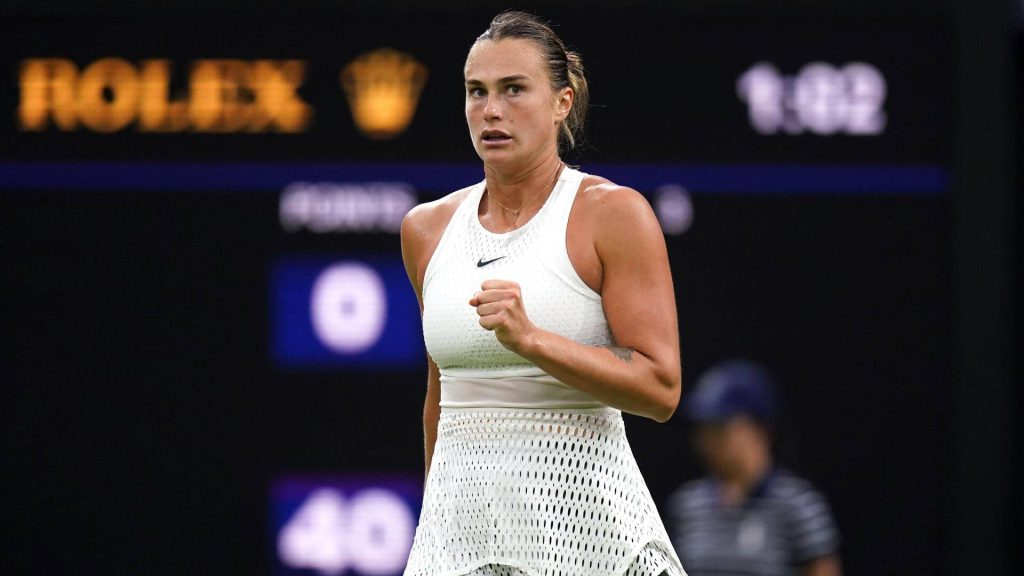
There was plenty of debate about whether sport should always prioritise “growing the game” at any cost. But this tournament pushed that question to the limit. At times, the crowd noise became so overwhelming that even Aryna Sabalenka’s trademark screams were drowned out.
One observer bluntly summed up the mood: “Sometimes, gatekeeping is great.” It was a sharp line, but it reflected a genuine sense that the event had lost some of its focus.
Women’s tennis delivered the biggest moments
Despite the off-court dysfunction, the women’s draw supplied some of the tournament’s most compelling tennis. The quarter-final day was especially memorable, producing four dramatic final sets across four matches during a 16-hour stretch from 11:30 a.m. on Tuesday to 3:33 a.m. on Wednesday.
That schedule alone raised fresh concerns about how the sport handles late finishes. Tournament organisers still have not found a proper solution to the problem of matches ending in the early hours, and the issue has become one of the most damaging optics in modern tennis.
Still, the level on court was outstanding. The top six women all reached the quarter-finals, and for the first time in 51 years, the top four made up the semi-finals. It was a reminder that the women’s game remains one of the most dependable sources of drama in tennis.
Sabalenka, Rybakina and Zheng shine
Aryna Sabalenka’s comeback win over Wimbledon champion Linda Noskova stood out as one of the best matches of the season. Coming through that battle, especially after a difficult summer, felt like a defining rebound for the world No. 1.
Elena Rybakina also handled her challenge brilliantly. She overcame the pressure of her ranking, an achilles injury and a difficult draw to claim the title, reinforcing how dangerous she has become on hard courts over the past year.
Zheng Qinwen produced one of the tournament’s most stunning fightbacks, twice recovering from 0-5 down to win 7-5 in the third set across separate matches against Madison Keys and Iga Swiatek. Her resilience was one of the clearest stories of the entire event.
“The women’s draw stole the show again, not just for quality, but for the kind of pressure-response tennis that fans remember.”
Elsewhere, Coco Gauff’s run to the semi-finals reflected major progress after a previous US Open where her serve issues left her emotional and exposed. This time, she looked more composed and far more complete.
Men’s tennis battled injuries, then found a hero
The men’s side had a more difficult year overall, with a wave of injuries disrupting the season for several young stars. Carlos Alcaraz and Jannik Sinner were only the most visible names affected, while Jack Draper, Holger Rune, Lorenzo Musetti, Arthur Fils and João Fonseca also missed significant time.
That context made the New York finish even more dramatic. In one of the tournament’s defining matches, Ben Shelton defeated Alcaraz in a gruelling five-set contest that lasted 4 hours and 28 minutes. Alcaraz pushed his body to the edge, vomited repeatedly and still lost in a final-set tie-break.
Yet the bigger storyline was emotional rather than statistical. After four and a half months out with a wrist injury, Alcaraz returned to a sport he had missed deeply and left the court smiling. It was the face of a player who, even in defeat, felt relieved to be back.
The tunnel leading to the locker room has seen tears before, but this time it saw joy. That made the moment more human, and perhaps more memorable, than the scoreline itself.
What the 2026 US Open will be remembered for
The 2026 edition will not be remembered as a smooth or polished Grand Slam. It will be remembered for leaks, broken infrastructure, endless noise and players competing through a venue that often felt barely ready for the occasion.
But it will also be remembered for the quality of the tennis that broke through the mess. Sabalenka’s comeback, Rybakina’s control, Zheng’s impossible recoveries, Gauff’s progress and Alcaraz’s emotional return all gave the tournament its pulse.
That contrast defined the US Open 2026: chaos around the court, brilliance within it. For all the wrong reasons, it was a Grand Slam people will talk about for years.