
Now Reading: Ramesh Powar helps Australia U-19 spinners sharpen skills
-
01
Ramesh Powar helps Australia U-19 spinners sharpen skills


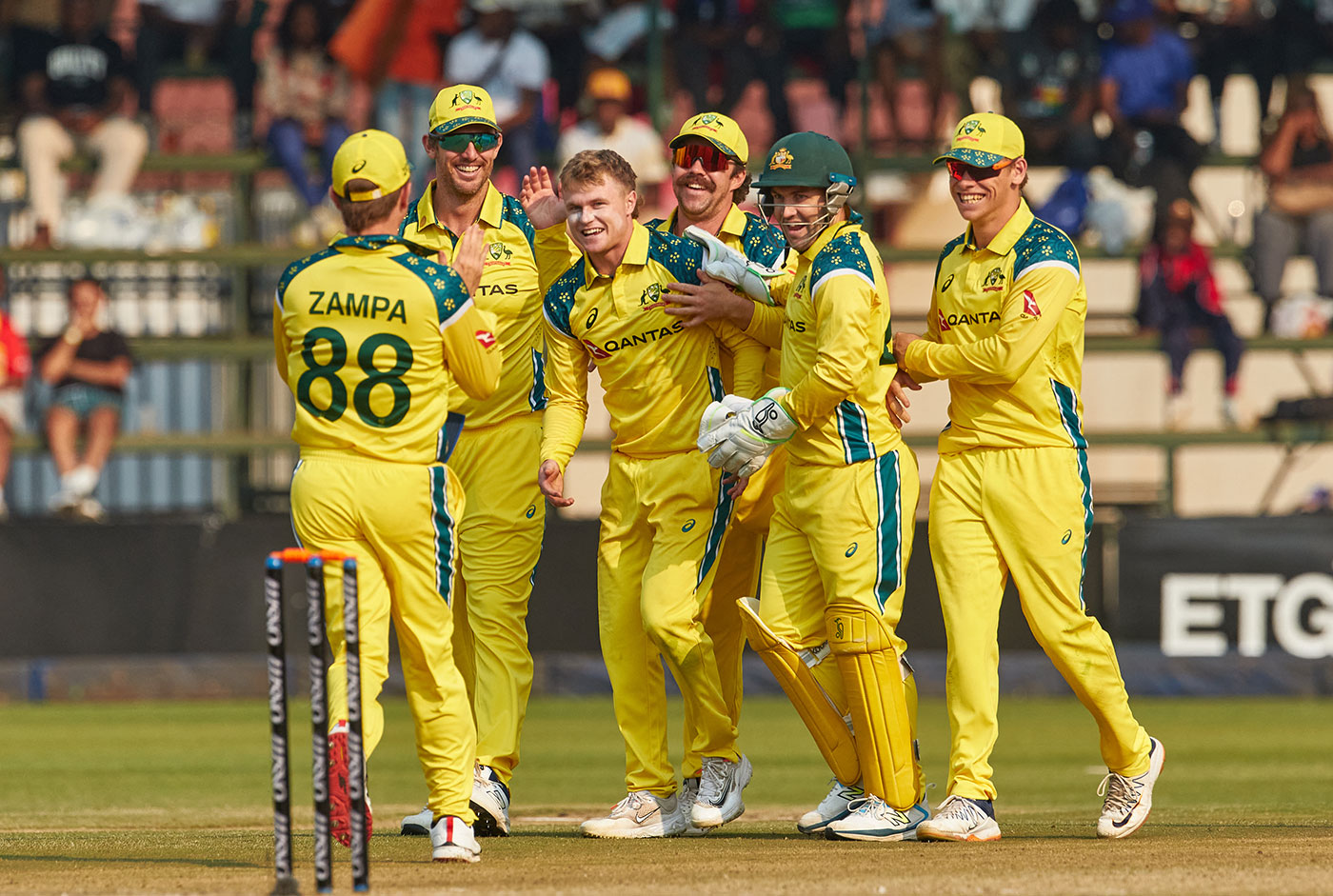
Former India off-spinner Ramesh Powar has turned mentor for Australia’s U-19 bowlers, offering his experience and technical advice to a young spin group looking to add variety and control. The session drew attention because it brought together one of India’s noted spin voices and a promising Australia age-group unit eager to sharpen its craft.
Powar’s presence adds experience
Powar’s involvement is significant because spin bowling often improves fastest when young players get direct, practical feedback. For Australia’s U-19 group, working with a specialist who understands the pressures of subcontinent conditions can be especially useful.
While the details of the session were not framed around a match or result, the value lies in the exchange itself. Young bowlers often learn best when theory turns into clear, repeatable action — grip, release, drift, pace variation and body position.
Why this matters for Australia U-19
Australia’s junior teams have increasingly looked to strengthen their spin options for tours and tournaments in conditions where spin can decide games. Guidance from an experienced campaigner like Powar can help them build confidence against both attack-minded batters and slow-turning surfaces.
A coach or mentor with international playing experience can also simplify the difficult parts of spin bowling. That includes reading pitch behavior, setting attacking fields, and knowing when to bowl with flight versus when to keep a flatter trajectory.
“Young spinners usually need one thing most: clarity,” a cricket observer noted. “If they understand their stock ball and their best variation, they can improve quickly.”
A learning exchange beyond borders
Powar’s work with Australia’s youngsters also highlights the growing cross-border nature of cricket development. National age-group programs are increasingly open to specialist input, especially when the goal is to produce smarter, more adaptable cricketers.
That is particularly important for spin bowling, where conditions, tactics and mindset often matter as much as raw skill. A brief training stint can leave a lasting impact if it helps a young bowler identify small technical adjustments that make a big difference in match situations.
Spin education can shape future tours
For Australia U-19, the lesson is not just about learning from an Indian spinner. It is about preparing for a wider range of playing environments and opposition styles. In modern cricket, teams that develop versatile spinners tend to have more options when the ball stops coming on, or when middle overs demand control.
Powar’s session may not have produced a headline-grabbing stat line, but it speaks to a broader truth: good coaching moments often happen away from the scoreboard. For a young spinner, one useful tip at the right time can influence an entire season.
As junior cricket continues to feed the next generation of international talent, these exchanges may become even more valuable. And if Australia’s U-19 spinners absorb the advice well, the effects could show up long after the training session is over.