
Now Reading: Republic of Ireland Squad to Discuss Israel Fixtures
-
01
Republic of Ireland Squad to Discuss Israel Fixtures

Republic of Ireland Squad to Discuss Israel Fixtures

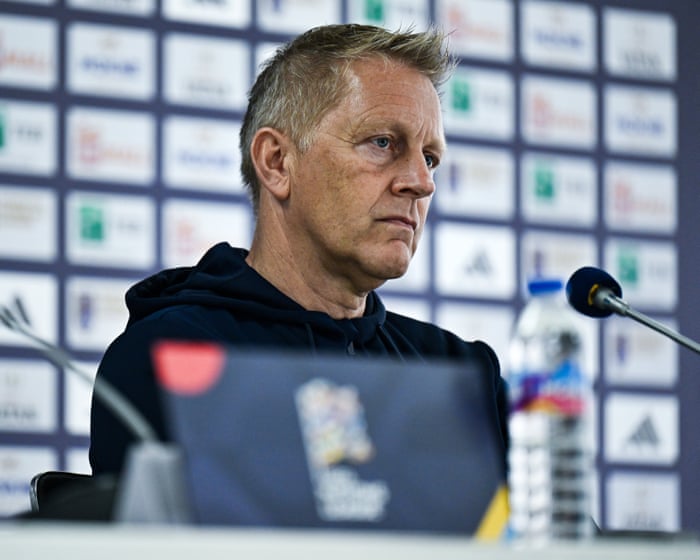
The Republic of Ireland squad is set for a frank and potentially difficult conversation after Thursday’s trip to Kosovo, with Dara O’Shea confirming the players will meet on Friday to discuss how they approach the upcoming fixtures against Israel.
With boycott calls growing and pressure building beyond the pitch, Ireland’s international window has become about much more than football. Yet O’Shea insists the squad’s first task remains clear: beat Kosovo, then address the wider debate together.
A meeting delayed until after Kosovo
Ireland travel to Pristina to face Kosovo on Thursday evening before moving on to Debrecen in Hungary, where they will play the first of two matches against Israel in this international window. The second “home” fixture against Israel is set to be played in Backa Topola, Serbia, on 4 October.
O’Shea, who will captain the side in the absence of injured Nathan Collins, said the squad had already agreed that the issue should be discussed as a group after the Kosovo match rather than before it. The defender stressed that the players need time to speak openly and respectfully.
“We’ve got to respect each other’s opinions and each other’s views and really sit down and take the time,” O’Shea said.
He added that any decision taken by the squad would be collective, with every voice given space. “Whatever decision that we go through as players is taken as one and everybody’s view is respected,” he said.
Pressure builds away from the pitch
The conversation comes against a tense backdrop. Protesters gathered at the Republic of Ireland team hotel in Dublin earlier this week, while the Irish Sport for Palestine Group published an open letter signed by more than 160 Irish sportspeople, urging the Football Association of Ireland to withdraw from the fixtures because of the situation in Gaza.
The row has pulled in football authorities, politicians and supporters, turning a standard international break into a major public issue. Ireland manager Heimir Hallgrímsson’s comments last week added further fuel, after he said: “We’re not playing with genocide, we’re playing against genocide. We’re playing against Israel, we’re not playing with Israel.”
That prompted a sharp response from Israel’s football governing body, which accused Hallgrímsson of “ignorance, hypocrisy and stupidity.” Taoiseach Micheál Martin later described those remarks as “unacceptable” and said they should be withdrawn.
Hallgrímsson tries to refocus
Speaking on Wednesday, Hallgrímsson acknowledged that his comments had created extra headlines at the wrong time, saying it was “not clever” to take attention away from the Kosovo game. He thanked those who had supported the team, but admitted the situation has been tricky.
“We are playing an important game against Kosovo. So that was not the purpose,” he said. “From a leadership point of view, it was not clever from me to take the attention like this.”
For Ireland, that means the immediate priority is still performance. Kosovo have proven dangerous opponents, and O’Shea was keen to underline that the squad’s focus on match preparation has not disappeared despite the surrounding noise.
Team unity in a difficult moment
The Ipswich defender said the squad has tried to block out external distractions by staying together and limiting social media exposure during the window. He described the environment inside camp as one where players can switch quickly into international mode, even when the broader context is unusually heavy.
“The good thing we have as players is when we step into the squad you’re in the international bubble straight away,” O’Shea said. “We’ve known the noise around the game and there has been, but I think we’ve all tried to stay off social media as much as possible and stay together.”
That sense of togetherness will matter on Friday, when the squad is expected to speak openly about the Israel fixtures and any possible pre-match formalities. Asked whether a boycott would be discussed, O’Shea said the players’ role is different from that of the governing bodies.
“For us, the decision was made by the FAI, Uefa and the Government,” he said. “For us as players, that’s not our decision.”
He was firm, however, that the squad wants every opinion heard. “We’ll speak openly about what we feel and what we feel is right,” he added. “That’ll be given its time on Friday.”
What happens next?
For now, the sporting side of the window comes first. Ireland must navigate a testing away match against Kosovo before turning to a discussion that has already become one of the most contentious issues surrounding the team in recent years.
The next 48 hours could shape the tone of the entire camp. On the field, Ireland need points and momentum. Off it, they must decide how to handle a fixture that has become politically charged, emotionally loaded and impossible to ignore.
Whatever emerges from Friday’s meeting, O’Shea’s comments suggest the squad wants the conversation to be private, honest and unified. In a window dominated by outside noise, that may be the only way forward.