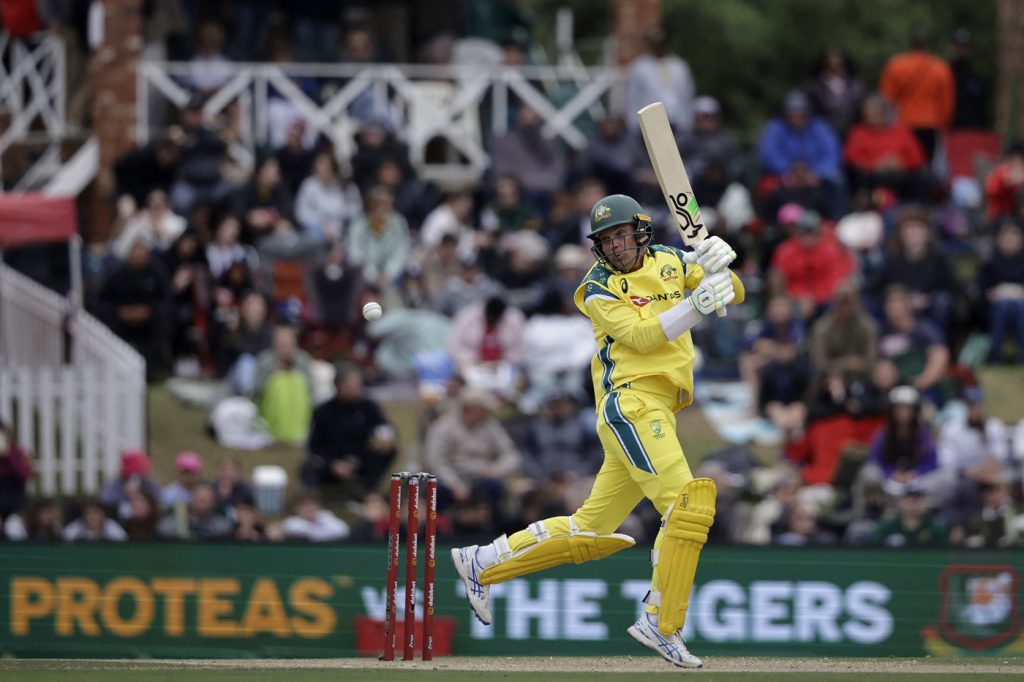




Australia’s familiar middle-order issues were exposed again on Sunday, as South Africa wrapped up the three-match ODI series with a 32-run win in Johannesburg and a game to spare. Despite another explosive start from the tourists’ top order, the chase fell apart in the middle overs, leaving Australia with too much to do late on.
Strong start, then another slowdown
For the second match in a row, Australia looked in control early in the chase. Mitch Marsh and Travis Head came out swinging, taking the attack to South Africa’s bowlers and giving the visitors real momentum at the top.
But once both openers were dismissed, the innings lost its shape. South Africa’s spinners tightened the screws, just as they had in the series opener in Durban, and Australia again struggled to score freely through the critical middle overs.
The contrast was stark. In Durban, Australia managed only 37 runs from overs 30 to 40. In Johannesburg, on what was described as an excellent batting surface, they still produced only 35 runs in the same phase. That was the decisive stretch of the match.
South Africa keep control in the pressure moments
South Africa’s ability to dominate the middle phase proved the difference. With the bat, they posted a commanding 365 for 9 in their 50 overs, driven by centuries from Temba Bavuma and David Miller. Their effort gave the home side a strong platform and plenty of scoreboard pressure.
Australia fought back in patches, but the chase never fully recovered after the openers departed. The visitors were eventually bowled out for 333 in 49.5 overs, falling 32 runs short in a high-scoring contest that again highlighted the value of control in the middle overs.
South Africa’s recent record against Australia also underlined their edge in this rivalry. The Proteas have now won 19 of the last 25 ODI meetings between the sides, a run that reflects both confidence and consistency at key moments.
Marsh admits the problem is real
Australia captain Mitch Marsh did not hide from the issue after the defeat. He admitted the team is well aware that its middle-order batting remains an area that needs attention.
“It’s certainly an area where we need to improve and we’re well aware of that,” Marsh said. “We set up our innings really well in both games but we haven’t been able to execute during those middle phases.”
He also credited South Africa for the way they controlled the game once the openers were removed. “You also have to give South Africa full credit for the way they’ve bowled during those periods,” he added.
A valuable lesson ahead of 2027
This tour is more than just a bilateral series for Australia. The team is effectively on a fact-finding mission in South Africa, which will host the 2027 Cricket World Cup alongside Namibia and Zimbabwe. Learning how to handle local conditions could prove useful when major tournaments return to the region.
Marsh said there were positives to take from the younger players in the squad, even if the result was disappointing. “I thought some of our younger guys performed really well. You see glimpses of what they’re capable of and that makes the future exciting,” he said.
Still, the broader picture is clear: Australia have been outplayed in the series and now face the final ODI in Potchefstroom determined to avoid a whitewash. A win there would at least give them a positive finish, but the larger concern is how quickly their middle-order problem has become a recurring theme.
Final chance to reset
With the series already decided, Australia head into the last game with little pressure on the standings, but plenty on their planning. The batting unit has shown it can launch aggressively at the top; the question is whether it can convert promising starts into winning totals when the spin arrives and the innings gets congested.
South Africa, meanwhile, have delivered the kind of composed, clinical ODI performance that can define a series. Their ability to absorb pressure, seize control in the middle overs and finish strongly has been the story of the contest.
If Australia want to close the gap, the final ODI is not just about the scoreboard. It is about solving a problem that has now been exposed twice in the same series.