


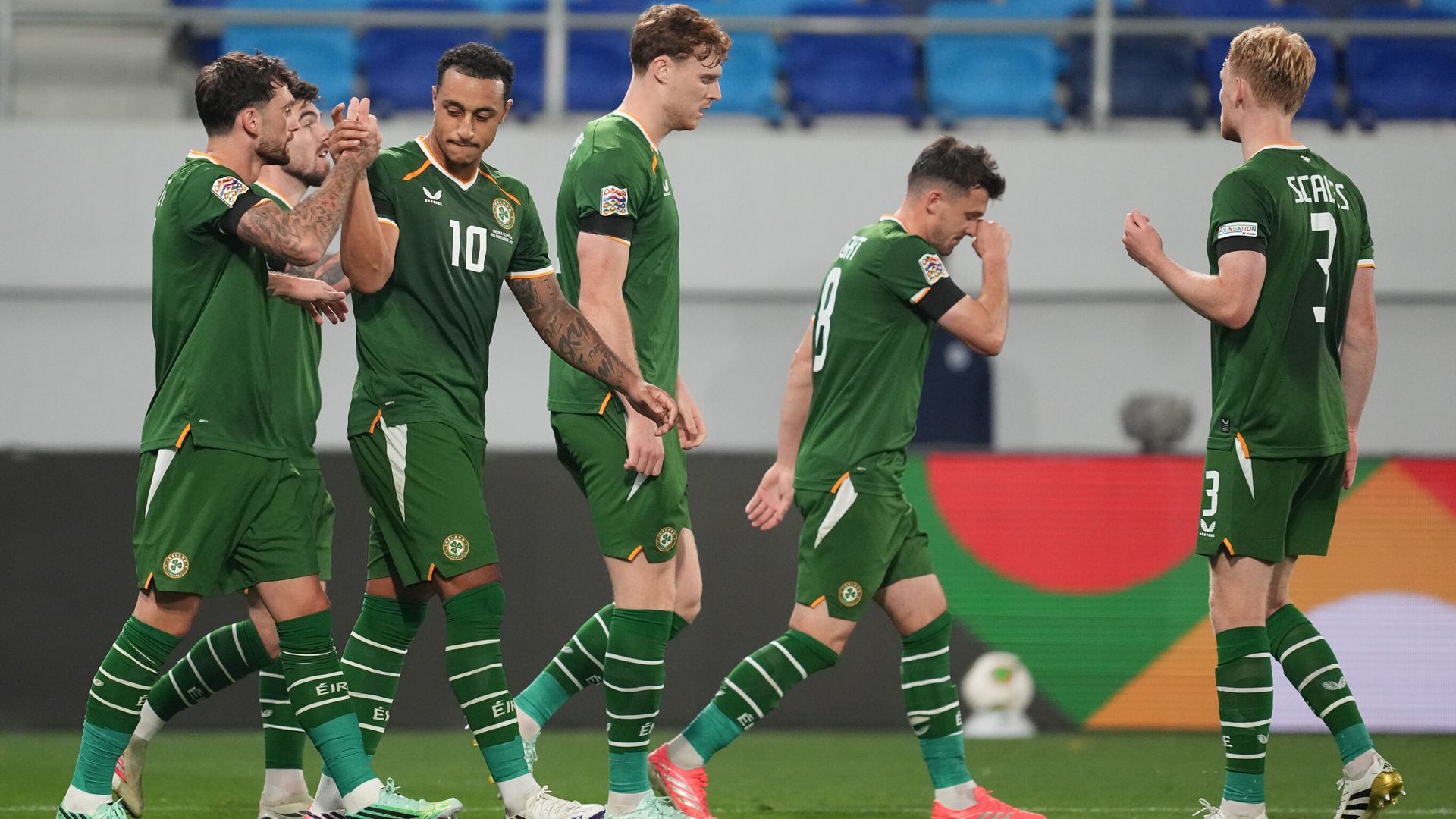
Heimir Hallgrímsson has urged UEFA to keep the Republic of Ireland and Israel apart in future draws after a second bruising meeting between the sides ended in a draw and a fresh wave of controversy. The Ireland manager described the two-game sequence as deeply difficult, with tempers flaring before, during and after the match in Serbia.
A tense night ends all square
The Group B3 contest at the TSC Arena in Backa Topola finished 1-1 after Troy Parrott’s first-half penalty gave Ireland the lead, only for Dor Peretz to level shortly after the break. The match was played behind closed doors after the Football Association of Ireland moved it to a neutral venue for operational reasons.
Parrott, who has now scored 10 goals in his past seven competitive internationals, struck from the spot in the 39th minute. The goal underlined his growing influence for Ireland, but the momentum shifted quickly after the restart when Israel responded with a slick move finished by Peretz.
Parrott continues hot streak
That statistic may have been the brightest takeaway for Ireland on a night otherwise dominated by tension. Parrott’s confidence from the penalty spot and his broader scoring run have become a major boost for Hallgrímsson’s side, even if the team could not turn the opening goal into a second consecutive win over Israel.
“We need now some time to reflect and go forward,” Hallgrímsson said after the game. “It’s also the best time to find your enemies when you’re lying on the ground and people are kicking you.” His words reflected the sense of frustration surrounding the fixture and the emotionally charged backdrop that has followed the sides through this international window.
Off-field tension spills into the spotlight
The match was already carrying a heavy atmosphere before kick-off. Ireland players again wore black armbands and bowed their heads during the Israeli national anthem, while the Israeli side also wore black armbands in memory of those killed in the Hamas-led attacks on Israel on 7 October 2023.
Caoimhín Kelleher, acting as captain in place of Dara O’Shea, did not shake hands with Israel captain Peretz before the match, mirroring O’Shea’s action in the previous meeting. Hallgrímsson did not want to comment on a half-time confrontation, after which it is understood a member of his backroom staff alleged he had been spat at by an Israeli player.
The Ireland manager said that issue should be handled by the disciplinary process rather than in the public arena. He also made it clear that, in his view, the teams should not be paired together again any time soon.
“No, they shouldn’t. That’s not ours to decide, that’s UEFA,” Hallgrímsson said. “UEFA needs to step in and do something.”
What happened on the pitch
Ireland found some rhythm in the first half, with Jimmy Dunne earning the penalty after he was brought down following a scramble from Israel goalkeeper Assaf Tzur. The decision was confirmed after a long VAR review, before Parrott sent the keeper the wrong way.
Israel hit back two minutes after the interval. Oscar Gloukh’s effort deflected kindly off Liam Scales and into the path of Peretz, who finished low and confidently to bring the game level and silence any sense of control Ireland had built.
From there, the match became increasingly scrappy. Officials had to intervene as players clashed on the way into the tunnel at half-time, and another altercation broke out in stoppage time before more heated words were exchanged after the final whistle.
Why this fixture carried extra weight
The decision to move the game away from Dublin had already made this fixture unusual. The FAI shifted it to a neutral venue after widespread calls for a boycott in protest at Israel’s actions in Gaza, and the association had previously called for Israel to be banned from club and international competitions.
That wider political and sporting context made the football itself impossible to separate from the noise around it. While Ireland can point to a strong competitive response in the first meeting, the second game offered a reminder that these are not normal international nights.
Hallgrímsson calls for a reset
For Ireland, the immediate challenge is to move past the emotion and focus on the football. For UEFA, the issue raised by Hallgrímsson is likely to remain under the spotlight, especially given the two matches were marked by visible tension and repeated stoppages.
Parrott’s scoring form and Ireland’s resilience in difficult circumstances will be encouraging signs. But the bigger story after this draw may be Hallgrímsson’s blunt call for separation, a message that adds fresh pressure on the governing body to consider the fallout from these fixtures.
In a night where the football, the atmosphere and the wider context all collided, the result was only part of the story. The rest was written in the exchanges, the gestures and the manager’s pointed message: this was too much for both sides, and he wants UEFA to prevent a repeat.