Now Reading: Cricket Scotland Draws a Line: No Bilaterals or Warm-Ups With Afghanistan Men
-
01
Cricket Scotland Draws a Line: No Bilaterals or Warm-Ups With Afghanistan Men


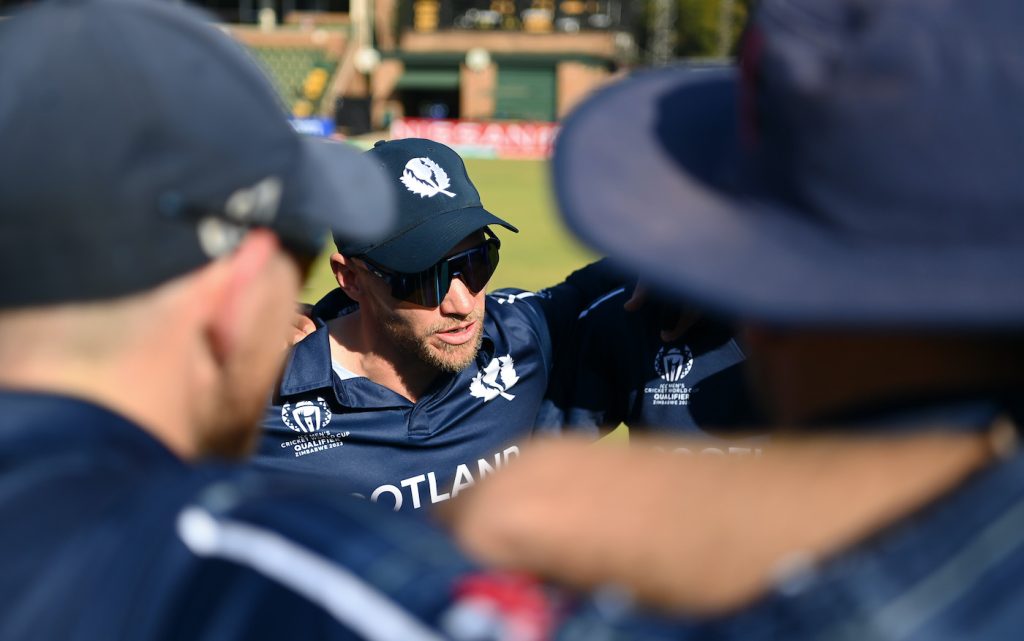
Cricket Scotland has drawn a firm line. The board confirmed it will not proactively schedule bilateral series or standalone fixtures against Afghanistan men outside ICC events, and the policy applies immediately. The move places Scotland alongside England and Australia in a growing stand over women’s rights in Afghan cricket.
What Cricket Scotland Has Announced
On November 9, 2026, Cricket Scotland set out its new position. It will not proactively arrange bilateral series or standalone fixtures against Afghanistan men outside ICC events.
The board also confirmed it will not host Afghanistan men for warm-up matches, practice games or pre-tour training camps. The policy takes effect immediately.
Scotland’s contracted men’s and women’s players were informed by the board on the same day the policy was confirmed.
What Is Covered by the Policy?
- Bilateral series and standalone fixtures outside ICC events
- Warm-up matches hosted by Scotland
- Practice games
- Pre-tour training camps
The policy applies unless there is a material change in the circumstances surrounding Afghanistan women’s cricket and wider human rights considerations.
Why Now? The Review Behind the Decision
The announcement follows a review launched by Cricket Scotland’s board. The trigger was an approach from the Afghanistan Cricket Board about using Scottish training facilities during the summer of 2026.
The review was also prompted by questions over the potential availability of Scottish players for the Afghanistan Premier League T20 draft.
The George Munsey Factor
George Munsey was the only Scotland contracted player signed for the Afghanistan Premier League T20. That made the issue immediate rather than theoretical.
In its statement, the governing body said: “Cricket Scotland will comply with its obligations as set out in its contracts with its players.”
It added a pointed caveat: “If an NOC is issued, participation by the player/s must not be interpreted as an endorsement by Cricket Scotland of the current Afghan regime or its policies.”
Scotland Joins England and Australia
Scotland is not alone. The stance echoes positions already taken by two of cricket’s biggest powers.
| Board | Position |
|---|---|
| Cricket Australia | Applied a comparable position before England |
| England and Wales Cricket Board | Confirmed in May 2026 it would not approve bilateral matches against Afghanistan outside ICC events |
| Cricket Scotland | Announced November 9, 2026 it will not schedule bilaterals, warm-ups, practice games or camps |
The ECB cited concerns about women’s rights under Taliban rule. Scotland’s decision now adds another voice to that collective stand.
The Wider Background
Afghanistan was granted Full Member status by the ICC in 2017. Since then, its national board has failed to meet the ICC requirement to fund and develop a women’s national team and development structures.
Experts have described the situation facing women and girls in Afghanistan as gender apartheid under Taliban governance.
The Refugee Women’s XI
Earlier in 2026, the ICC put a roadmap in place for an Afghanistan Refugee Women’s XI. That side could potentially compete in ICC events by 2030.
The team, primarily based in Australia, toured England during the summer of 2026, coinciding with the T20 World Cup period. These developments formed part of the context behind Scotland’s policy review.
Recent Scotland vs Afghanistan Meetings
| Occasion | Detail |
|---|---|
| T20 World Cup 2021 | Last full international meeting |
| T20 World Cup 2024 | Warm-up match |
| February 2 warm-up (ahead of this year’s T20 World Cup) | Afghanistan won by 61 runs |
The two sides have shared the stage regularly, but the opportunities for friendly meetings are now set to shrink.
What Happens Next?
Cricket Scotland confirmed the policy will be kept under annual review. A material change in Afghanistan women’s cricket, a shift in wider human rights conditions, or a relevant ICC decision could prompt a reassessment.
However, the board set no fixed timeline for change. It also did not specify what level of progress on women’s cricket would be required.
ICC Events Remain Open
Crucially, the policy does not stop Scotland from facing Afghanistan within ICC-sanctioned tournaments. Meetings at future T20 World Cups or other ICC events remain possible.
That leaves a clear split. Scotland will not go out of its way to play Afghanistan men, but it will not walk away from global competition either.
With England, Australia and now Scotland aligned, the pressure on the wider cricket world to take a position is only growing. Expect this debate to follow the sport into the next ICC cycle.