
Now Reading: Hydration Breaks Look Set to Stay at the 2030 World Cup as FIFA Flags Ad Windows to Broadcasters
-
01
Hydration Breaks Look Set to Stay at the 2030 World Cup as FIFA Flags Ad Windows to Broadcasters

Hydration Breaks Look Set to Stay at the 2030 World Cup as FIFA Flags Ad Windows to Broadcasters

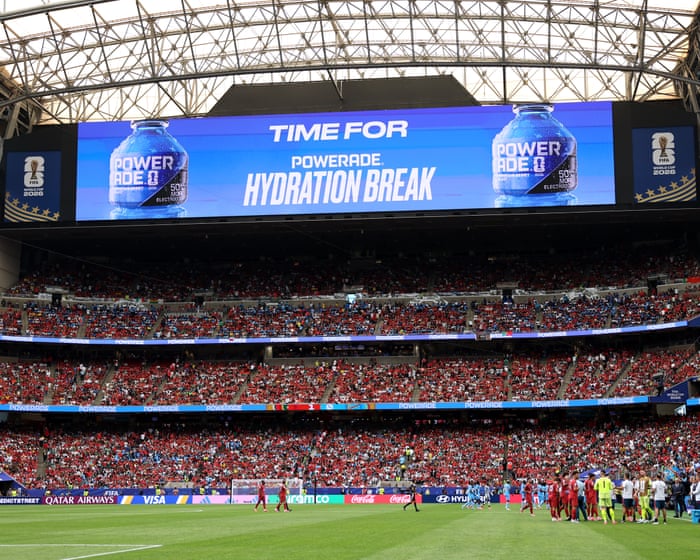
The hydration break may be here to stay. FIFA’s tender documents for 2030 World Cup TV rights reportedly include a provision allowing broadcasters to sell adverts during the stoppages. That is a strong signal the controversial pauses will return, even though FIFA says no final decision has been made.
Tender Documents Point to Hydration Breaks Returning
According to the Guardian, the tender documents flag both the possibility of hydration breaks and their commercial benefits to potential rights holders. They are also understood to reference cooling breaks, the welfare mechanism used by UEFA.
Under that system, play is stopped for between 90 seconds and three minutes if the on-field temperature reaches 28C. FIFA sources told the Guardian the tenders were designed to cover all potential options.
What FIFA Says
FIFA insists it has yet to decide whether hydration breaks will be used at the 2030 tournament. The event will take place largely in Morocco, Spain and Portugal, with three matches in South America.
FIFA declined to comment on the specifics. Even so, the wording of the tender leaves little doubt about what broadcasters are being told to expect.
How the Breaks Became a Broadcasting Goldmine
Last summer, a three-minute break midway through each half was introduced for the first time at all 104 World Cup matches. FIFA presented it as a player welfare measure. It also turned into a commercial boon for rights holders, particularly Fox Sports and Telemundo in the United States.
The Hollywood Reporter reported that the breaks generated between $2m and $9m in advertising revenue per game. That fuelled claims Fox brought in an estimated $250m from the pauses alone.
| Metric | Figure |
|---|---|
| Matches with hydration breaks (2026 World Cup) | 104 |
| Length of each break | 3 minutes |
| Ad revenue per game (reported) | $2m-$9m |
| Fox’s estimated haul from breaks | $250m |
| Fox’s total ad yield (Guideline) | $835m |
| Rights fee paid to FIFA by Fox | $485m |
| Matches in climate-controlled stadiums | 31 of 104 |
| Expected US rights value for 2030 | $1.5bn-$2bn |
Fox’s Big Return
Fox’s overall advertising yield from the tournament reached $835m, according to media sales analyst Guideline. That is almost double the $485m rights fee paid to FIFA.
FIFA did not benefit financially from the breaks last summer. The anticipation of them could now push prices higher for 2030.
Why FIFA Brought Them In
FIFA used cooling breaks on an ad hoc basis before adopting hydration breaks wholesale for the 2026 World Cup. That was despite 31 of the 104 games being played in climate-controlled stadiums.
The trigger was the 2025 Club World Cup in the US, where high temperatures led to stoppages in about 60% of matches. FIFA said the move protected the integrity of the World Cup by ensuring all matches were played in the same conditions.
Welfare Versus Commerce
That is where the debate lives. Supporters point to player safety in extreme heat. Critics argue that uniform breaks interrupt the flow of play and that the commercial upside is impossible to ignore.
The timing is hard to miss too. Mandatory stoppages that suit the players also create guaranteed ad slots twice per match.
What It Means for the 2030 Rights Auction
FIFA has already awarded World Cup rights to Netflix in Spain and to public service broadcaster SBS in Australia. The sales process for the US and Puerto Rico is continuing, with Thursday the deadline to bid.
US rights are expected to fetch between $1.5bn and $2bn (£1.14bn-£1.52bn). The auction will feature bids from Netflix and all of the streaming services, alongside traditional broadcasters.
Women’s World Cup Will Be Different
Mandatory hydration breaks will not be used at next year’s Women’s World Cup in Brazil. Temperatures there are forecast to be cooler than in many cities at last year’s men’s tournament.
That detail shows FIFA is treating the breaks as conditions-dependent, at least for now. Whether the men’s 2030 tournament follows the same logic, or simply keeps the format that proved so lucrative, remains the big question.
The Bottom Line
The tender language is the clearest clue yet. With billions at stake and ad windows built into the pitch, the hydration break looks like a fixture of the modern World Cup. Fans will be watching to see whether welfare or revenue wins the argument.