
Now Reading: Cricket Victoria Chief Backs Indian Interest in BBL Sale
-
01
Cricket Victoria Chief Backs Indian Interest in BBL Sale


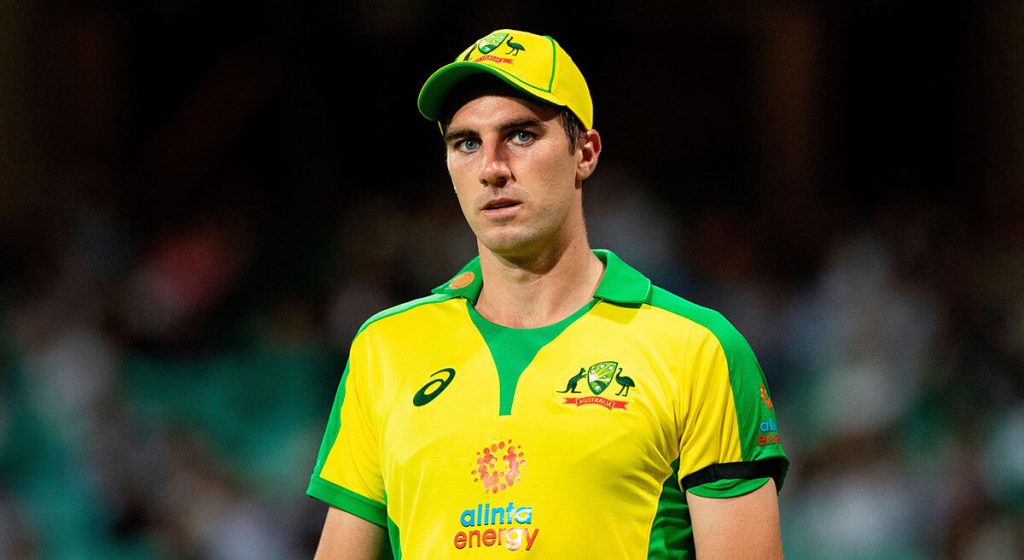
Cricket Victoria chief Nick Cummins has stepped into the growing debate over the Big Bash League’s private ownership future, arguing that the sport should not fear Indian involvement in Australian cricket. His comments come as Cricket Australia continues to push for a landmark BBL privatisation plan that could reshape the competition’s commercial future.
While the possibility of IPL-linked owners buying into Big Bash franchises has drawn plenty of attention, Cummins says the reality is broader than a simple India-versus-Australia storyline. He believes the next wave of investment may come from a mix of markets, with strong interest already emerging from the United States and other regions as well.
Cricket Australia’s private-money push gathers pace
Cricket Australia is aiming for a billion-dollar windfall by opening the BBL to private investment, and the Melbourne Renegades are currently the only franchise available for a full takeover. The sale is being handled by Cricket Australia rather than Cricket Victoria, and it is expected to be finalised by Christmas.
That deal, however, is not straightforward. Any buyer would be purchasing a club that does not yet have the kind of deep, loyal supporter base that makes sporting ownership attractive in more mature leagues. At the same time, potential investors are looking at a competition where Cricket Australia will still keep significant control.
Why Cummins thinks the fear is misplaced
Cummins, who oversees both the Melbourne Stars and the Renegades, said much of the public debate has focused too narrowly on India. He suggested the interest profile is far more international than many assume.
“If I use the interest at the moment, probably 40% of the people interested in the Renegades are Indian, 40% are from the USA, and then the rest is the rest of the world,” Cummins said in an interview with The Grade Cricketer.
His point was clear: the money chasing BBL ownership may not all come from India, even if Indian owners remain the most recognisable potential bidders. In his view, the interest reflects cricket’s global expansion rather than a single-country takeover narrative.
“Well, the money’s not necessarily coming from India,” he said. “I think people shouldn’t fear Indian involvement in Australian cricket because there are so many great things that have come out of India’s contribution to cricket and will continue to do so.”
The football analogy that caught attention
Cummins went further, drawing a historical comparison that has sparked discussion beyond cricket circles. He linked the spread of cricket in new markets to the way football expanded globally in the 1800s.
He pointed to countries such as the Netherlands and Belgium, where cricket is gaining traction partly because Indian communities are bringing the game with them. In his view, that mirrors the way English migrants helped carry football around the world generations ago.
“I think one of the reasons why cricket is growing so fast across the world is the diaspora, the Indian diaspora,” Cummins said. “That’s why soccer is so widespread. So I think the fact that the Indian diaspora is doing what England did 150 years ago is good for us.”
It is a provocative comparison, but it also reflects a broader truth about modern sport: migration, community networks and international capital are increasingly driving growth in new territories.
Fans split between opportunity and concern
Cummins also acknowledged that Australian fans are divided. Some welcome the idea of IPL influence, seeing it as a way to unlock more money, bigger audiences and stronger links with the world’s biggest cricket economy. Others worry about sovereignty, identity and how much control Australian cricket should be willing to hand over.
“There’s a spectrum, isn’t it?” Cummins said. “There’s a pretty dark side to some of the comments, all the way through to people just wanting to have sovereignty, and then there’s everything in between.”
That tension is likely to remain a major theme as the sale process develops. For Cricket Australia, the challenge is not only attracting serious bidders, but also convincing supporters that private ownership will not dilute the character of the competition.
Control remains the key issue for bidders
Even if IPL owners or other overseas investors show genuine interest, they will be entering a structure that does not hand over complete control. Cricket Australia is expected to retain influence over major areas such as salary caps, scheduling and investor approval.
That arrangement may prove difficult for buyers who are used to running franchises with far greater freedom in leagues such as the SA20, ILT20, the Caribbean Premier League, Major League Cricket and even the Hundred. For those owners, the attraction of the BBL will depend not just on brand value, but on how much authority they are actually allowed to exercise.
A cricket insider familiar with the broader debate summed it up simply: “Goodwill helps, but the deal only works if the structure makes sense for both sides.”
What happens next for the BBL?
Cricket Australia now faces two clear tasks. First, it must make the ownership terms attractive enough to bring serious bidders to the table. Second, it has to explain to fans what private money will change, and just as importantly, what it will not.
Cummins believes that debate should be handled calmly rather than emotionally. He argues that fear of change is natural, but that it should not stop Australian cricket from embracing new investment if the terms are right.
The Renegades sale could become the first major test of that approach. If the deal is completed by Christmas, it will reveal whether Cricket Australia’s vision for a more commercially powerful BBL is realistic — or whether the league’s traditions and its ownership rules still make the next step too difficult.
| Key point | Detail |
|---|---|
| Renegades interest | About 40% Indian, 40% US, 20% rest of world |
| Sale timeline | Expected to be completed by Christmas |
| CA control | Salary caps, scheduling and investor approval |
| Big picture | Cricket Australia seeks a billion-dollar boost |
The debate around BBL privatisation is no longer just about who has the money. It is about who gets the power, who gets the trust and how much of the game’s future Australia is willing to share.