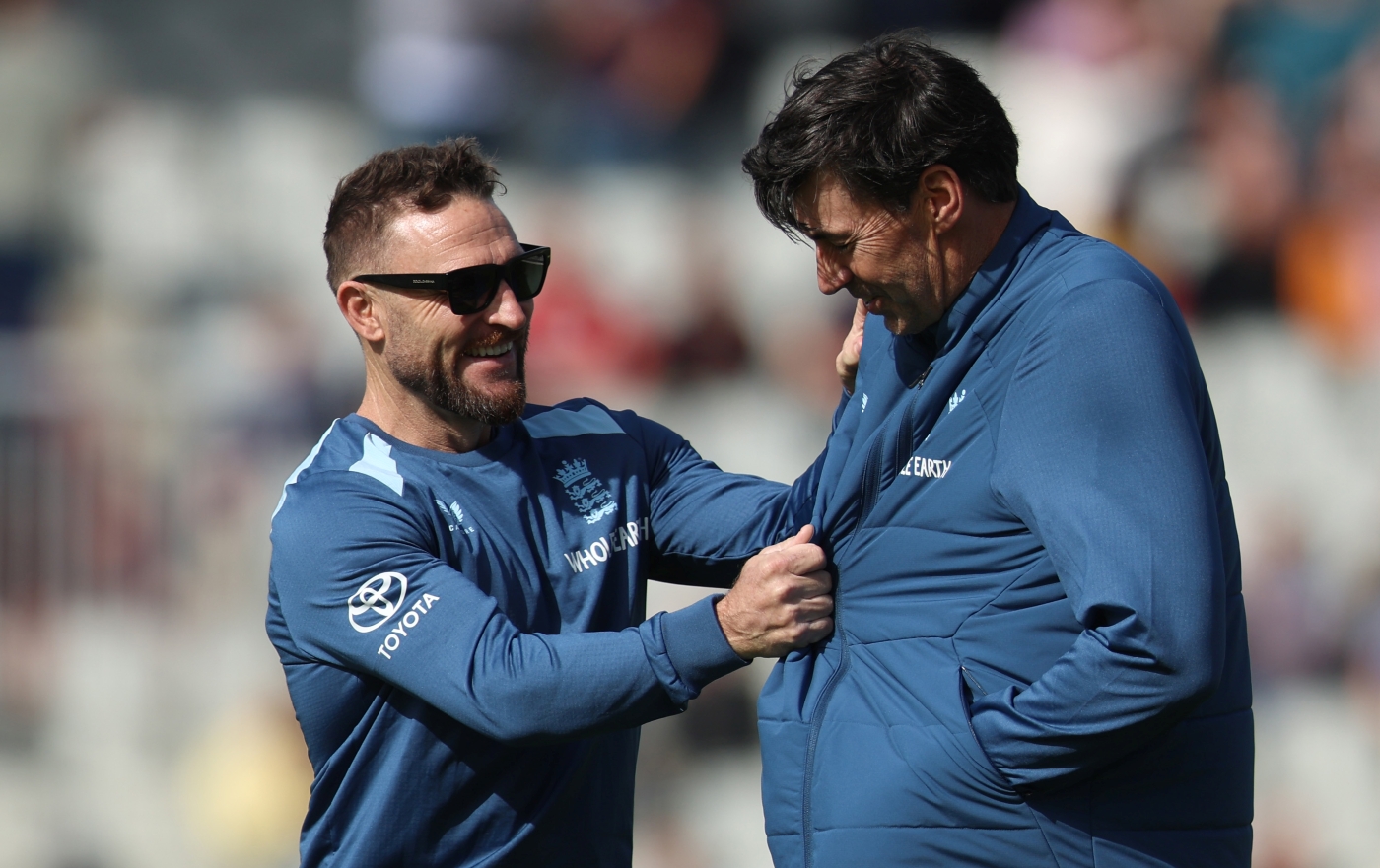
Stephen Fleming has stirred a familiar debate in English cricket even before his first Test series begins. The New Zealander, appointed England men’s Test coach in July, has said he believes the national side should ideally be led by someone from England, while also making coach development a priority during his tenure.
Fleming, who will take charge of his first series in South Africa in December, arrives with England once again turning to an overseas coach for leadership. His comments add a fresh layer to a long-running conversation about identity, succession and the future of English coaching.
Fleming opens up on English leadership
Speaking on BBC Radio 5 Live, Fleming was candid about how he sees the role of a national coach. The former New Zealand captain said he believes a national team should primarily be coached by a national representative, while acknowledging he is grateful for the chance to lead England.
“I do believe that primarily the national team should be coached by a national representative,” Fleming said. “I’m grateful for the opportunity, but there will be some development in terms of the coaching, and you can see by our staff.”
His remarks are unlikely to settle the debate, but they do signal awareness of the issue from inside the England setup. For a team that has repeatedly appointed coaches from overseas over the past two decades, the message is both reflective and pointed.
A coaching history heavily tilted overseas
Since 1999, only two Englishmen have coached England’s Test side: Peter Moores, who had two spells, and Chris Silverwood. Ashley Giles also spent time in charge of the white-ball team, but the wider pattern has been dominated by foreign appointments.
England’s men have also been coached by Duncan Fletcher and Andy Flower from Zimbabwe, Trevor Bayliss from Australia, and now Fleming from New Zealand. Brendon McCullum, another New Zealander, remains in charge of England’s white-ball side, while Australia’s Matthew Mott also previously held the white-ball role.
That broader context is important because Fleming is not rejecting overseas influence. Instead, he appears to be arguing that England’s pathway should produce more homegrown coaches capable of stepping into top jobs in the future.
Backroom team leans local
Fleming’s support staff already reflects that ambition. Former England opener Marcus Trescothick, ex-wicketkeeper James Foster and former spinner Richard Dawson all sit within his coaching group. Jonathan Trott, an Ashes winner with England, is also set to begin a spell with England Lions.
Both Trott and Dawson had been in contention for the Test head coach role before Fleming was appointed. Their involvement now suggests England are keeping more of the expertise within the domestic system, even if the top job itself is again in overseas hands.
Fleming said it will be a “priority” of his tenure to help develop English coaches. He also said county coaches and former players will occasionally be invited into the set-up, describing the approach as inclusive and rooted in what already exists within the English game.
County cricket remains part of the plan
One of the most common criticisms of Brendon McCullum’s four-year spell with England’s Test side was his limited time around county cricket. Fleming seems determined to address that concern.
He visited counties in September and spoke warmly about his connection to the domestic game. The former batter had playing spells with Nottinghamshire, Yorkshire and Middlesex, giving him a first-hand understanding of the structure he now wants to lean into.
“It was good to catch up with those guys and get a feel for where the county game is at,” Fleming said. “I really enjoyed it and it will be a key part to continuing developing players.”
He also confirmed he plans to spend part of next summer watching county cricket as England build towards the home Ashes series. That presence could prove significant, both for player identification and for strengthening ties with the domestic game.
Spin options and selection questions ahead of South Africa
Fleming’s first on-field challenge begins with the three-Test tour of South Africa, where England are expected to name their squad in the first week of November. It will be his first series in charge after not taking the role for the Pakistan assignment earlier this year.
Selection questions are already building, particularly around spin. England did not choose a specialist spinner in any of the three Tests against Pakistan, instead fielding four frontline seamers. That conservative approach reflected conditions, but it also underlined how unsettled England remain in the red-ball spin department.
Shoaib Bashir was named last week as England’s only specialist red-ball spinner on the list of centrally contracted players. Mason Crane and Liam Patterson-White received development deals, signalling that the pool beneath Bashir is still being assessed.
Asked whether Bashir’s contract makes him England’s number one spinner, Fleming framed it as a matter of continuity rather than finality.
“There is a raft of spinners there and are probably looking for an opportunity,” Fleming said. “Bashir has got some experience and is still very young. There’s an aspect of still looking and developing.”
He added that different conditions could change the picture quickly, especially on the two-Test tour of Bangladesh in February, where spin is expected to play a major role. “Horses for courses,” as Fleming put it, could become the defining phrase of England’s rotation strategy.
What Fleming’s comments really mean
Fleming’s view does not necessarily amount to a criticism of his own appointment. Instead, it reads like a statement of principle: England should build stronger coaching pathways so that the next generation of top jobs can be filled from within.
That perspective may resonate with supporters who want a stronger domestic identity, but it also places pressure on the ECB to ensure local coaches are given meaningful progression routes. If Fleming’s tenure succeeds, it may be measured not only by results in South Africa, Australia and Bangladesh, but by how many English coaches emerge stronger from the system around him.
For now, England’s latest overseas coach has made an unusual promise: to help prepare the ground for a future in which England may no longer need to look abroad for their next Test leader.