
Now Reading: India Rewrite Test History With Record Batting Blitz in Wellington
-
01
India Rewrite Test History With Record Batting Blitz in Wellington



India’s Wellington masterclass changes the record books
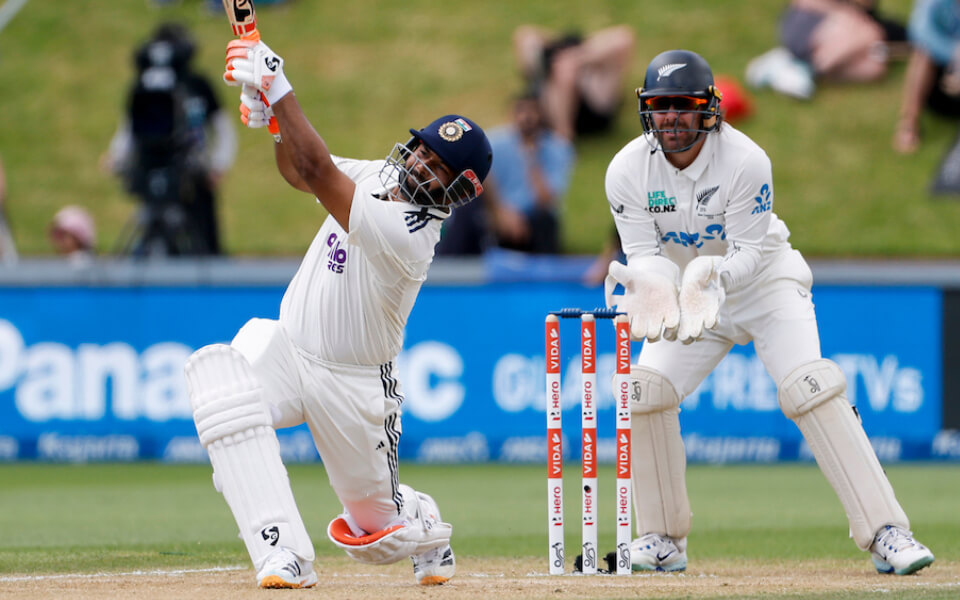
India delivered a statement performance at the Basin Reserve in Wellington, piling up a record total that has pushed their Test batting history in New Zealand into new territory. The innings was built on control, depth and relentless scoring, with the visitors turning a strong position into a landmark effort that now stands as their highest Test total on New Zealand soil.
The numbers tell the story of an innings that never truly loosened its grip. India finished on 522 for 4 in 131 overs, surpassing their previous best of 520 set at Hamilton in 2009, and doing so with far greater authority and consistency across the batting order. For a touring side, it was the kind of effort that forces everyone to sit up and take notice.
Top-order pressure turns into a historic score
What made the innings especially striking was the way India’s top order kept cashing in. Five of their top-order batters passed fifty in the same innings, the first time they have done that away from home in Test cricket. That rare depth gave the innings an unbroken sense of momentum, even as wickets occasionally threatened to slow the charge.
KL Rahul led the way with a fluent 136, while captain Shubman Gill came agonisingly close to a century with 98. Yashasvi Jaiswal added 85, and two other Indian batters contributed 80 and 56, underlining how widespread the runs were across the lineup. The result was not just one dominant century, but a collective batting effort that kept New Zealand under constant pressure.
Key batting numbers
| Player | Runs |
|---|---|
| KL Rahul | 136 |
| Shubman Gill | 98 |
| Yashasvi Jaiswal | 85 |
| Other notable scores | 80, 56 |
India’s innings also created a bigger historical marker. It became their highest Test total in New Zealand, moving past the 520 they had recorded in Hamilton in March 2009. That Hamilton match ended in victory for India, and this new benchmark now takes its place as the standard by which future tours will be judged.
A landmark total in the context of Indian Test history
India’s 522 for 4 is significant not only because it broke a country-specific record, but because it came in conditions where visiting teams have often struggled to build mammoth totals. The Basin Reserve has seen quality batting before, but India’s latest performance lifted them above every previous mark they had set in the country.
As one observer of the innings might put it, this was a display of sustained authority rather than individual flashes. “When five top-order batters are all contributing in the same innings, it becomes almost impossible for the opposition to regroup,” a cricket analyst could reasonably argue, and that is exactly how the contest felt in Wellington.
It was also a performance that stacked up well against India’s own past overseas efforts. The previous highest totals in New Zealand had often come in matches that ended in draws or narrow scenarios, but this innings looked more like a total designed to break the game open rather than merely survive it.
India’s highest Test totals in New Zealand
| Score | Venue | Date | Result |
|---|---|---|---|
| 522/4* | Wellington | November 19, 2026 | In progress |
| 520 | Hamilton | March 18, 2009 | Won |
| 482 | Auckland | February 22, 1990 | Draw |
| 476/4 | Napier | March 26, 2009 | Draw |
| 438 | Wellington | February 14, 2014 | Draw |
New Zealand left chasing the game
New Zealand’s first innings of 368 was respectable, but it could not keep pace with the scale of India’s reply. By the close of Day 3, India had established a 118-run lead, and that advantage only widened as the match moved deeper into the second innings, where the tourists extended the margin to 241 runs.
The significance of the lead goes beyond the scoreboard. In Tests, a big first-innings advantage often reshapes every subsequent decision, from batting tempo to bowling plans, and New Zealand were immediately pushed into catch-up mode. India’s bowlers had already done enough to keep the match tilted in their favour, but the batting display ensured the pressure remained one-way.
India’s position becomes even clearer when compared with the benchmark for batting totals in New Zealand. The highest Test total ever recorded on New Zealand soil remains New Zealand’s own 715 for 6 declared against Bangladesh in Hamilton in 2019. India’s 522 for 4 does not surpass that all-time country record, but for an overseas team, it is still a major historical statement.
Why this innings matters beyond the numbers
This was more than just a big score. It was a reminder that India’s batting group, when settled, can impose itself in conditions that often reward patience, discipline and shot selection above all else. The innings carried a rare balance: one player made the defining hundred, another came within touching distance, and several others turned starts into meaningful contributions.
In that sense, the record is as much about batting culture as batting talent. India did not lean on one hero alone; they built the total through partnership batting, and that collective method made the eventual record feel inevitable rather than accidental.
For New Zealand, the challenge now is psychological as much as tactical. Chasing a side that has just produced its best-ever Test total in the country is never simple, and the gap on the board has left them with plenty to solve as the match progresses. India, meanwhile, have already done the hard part: they have turned a Test into a history-making occasion.
If this innings is remembered for one thing, it will be the scale of it. India arrived in Wellington with a chance to compete, and left the first innings with a record that will sit at the top of their New Zealand Test history for years to come.