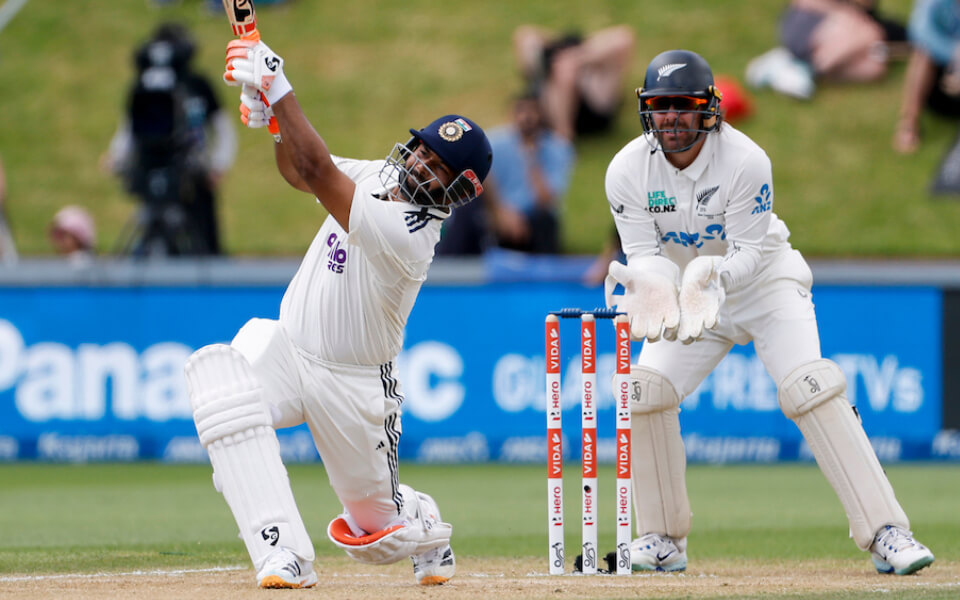



Shubman Gill came heartbreakingly close to a Test century, but his 98 off 146 balls still carried major weight for India in Wellington. On a flat Basin Reserve pitch, the Indian captain struck with authority, helped India push to 486 for four at stumps, and left New Zealand staring at a 118-run deficit.
Gill’s near-century sets the tone
The right-hander’s innings was built on control, timing and a clear attacking mindset. He hit nine fours and two sixes before Jacob Duffy finally ended his stay late on Day 3, denying him a three-figure milestone by just two runs.
Gill did not appear content to simply occupy the crease. He took the initiative early, forcing the bowlers to adjust to him rather than the other way around, and that approach helped India keep the momentum after the platform had already been laid by the top and middle order.
Strong support around the captain
India’s innings had already been energised by substantial contributions from KL Rahul, who scored 136, and Devdutt Padikkal, who made 80. Yashasvi Jaiswal added an 89-ball 85, while Rishabh Pant was unbeaten on 55 at the close, ensuring India ended the day in complete command.
With multiple batters converting starts into meaningful scores, Gill’s knock stood out not only for its own quality but also for the way it sustained the pressure on New Zealand. The visitors never allowed the innings to drift, and the scoreboard kept moving at a threatening pace.
Aakash Chopra spots the difference
Cricket analyst Aakash Chopra felt Gill’s innings was defined by more than just runs. In his view, the captain’s assertive approach separated him from a passive batting style, especially on a pitch where scoring was available but not always automatic.
“He was incredibly assertive and aggressive and was imposing himself. It sounds easy, because the pitch is flat and the ball isn’t doing much. But it is not that straightforward when you’ve seen a couple of partnerships develop and you’re just waiting and waiting,” Chopra said during a discussion on Cricinfo.
Chopra added that Gill’s instinct to get into rhythm quickly helped him dictate the flow of the innings once he settled. That ability to seize control, rather than wait for the game to come to him, was central to the impression he left.
Technique, timing and range on display
Beyond the intent, Chopra highlighted the technical quality in Gill’s batting. The Indian captain used a long forward stride to defend, clipped deliveries confidently through the leg side, and adjusted well when the short ball was sent his way.
That mix of defence and aggression is what made the innings so effective. Gill looked comfortable playing late, but he also knew when to step out and impose himself, which kept the bowlers from settling into a predictable length.
Why the innings mattered
Gill’s 98 now stands as the fourth-highest score by an Indian captain in Tests in New Zealand. Mohammad Azharuddin’s 192 remains the best by an Indian skipper on New Zealand soil, but Gill’s knock still added to a select list of commanding visiting captain performances.
For India, the significance was bigger than the personal milestone that slipped away. The innings helped stretch the lead and reinforced the sense that the visitors had the upper hand in the contest, with New Zealand needing a sharp response to stay alive.
| Metric | Details |
|---|---|
| Shubman Gill | 98 off 146 balls |
| Boundaries | 9 fours, 2 sixes |
| India score at stumps | 486/4 |
| Lead | 118 runs |
| KL Rahul | 136 |
| Devdutt Padikkal | 80 |
| Yashasvi Jaiswal | 85 |
| Rishabh Pant | 55* |
In a match where the pitch offered little assistance and patience was required, Gill’s innings carried the right blend of urgency and composure. He missed out on a century, but he left behind something just as valuable: control of the contest.