Now Reading: Jacob Duffy’s record spell as India smash Test marks
-
01
Jacob Duffy’s record spell as India smash Test marks


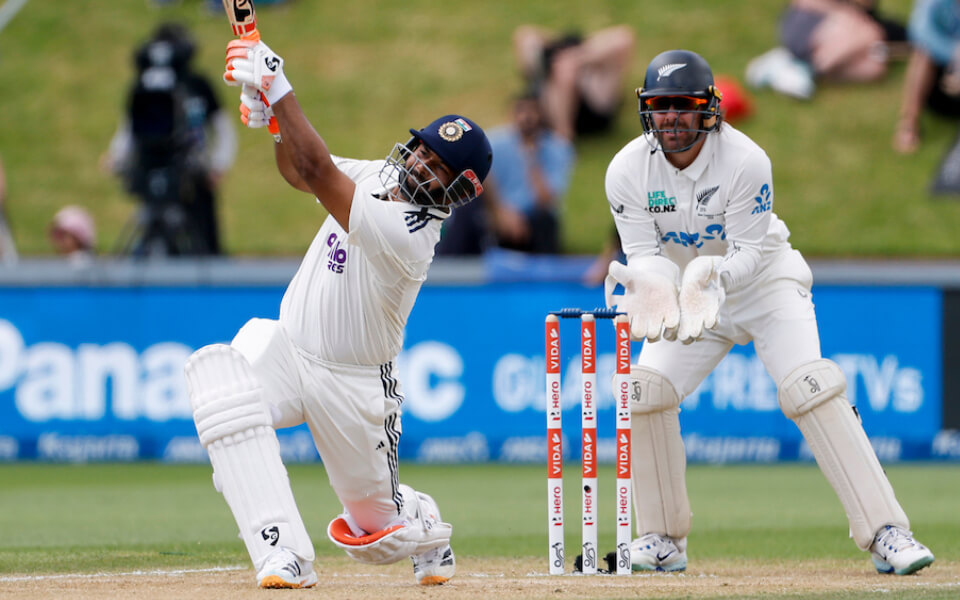
Sunday at the Basin Reserve delivered a brutal mix of history and pain. India piled on the runs, New Zealand were pushed deep into the field, and Jacob Duffy ended up on the wrong side of an unwanted record after a punishing spell in Wellington.
India’s towering total changes the tone of the Test
India declared their first innings at 720/9, a towering total that immediately shifted the match beyond survival mode for the hosts. It was the highest Test score ever by India in New Zealand, and it also became the highest total by any visiting side against New Zealand in Test cricket.
The declaration came after New Zealand had earlier been bowled out for 368, leaving India with a massive 352-run lead. In a match already tilting sharply, the visitors turned dominance into a statement.
A score that rewrote multiple records
This was not just another big innings. India’s 720/9 surpassed their previous best in New Zealand, which had stood at 520 all out in Hamilton in 2009. It also went beyond New Zealand’s previous best total against a visiting side, overtaking the West Indies’ 660/5 declared in Wellington in 1995.
For India, it was their third-highest Test total overall. Only 759/7 declared against England in Chennai in 2016 and 726/9 declared against Sri Lanka at Brabourne in 2009 sit higher in their long Test history.
| Record | Figure |
|---|---|
| India’s total in Wellington | 720/9 |
| India’s lead | 352 runs |
| New Zealand’s first innings | 368 |
| Jacob Duffy figures | 1/201 in 33 overs |
Jacob Duffy’s tough day ends in an unwanted milestone
For Jacob Duffy, the numbers told a harsh story. The right-arm quick finished with 1/201 from 33 overs at an economy rate of 6.09, with Shubman Gill’s dismissal as his only breakthrough.
That return made Duffy the first New Zealand fast bowler to concede 200 or more runs in a Test innings. It also put him atop an unwanted list in his country’s pace-bowling history, moving past Murphy Su’a, who had conceded 179 runs against England in 1995.
It was a difficult spell in a match where the attack had little room to breathe. India’s batters kept the scoreboard moving, and every over that passed only deepened the pressure on the hosts.
Joining an unwanted global list
Duffy also joined the all-time list of most expensive Test spells by pacers, sitting alongside Australia’s Brett Lee in joint-fifth place. Lee had conceded 201 runs against India in Sydney in 2004, showing just how rare and taxing such spells are for fast bowlers in Tests.
Only a handful of bowlers in Test history have conceded more runs in an innings, and New Zealand’s own record books make that reality even starker. Left-arm spinner Stephen Boock remains the country’s most expensive bowler in a Test innings, with 1/229 against Pakistan in Auckland in 1989.
“When a batting side keeps accelerating this relentlessly, even disciplined bowlers can get dragged into a record they never want,” was the kind of reflection the innings invited.
The wider context behind the numbers
The scale of India’s innings mattered as much as the individual figures. Their five 700-plus Test totals now place them second only to Sri Lanka among teams with such scores, underlining the depth and consistency of their batting across eras.
That broader milestone gives the Wellington declaration extra weight. It was not a batting flourish in isolation; it was part of a larger pattern of India turning strong positions into record-setting statements.
For New Zealand, the challenge now is mental as much as tactical. After conceding such a mammoth total, the hosts must regroup quickly and find a response that keeps the Test alive.
What the numbers say about the match
Duffy’s spell will be remembered for the wrong reasons, but it also reflects the intensity of the contest and the relentless pressure India applied. In Tests, there are days when bowlers are forced to keep attacking long after the match has moved past their control.
That was the story in Wellington: India in command, records tumbling, and Jacob Duffy left carrying a statistic he will want to forget as soon as possible. The second innings now becomes about whether New Zealand can answer the blow or whether India have already put the match beyond reach.