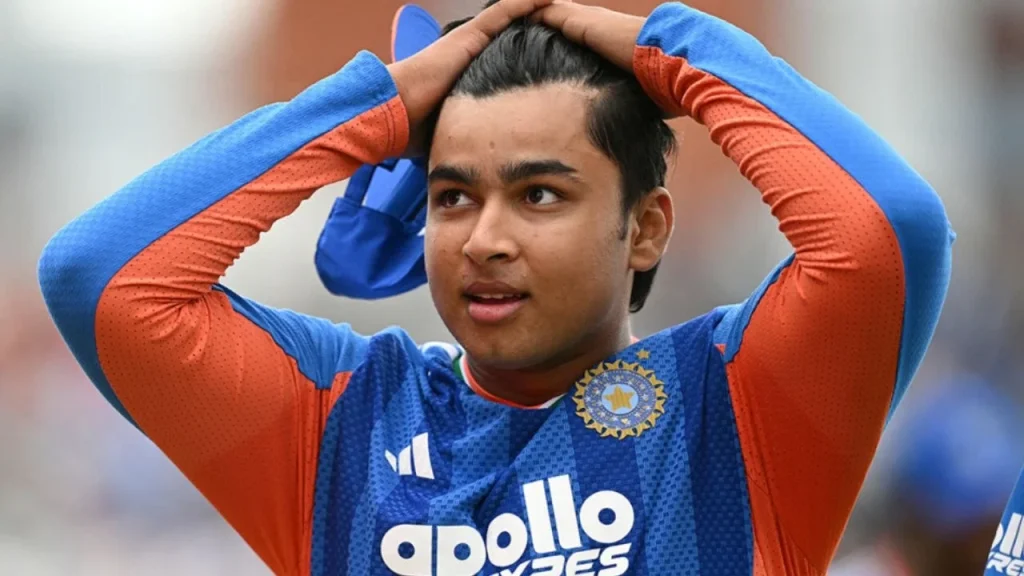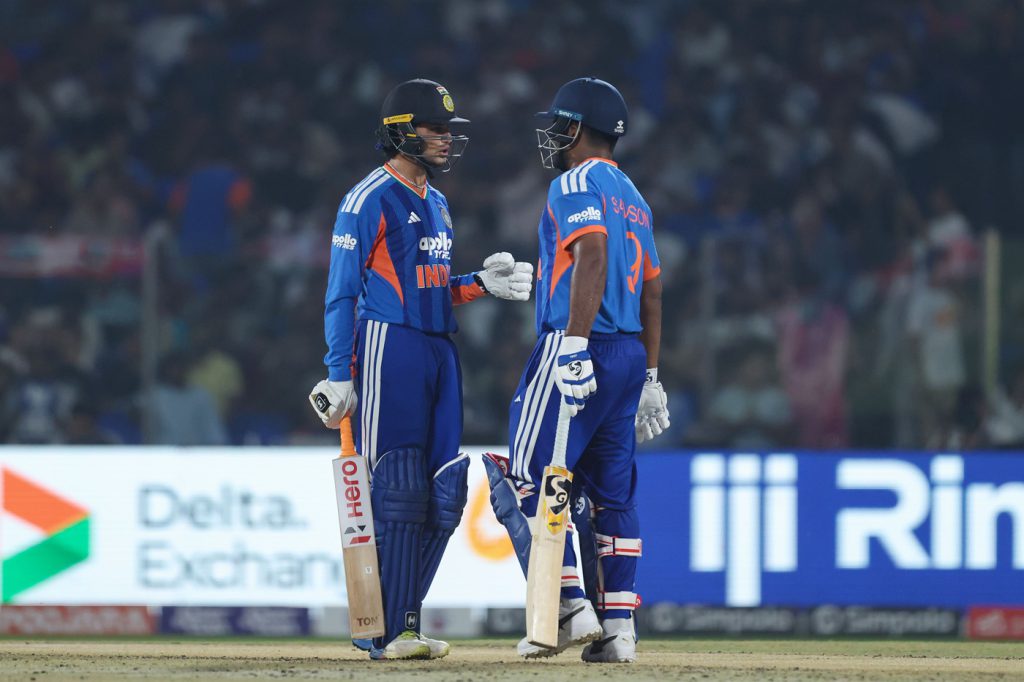



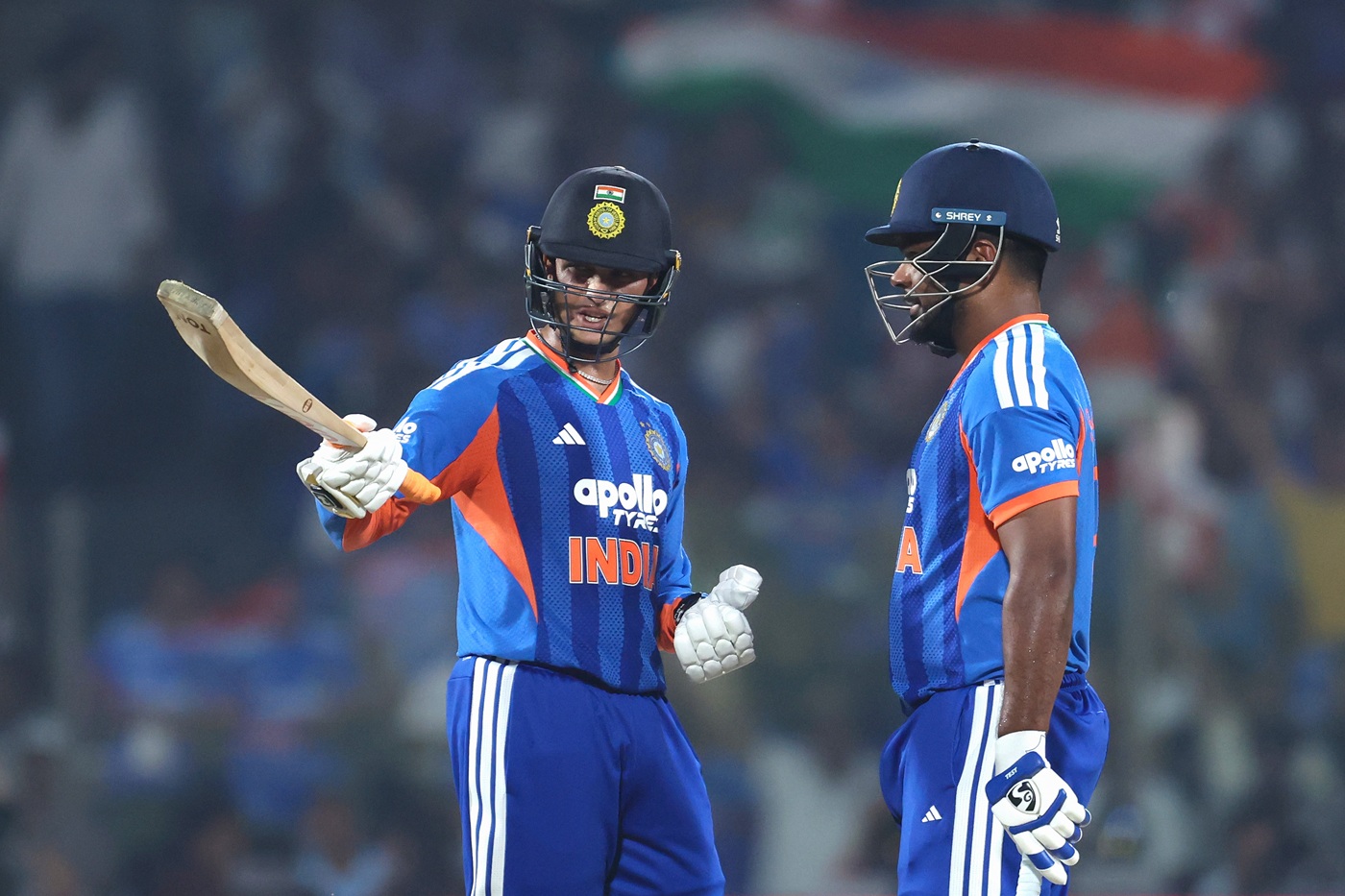
Abhishek Sharma turned the third T20I against Afghanistan into a record-breaking showcase at the Arun Jaitley Stadium, blasting a century in just 30 balls. In a format built for fireworks, the India opener delivered an innings that rewrote record books and left the opposition scrambling for answers.
He reached his fifty in only 16 deliveries, then needed just 14 more balls to storm to three figures. By the time he was dismissed in the 10th over, India were already flying at 142/1, and the game had been pulled firmly in their direction.
A record that changed the conversation
Abhishek’s 30-ball hundred made him the fastest T20I centurion among batters from an ICC Full-Member nation. The previous best in that category had been 33 balls, jointly held by Zimbabwe’s Sikandar Raza and New Zealand’s Finn Allen. That record had stood as a major benchmark in the shortest international format.
The knock also carried major significance at home. Abhishek went past Rohit Sharma’s Indian record of a 35-ball T20I century, set against Sri Lanka in 2017. For a young opener to surpass one of India’s most celebrated white-ball milestones adds extra weight to what was already a stunning innings.
Power, timing and relentless intent
Abhishek’s final score of 108 came off only 34 balls, featuring nine fours and 11 sixes. The numbers underline how completely he dominated the attack, mixing clean timing with fearless strokeplay and almost no margin for the bowlers.
His innings was not just about speed; it was about control. Every aggressive shot seemed to arrive at the right moment, and every over pushed Afghanistan deeper into damage-control mode.
A senior India observer summed up the shift bluntly: “When the powerplay turns into a record chase, the match is usually gone.” In this case, Abhishek made that truth look routine.
Where the knock stands in T20I history
Across men’s T20 internationals overall, Abhishek’s hundred is the third-fastest ever. Only Estonia’s Sahil Chauhan, who reached the landmark in 27 balls, and Turkey’s Muhammad Fahad, who got there in 29 balls, sit ahead of him in the all-time list.
That places the innings in rare company. Fast centuries are rare enough in T20 cricket, but a 30-ball effort at international level against a Full-Member side instantly becomes a reference point for batting explosiveness.
| Stat | Figure |
|---|---|
| Runs | 108 |
| Balls faced | 34 |
| Fours | 9 |
| Sixes | 11 |
| Fifty | 16 balls |
| Century | 30 balls |
| India score when dismissed | 142/1 |
Third T20I hundred and growing stature
The century was also Abhishek’s third in T20I cricket, a sign that his ceiling in the format is rising fast. Among Indian batters, only Rohit Sharma, with five T20I hundreds, and Suryakumar Yadav, with four, remain ahead of him.
That context matters because it shows this was not a one-off burst of form. Abhishek is building a profile as one of India’s most dangerous powerplay batters, capable of reshaping an innings before the fielding side has time to settle.
The bigger story is the manner in which he did it. There was no cautious buildup, no long period of adjustment and no visible hesitation. From ball one, he played as if the target was not just to score quickly, but to break something on the scoreboard.
For India, the knock gave them the ideal launchpad. For Afghanistan, it was a brutal reminder of how quickly a T20 match can be taken away when a batter gets into a rhythm this destructive.
The numbers will be remembered, but so will the intent. Abhishek Sharma did not simply score a hundred in record time; he announced himself as a batter who can change the shape of a match in a matter of overs.