
Now Reading: Japan Set for Historic First T20I Against India
-
01
Japan Set for Historic First T20I Against India


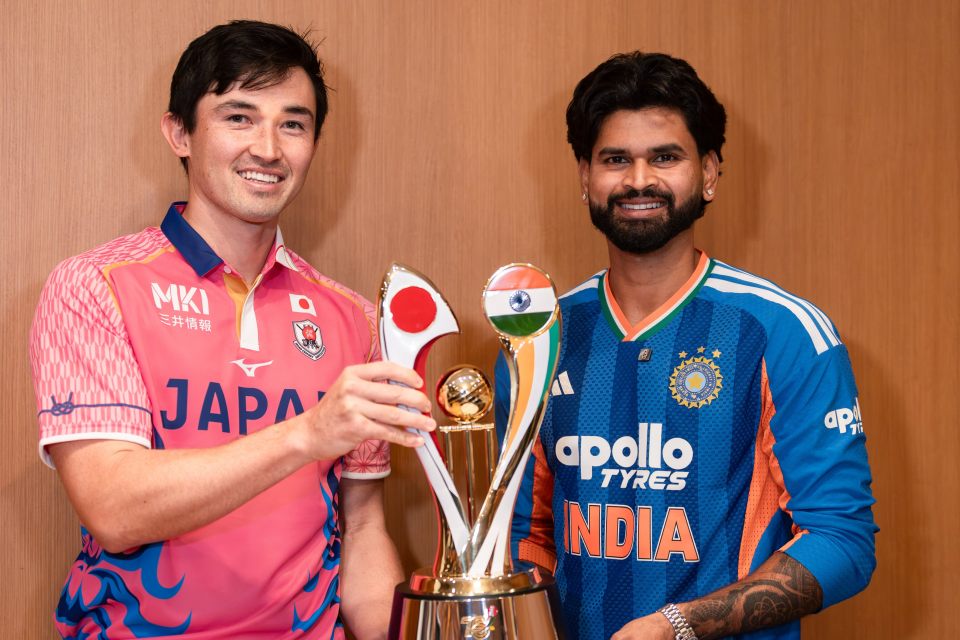
India’s T20I journey is about to add a fresh chapter, and this time the milestone comes against an opponent never faced before at senior men’s international level. Japan will become the 20th different team to play India in men’s T20I cricket when the two sides meet in a historic one-off match on Tuesday, September 22, at the Sano International Cricket Ground.
For Japan, it is a landmark occasion. For India, it is another reminder of how far the team has traveled in the shortest format, building a wide and varied international record against opponents from across the cricketing world.
A new name enters India’s T20I history
The upcoming fixture will be the first senior men’s international meeting between India and Japan. That alone gives the match a special place in the record books, especially for a Japanese side eager to test itself against one of the most established teams in world cricket.
India have already faced 19 different opponents in T20Is, ranging from major cricketing nations to emerging sides and associate teams. Japan now joins that list, and the clash offers a rare first-time matchup that can spark interest well beyond the scoreline.
As one Indian cricket observer noted in the buildup, “These are the matches that expand the game’s footprint. They matter not just for the result, but for the history they create.”
India’s T20I record shows depth and dominance
India’s record across their T20I opponents highlights both consistency and range. The Men in Blue have built strong head-to-head numbers against several major teams, while also maintaining perfect records against multiple associate nations.
| Opponent | Matches | India Wins | Opponent Wins | Notable Result |
|---|---|---|---|---|
| Afghanistan | 12 | 10 | 0 | 1 tie, India won tie-break |
| Australia | 37 | 22 | 12 | India lead 64.70% |
| Bangladesh | 18 | 17 | 1 | India win rate 94.44% |
| England | 35 | 18 | 16 | Closely fought rivalry |
| Pakistan | 17 | 13 | 3 | 1 tie, India won super over |
Those numbers underline India’s standing as one of the most influential T20I sides in the game. They have often found ways to control high-pressure contests, while also showing an ability to dominate lower-ranked opposition when expected to do so.
Big rivals, clear edges, and a few tight battles
Some of India’s most notable T20I rivalries have been defined by narrow margins. England remain the most balanced matchup, with India and England meeting 35 times between 2007 and 2026. India have won 18 and England 16, a margin that reflects just how competitive the rivalry has been.
New Zealand also have a strong record in the contest, with India winning 17 of 31 matches and the Black Caps winning 11. One tie was decided in India’s favor via super over, further adding to the drama of a rivalry that rarely stays one-sided for long.
Pakistan, meanwhile, remains one of the sport’s most watched fixtures. India’s 13 wins from 17 T20Is, including one super-over victory in a tied game, give them an upper hand, even if the emotional weight of the contest usually makes numbers feel secondary.
Bangladesh and Afghanistan have struggled to break through
Against Bangladesh, India have been especially dominant. Seventeen wins from 18 games paint a clear picture of control, with Bangladesh managing just one victory in the rivalry.
Afghanistan have also found India a difficult barrier to cross. Across 12 T20Is, India have stayed unbeaten, winning 10 and claiming the other match through a tie-break after a tie. It is a record that reflects India’s ability to absorb pressure and finish strong.
Perfect records against several associate nations
India’s T20I record also includes complete winning runs against a number of associate teams. They have beaten Hong Kong, Namibia, Nepal, the Netherlands, Oman, the United Arab Emirates, the United States and Scotland in all their meetings listed here.
Those records matter because they speak to the professionalism expected of top sides. India have generally handled those fixtures with authority, avoiding the kind of slip-ups that can create shock results in the shortest format.
Among those results, the one-off wins over Oman and Nepal stand out as examples of India treating every opponent with the same competitive seriousness. That attitude has helped build a wide and impressive T20I portfolio.
What Japan’s moment means
For Japan, this match is bigger than a debut opponent. It is a chance to measure progress, gain exposure, and step into a fixture that will be remembered as a first in their cricket history.
For India, it is another opportunity to show their evolution in T20 cricket, where the calendar now stretches across a wider global map than ever before. The match may be historic for the first meeting alone, but it also reinforces a broader truth: India’s T20 story is now firmly international in scope.
The September 22 clash at Sano International Cricket Ground will not just add a result to the record books. It will create one.