
Now Reading: Sandpapergate Ghosts Return as Australia Face South Africa in Newlands Series Decider
-
01
Sandpapergate Ghosts Return as Australia Face South Africa in Newlands Series Decider


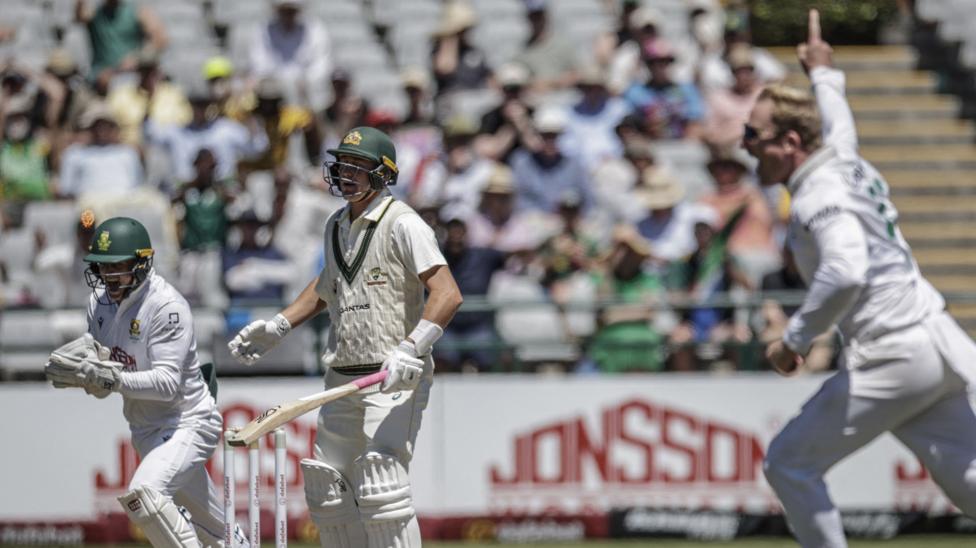
The series is level at 1-1, the stage is Cape Town, and the history is impossible to ignore. Australia return to Newlands on October 27 for the first time since the 2018 ball-tampering scandal. This time they arrive fragile, with South Africa smelling blood.
The Afternoon That Changed Everything
In March 2018, Australia were chasing reverse swing on the third afternoon with South Africa batting a second time. Cameron Bancroft had a piece of yellow sandpaper in his pocket and used it to scuff one side of the ball. The cameras found him within minutes.
What he did next mattered more than the act itself. Spotting himself on the big screen, Bancroft pushed the sandpaper down the front of his trousers. When the umpires came over, he produced a sunglasses pouch.
Smith and Bancroft admitted at the close of play that the plan had been deliberate. Smith referred vaguely to a leadership group that had settled on it.
Bans and a Telling Gap
Cricket Australia blamed David Warner, who devised the plan and showed Bancroft how to carry it out. Smith knew and did nothing to stop it. The bans ran to twelve months for the two senior men and nine for Bancroft.
The ICC, judging only the tampering, handed Smith a one-match suspension and Bancroft three demerit points. That gap shows where the real offence was thought to lie.
| Person | Cricket Australia ban | ICC sanction |
|---|---|---|
| Steve Smith | 12 months | 1-match suspension |
| David Warner | 12 months | Not specified |
| Cameron Bancroft | 9 months | 3 demerit points |
Smith’s Fitness and a Watchful Eye
Only Smith remains of the three. Warner has retired and Bancroft is long gone. Even Smith is not certain to play, as he must pass a fitness test for the neck stiffness that bothered him through Gqeberha.
Whoever takes the field, the scrutiny is unavoidable. Any reverse swing Australia’s bowlers find this week will be watched by broadcasters who know exactly which camera angles turned a Test into a scandal.
Australia Arrive Fragile
The timing is awkward because Australia are not imperious. They were bowled out for 99 and made to follow on last week. Nic Maddinson has been released from the squad, and Marnus Labuschagne carries scores of 37, 37, 14 and 39 into a match he may not survive.
South Africa have noticed. Simon Harmer said his side had realised Australia’s batters were human and could be put under pressure. Ryan Rickelton has openly admitted they intend to get into Labuschagne’s head.
Marco Jansen spent part of the last Test needling Labuschagne in Afrikaans, the two having grown up in the same Northwest town. That is what a side does when it believes it has found a weakness.
A Series Too Close to Call
Nothing in the first two Tests settles this one. Australia won in Durban by 214 runs and looked a class apart. South Africa won by an innings in Gqeberha after losing the best part of two days to rain, and looked the same.
| Detail | Figure |
|---|---|
| Durban Test (Australia) | Won by 214 runs |
| Gqeberha Test (South Africa) | Won by an innings |
| Australia’s low total | 99 all out |
| Temba Bavuma at St George’s Park | 179 |
| Marco Jansen at St George’s Park | 5 wickets and 85 runs |
| Travis Head’s innings | 121 |
Selection Puzzles on Both Sides
South Africa’s case rests on the men who delivered last time. Bavuma made 179, and Jansen took five wickets before hitting 85. Kagiso Rabada waits at the other end. The reigning World Test Championship holders make one change, with Gerald Coetzee replacing the injured Anrich Nortje.
Australia have the opposite problem. Pat Cummins described five match-winners competing for four bowling slots. The batting that should give those bowlers something to defend produced just one innings of substance in the last match, Head’s 121.
Conditions Under Table Mountain
Newlands will not give up its secrets early. Expect a seam in the pitch on the first morning and pace in it as the match wears on. The weather can also take a session away without warning.
There is every chance the week is about nothing more than cricket, with Rabada and Cummins bowling well and the better batting side taking the series. That is certainly how the players would prefer it.
But the sport has a long memory. It has put Australia back at Newlands with a series to win, and the cameras are pointed at the same square of ground they were in 2018.