
Now Reading: Tuchel Told to Learn From England’s World Cup Mistakes
-
01
Tuchel Told to Learn From England’s World Cup Mistakes


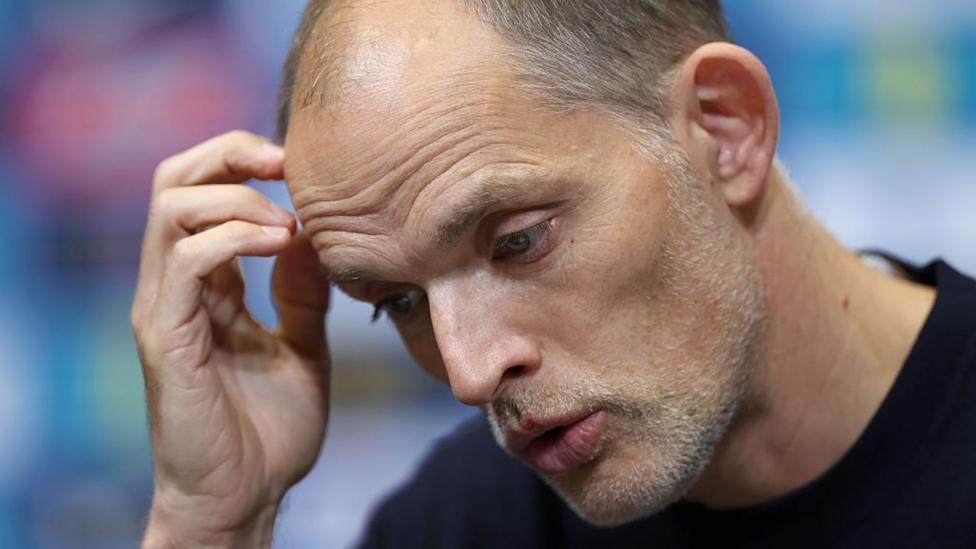
Thomas Tuchel has launched his next England chapter with confidence, but the conversation around his first squad since the World Cup is already exposing familiar fault lines. The head coach insists most supporters are still with him. Critics, though, believe the harshest lessons from England’s collapse against Argentina have not been fully absorbed.
Tuchel’s message: look forward, not back
Tuchel used his unveiling at Wembley to push a positive narrative. He argued that the overwhelming mood around England remains encouraging, and he pointed to the bronze-medal win over France as a reminder that the campaign ended with a strong response. In his view, the World Cup story should not be reduced to one painful knockout defeat.
“The narrative should be directed by the 6-4 win over France,” Tuchel suggested, making clear he wants the next phase to be defined by progress rather than regret. Yet the lingering image of England’s retreat after taking the lead against Argentina is still difficult to erase, especially for fans who expected more control in a big semi-final.
The squad hints at evolution, not revolution
For the Nations League fixtures against Spain, Czechia and Croatia, Tuchel has mixed continuity with change. Injuries have forced his hand in several areas, with Dean Henderson, Dan Burn, John Stones, Reece James, Djed Spence and Jordan Henderson all unavailable. That opened the door for a group that feels younger, quicker and a little less predictable.
The 26-man squad includes a blend of established names and fresh options, with players such as Elliot Anderson, Alex Scott, Myles Lewis-Skelly, Rio Ngumoha and Lewis Hall adding energy to the setup. Tuchel’s selection also suggests he is willing to rethink some of the conservative choices that defined England’s World Cup approach.
England squad by position
| Role | Players |
|---|---|
| Goalkeepers | Jordan Pickford, James Trafford, Jason Steele |
| Defenders | Trent Alexander-Arnold, Jarrod Branthwaite, Trevoh Chalobah, Marc Guéhi, Lewis Hall, Ezri Konsa, Tino Livramento, Nico O’Reilly, Jarell Quansah |
| Midfielders | Elliot Anderson, Jude Bellingham, Myles Lewis-Skelly, Kobbie Mainoo, Cole Palmer, Declan Rice, Alex Scott |
| Forwards | Dominic Calvert-Lewin, Eberechi Eze, Anthony Gordon, Harry Kane, Rio Ngumoha, Marcus Rashford, Morgan Rogers, Bukayo Saka |
Alexander-Arnold returns, but questions remain
One of the most eye-catching selections is Trent Alexander-Arnold’s return after a long absence. The Real Madrid defender has not been in the England picture since June 2025, and Tuchel admitted the full-back has work to do to prove he belongs in the team’s long-term plans.
The decision is intriguing because it raises the obvious question: why now? If other options had been fit, would Alexander-Arnold still have been recalled? Tuchel did not frame him as a midfielder and made it clear that a call-up must be followed by a strong performance in an England shirt.
That makes the upcoming matches feel like a test not just for Alexander-Arnold, but for Tuchel’s wider approach. The coach wants technical quality, yet he also wants intensity, athleticism and tactical flexibility. Balancing those demands is where England’s next step will either take shape or stall.
The World Cup hangover still matters
Tuchel has repeatedly stressed brotherhood, mentality and team spirit, but the criticism of England’s World Cup display was never only about attitude. It was also about structure. At times, England looked trapped between styles: not quite a possession side, not quite a chaotic transition team, and not always strong enough in either direction.
The problem, as many observers have pointed out, was that England’s best moments came when they played with more freedom. Tuchel has spoken about embracing “the chaos,” a phrase that fits the emotional momentum of the second half against Croatia, when England finally played with pace and directness. But replicating that level against elite opponents is easier said than done.
“There were technical and tactical flaws to address,” one analysis of the squad noted, underlining the tension between continuity and change.
England also had moments in the World Cup where the midfield looked short of legs and ideas. Declan Rice was overworked against Argentina, while Kobbie Mainoo was selected but not used. That oversight has seemingly been acknowledged this time, with Tuchel saying he has a duty to assess Mainoo properly in the current cycle.
Youth, versatility and a different attacking edge
There is optimism in the new names, and that may be the biggest shift of all. Myles Lewis-Skelly and Alex Scott bring freshness in midfield, while Rio Ngumoha offers the sort of fearless attacking profile that can lift the mood around a camp. Lewis Hall and Tino Livramento also add mobility in wide defensive areas.
Perhaps most notably, Tuchel’s choice to include Cole Palmer instead of Noni Madueke suggests a more flexible attacking idea. Palmer is not a chalk-on-the-boots winger, but he may offer England a better overall footballing balance. In a squad packed with pace, power and technical ability, Tuchel appears ready to explore combinations rather than rely on one-dimensional role-for-role selection.
The challenge ahead
England now begin their Nations League campaign with a home match against Spain next Saturday, and the pressure is immediate. Tuchel wants his side to be brave, but bravery must be matched by control. He has the talent pool to improve England’s ceiling, but the real test is whether he can connect the pieces into a system that finally makes sense.
For now, the debate remains open. Tuchel believes the majority are on his side. The more sceptical fans, however, are still waiting for proof that the mistakes of the World Cup will not return when the lights get brighter. If England start fast and show more imagination, the conversation may shift quickly. If not, the 0.1% will be louder than he expects.