


UEFA has opened a disciplinary investigation into a heated half-time incident from the Republic of Ireland’s Nations League clash with Israel, after an allegation of spitting was raised following Sunday’s 1-1 draw in Serbia. The case has added another layer of controversy to a fixture already overshadowed by political tension, protests and heated exchanges on and off the pitch.
UEFA confirms disciplinary investigation
The European governing body said the probe follows a review of the official reports from the match. UEFA added that an Ethics and Disciplinary Inspector has been appointed to examine potential misconduct by player(s) in relation to the incident at the neutral venue in Backa Topola.
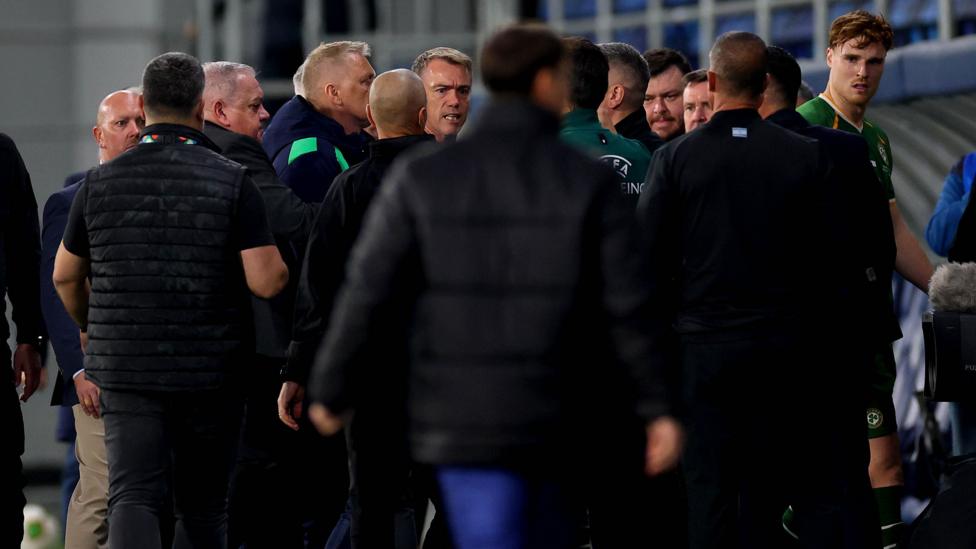
The allegation centres on an incident in or around the tunnel at half-time, with reports suggesting a member of the Republic of Ireland coaching staff claimed he was spat at by an Israel player. Ireland head coach Heimir Hallgrimsson later confirmed there had been an “accusation of spitting” during the fracas.
What both sides have said
Hallgrimsson said the atmosphere had been tense throughout the contest and claimed Israel attempted to intimidate his team from the opening whistle. He also praised his players for keeping their composure in a match that could easily have spilled further out of control.
“I give a lot of credit to the players to stay calm,” he said after the match. “It could have been a game of yellow and red cards but we were composed.”
Israel head coach Ran Ben-Shimon said he did not see the incident and insisted he was in the dressing room with staff at the time. “I didn’t see anything,” he said. “When I get the chance to check I will get back to you.”
Controversy builds around the fixture
The match had been under scrutiny long before kick-off. The teams were drawn together in Group B3 amid ongoing anger and protest surrounding the Israel-Gaza war, and the Republic of Ireland’s fixtures against Israel were already the subject of calls for a boycott. Demonstrations were staged before and during Ireland’s previous game against Austria in Dublin.
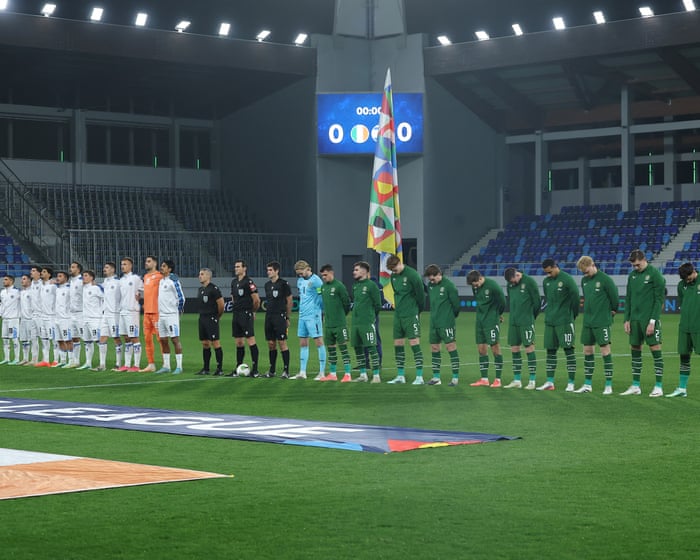
Despite the pressure, the Football Association of Ireland chose to fulfil both fixtures. Republic of Ireland players did not take part in pre-match formalities in either match, while the team also bowed their heads during Israel’s national anthem.
Those gestures reflected the tense backdrop to a game that never really escaped the political shadow hanging over it. The half-time clash only intensified the scrutiny, with UEFA now set to review what happened and whether disciplinary action is warranted.
What happens next?
The investigation will determine whether any misconduct took place and, if so, whether it merits sanctions. For UEFA, the focus will be on the official reports, referee observations and any other available evidence gathered from the match.
For Ireland, the incident comes at the end of two emotionally charged fixtures in a difficult international window. For Israel, it places further attention on a team already involved in a match that was contested as much in the stands and surrounding debate as on the pitch.
Whatever the outcome, the case is likely to remain in the spotlight until UEFA concludes its review. As Hallgrimsson made clear, the emotional temperature around the fixture was never far from boiling point, and this latest allegation has ensured the story is far from finished.
| Match | Result | Venue |
|---|---|---|
| Republic of Ireland vs Israel | 1-1 | Backa Topola, Serbia |
| Incident | Alleged spitting at half-time | Tunnel / near tunnel |
| UEFA action | Disciplinary investigation opened | Following official reports |
As one official described the situation through UEFA’s report-led process, the governing body is now treating the matter as a potential disciplinary case. The final decision could shape how future high-tension internationals are managed when football and politics collide.