
Now Reading: Why India Keep Getting the Last ICC Group Match
-
01
Why India Keep Getting the Last ICC Group Match


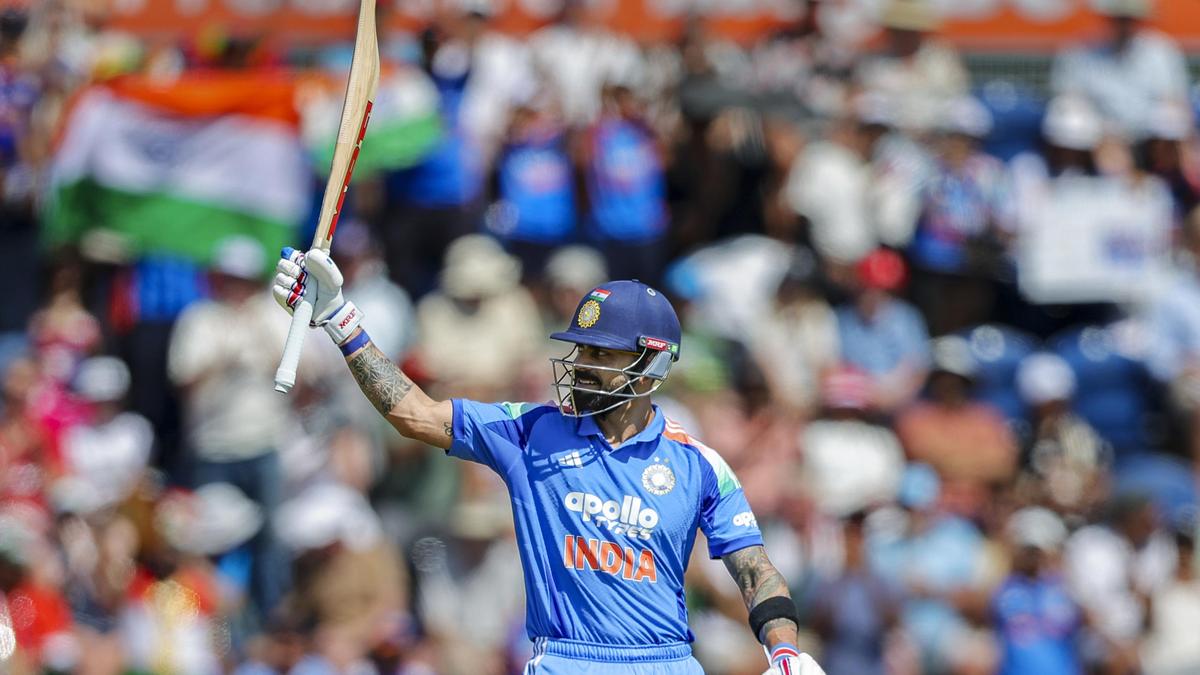
The ICC’s 2027 ODI World Cup schedule has reignited a familiar debate in cricket circles: why does India so often end up playing the last group match? Once again, the pattern is hard to miss, with India closing their group-stage campaign against Zimbabwe on the final day of the tournament’s opening phase.
For fans, the question is not just about timing. It is about whether the schedule gives India a subtle competitive edge, or whether the explanation is simpler and more commercial than conspiratorial. With six of the last seven men’s ICC white-ball events seeing India play last in their group, the discussion has returned with force.
India’s 2027 group-stage path
The ICC unveiled the full ODI World Cup 2027 schedule in Cape Town, and India’s route quickly stood out. They begin against Australia in Cape Town on October 7 before heading to Johannesburg for the high-profile clash with Pakistan on October 10.
Afghanistan await in Centurion on October 14, followed by a meeting with a Qualifier A side in Bloemfontein on October 17. The group phase ends at Victoria Falls on October 24, where India face co-hosts Zimbabwe.
| Match | Date | Venue |
|---|---|---|
| India vs Australia | October 7 | Cape Town |
| India vs Pakistan | October 10 | Johannesburg |
| India vs Afghanistan | October 14 | Centurion |
| India vs Qualifier A | October 17 | Bloemfontein |
| India vs Zimbabwe | October 24 | Victoria Falls |
Why fans think the pattern matters
The strongest criticism comes from the idea of net run rate advantage. A side that plays last in the group knows exactly what it needs from the match, including whether a win must be chased quickly or a target defended aggressively. In tight qualification races, that knowledge can shape tactics right down to the final over.
“Knowing the table before you play can matter more than people admit,” one fan argued online, reflecting a growing suspicion around the scheduling trend. “Even if it is not intentional, it feels like an edge.”
That feeling has real traction because the pattern is not isolated. Across seven men’s ICC white-ball tournaments from 2021 to 2027, India have been assigned the final group match on six occasions. The only exception came at the 2024 T20 World Cup in the USA and the Caribbean, when India played Canada before Pakistan and Ireland finished Group A the next day.
Commercial logic or competitive imbalance?
There is, however, a more practical explanation. The ICC and host broadcasters have frequently placed India’s final group fixture in a weekend prime-time slot, especially on a Sunday evening in Indian time, often against an Associate or lower-ranked opponent. That timing tends to maximize television audiences in the world’s biggest cricket market.
From a commercial standpoint, the logic is obvious. India remains the sport’s biggest draw, and a late-weekend slot offers the best chance of strong viewership before the knockout rounds begin. That does not automatically mean the schedule is unfair, but it does explain why the pattern keeps appearing.
The article’s central argument is clear: the trend likely reflects broadcasting priorities more than any deliberate attempt to benefit India on the field. Still, repetition creates suspicion, and suspicion is difficult to shake in tournament sport.
Does the advantage really change outcomes?
Not always. The net run rate argument sounds persuasive, but it only becomes decisive when qualification is finely balanced. India have often entered the final group game already well placed, which reduces the impact of any theoretical advantage.
The 2024 exception also shows that the scheduling is not rigid. That alone weakens the idea of a fixed rule and strengthens the case that the calendar is shaped by a mix of logistics, audience expectations and commercial strategy.
“A fair tournament should avoid even the appearance of an edge,” the piece notes, and that may be the most important point of all. Even if the arrangement is innocent, repeated patterns can damage trust among fans and rivals alike.
What ICC could do to settle the debate
The cleanest solution would be to schedule the final round of group games simultaneously, the way football tournaments often do. That would remove the possibility of one team knowing the qualification picture before it takes the field.
Such a move could protect the credibility of the competition while preserving fairness for all sides. It may not eliminate every complaint, but it would reduce the noise around India’s recurring position at the end of the group stage.
For now, the debate continues. India’s schedule for 2027 has given fans another reason to ask whether this is just smart planning or a structure that needs changing. Either way, the conversation is not going away anytime soon.