
Now Reading: English Football Faces Financial Disaster Warning
-
01
English Football Faces Financial Disaster Warning


English football has been issued a stark warning: the game is standing on the edge of a financial disaster. A new report from the Independent Football Regulator says that if owners were to withdraw funding, a significant number of clubs could collapse within 30 days.
The findings paint a troubling picture across the pyramid, from the Premier League to the lower leagues. With 94% of the top 116 clubs currently making losses, the report argues that the sport’s financial model has become dangerously fragile, even as the richest clubs continue to grow at remarkable speed.
A system built on risk
The regulator’s State of the Game report, a 245-page assessment of English football, highlights a deep imbalance between wealth at the top and debt further down the pyramid. David Kogan, chair of the Independent Football Regulator, described the situation as a “massive contradiction” and said the system has become too dependent on owner support.
“At the heart of English football’s success is a massive contradiction,” Kogan said. “While some of our clubs are among the richest and most competitive in the world, others are standing on the edge of financial disaster.”
His warning lands at a time when the game’s spending habits continue to balloon. According to the report, the highest wage bill in the Premier League is now £364 million a year. Over the same period, average club revenue has risen by more than 2,000%, but wages have surged by 5,000%, showing how sharply costs have outpaced income.
Losses across the pyramid
The numbers are even more alarming beyond the top flight. The BBC’s reporting on the same findings says more than 60% of clubs in the EFL and National League are technically insolvent, underlining how widespread the danger has become.
That means many clubs are surviving not because their business models are stable, but because ownership groups continue to plug the gap. The report warns that this reliance is no longer sustainable and that too many clubs would struggle to operate without direct owner backing.
| Key figure | Detail |
|---|---|
| 94% | Of the top 116 clubs are loss-making |
| £364 million | Highest Premier League wage bill |
| 2,000%+ | Average club revenue increase |
| 5,000% | Wage growth over the same period |
| 30 days | Potential survival window without owner funding |
Case studies that still haunt the game
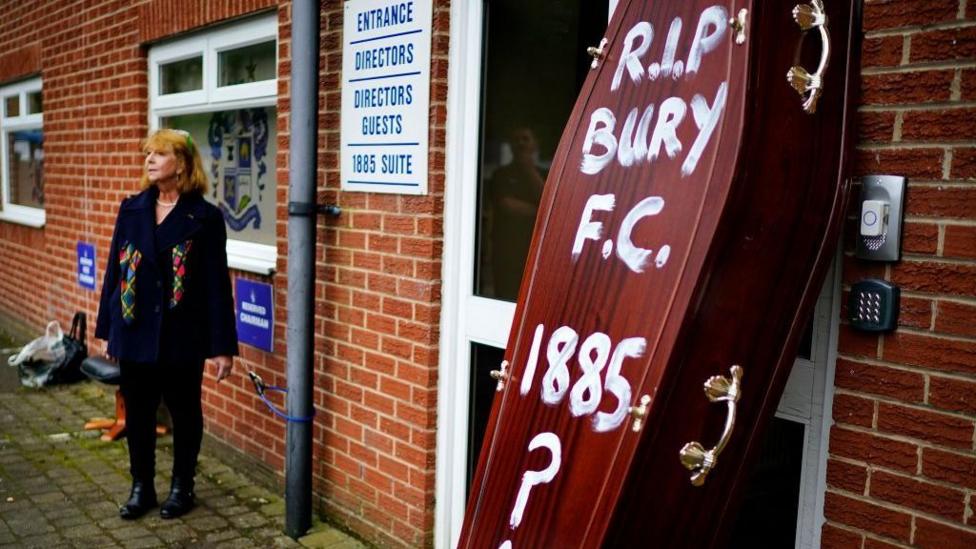
The report points to Bury, Wigan and Derby County as case studies that show what can happen when clubs lose financial control or stability. Their struggles have become cautionary tales for supporters, regulators and governing bodies alike.
For fans, the message is not abstract. It is a reminder that even historic clubs can drift toward crisis when debt rises, costs spiral and revenue streams fail to keep pace. The report’s six-point plan is designed to push the game toward stronger financial oversight, better risk management and greater transparency.
What the regulator wants to change
Among the key recommendations is a reformed revenue distribution model, intended to make the whole pyramid more stable. The report also calls on clubs to improve how they manage financial risk and to be more open with supporters about their finances.
The warning over parachute payments adds another layer of tension. The regulator has suggested they could be scaled back, a move that would likely spark debate among clubs that rely on them after relegation. Supporters may welcome stronger controls, but many owners and executives will argue that any reform must avoid harming competitiveness.
Kogan’s blunt assessment captured the urgency of the moment. “Football has always been bloody risky,” he said, “but now if you fail the failure is much harder to take because the numbers are so much bigger and that’s where we come in.”
Why this matters now
The release of the report comes as Premier League action continues this weekend, but the off-field crisis may prove more consequential than anything on the pitch. The regulator believes the current structure leaves too many clubs exposed to shocks, with financial instability now a system-wide issue rather than a rare exception.
That makes intervention harder to avoid. English football remains commercially powerful and globally admired, but the report suggests that underneath the success lies a dangerous vulnerability. If clubs are living beyond sustainable means, the next collapse may not be far away.
For now, the message is clear: English football may be richer than ever at the top, but far too many clubs are still one bad season away from serious trouble.