
Now Reading: Are Europe’s Women’s World Cup play-offs working?
-
01
Are Europe’s Women’s World Cup play-offs working?


England’s latest romp raises a bigger question
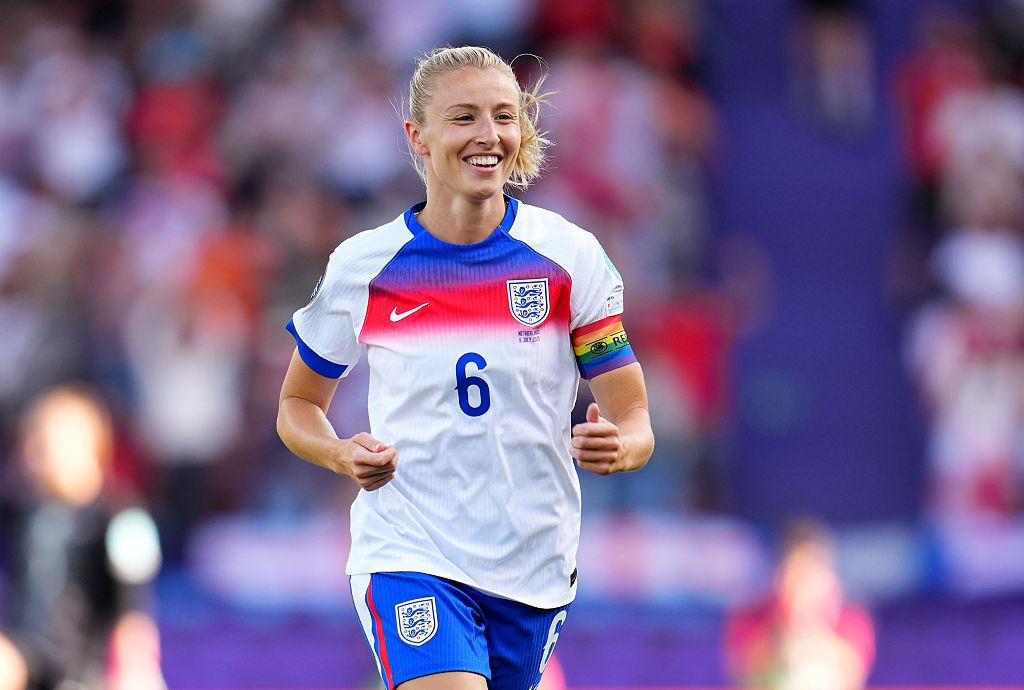
England’s march through the Women’s World Cup play-offs should have been routine. Instead, it has become the latest flashpoint in a growing debate over whether UEFA’s qualification format is fit for purpose.
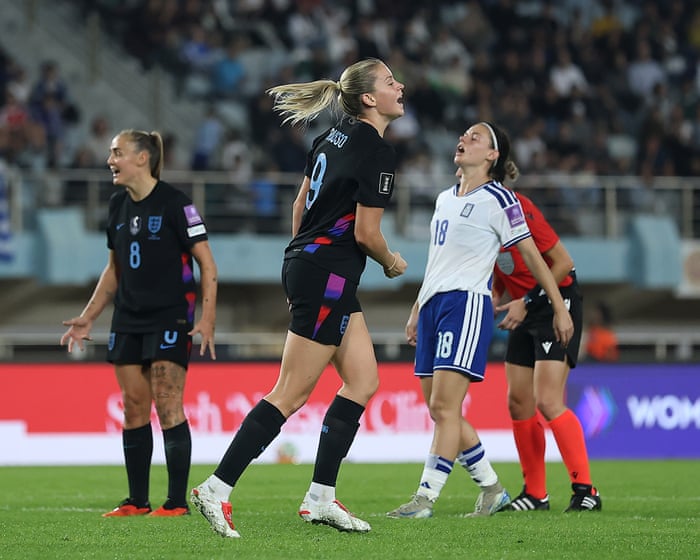
The Lionesses brushed aside Greece 8-1 on aggregate, a result that underlined the gulf in quality between one of Europe’s elite teams and an opponent ranked 55 places lower in the world. The performance was dominant, but the broader picture was harder to ignore.
For Sarina Wiegman’s side, the task now moves on to Ukraine. Yet the awkward reality remains: England still have not qualified for the 2027 Women’s World Cup, despite losing just once in 2025 and winning seven of their last eight qualifiers.
A system producing predictable mismatches
The current structure has only one team from the league phase qualifying automatically, forcing several of Europe’s strongest nations into play-offs against far weaker opposition. That has led to a wave of one-sided scorelines across the continent.
The Netherlands, 2017 European champions, beat Hungary 11-0 on aggregate. Norway followed a different path but still thumped Romania 8-0. Sweden and the Republic of Ireland also delivered emphatic wins, with aggregate scores of 15-0 and 12-0 respectively.
Those numbers do not point to a lack of quality in European women’s football. If anything, they show the opposite: the top teams are stronger than ever, but the qualification route is failing to turn that strength into meaningful competition.
England’s numbers tell the story
England’s campaign has been impressive by any normal measure. They collected 15 points in the league phase, scored 21 goals, and conceded just six. Their only defeat came away to world champions Spain, who also denied them top spot on head-to-head record.
They even beat Spain 1-0 at Wembley, proof that this is not a team stumbling through qualifiers. Yet because they were placed in a difficult group with Spain and Iceland, the Lionesses finished second and were pushed into the play-offs.
Wiegman did not hide her frustration when discussing the process.
“Of course we wanted to qualify straight away, that’s not the case,” she said. “Uefa will review how things are set up and see whether they think it works or it should be better, or different.”
Why the format feels out of step
The issue is not simply that England won comfortably. It is that Europe’s qualification pathway is increasingly producing two realities at once: elite nations are being forced into high-pressure games against each other early on, while the play-offs often become formalities against teams several tiers below.
That disconnect is especially striking when viewed alongside the rest of the global calendar. England’s potential World Cup rivals are getting exposed to elite preparation. Germany and Japan met in a high-profile friendly. Brazil and Argentina produced a 2-2 draw. The USA even played Spain twice in five days.
By contrast, England are being asked to repeat fixtures against the same opposition multiple times. They already beat Ukraine twice in the league phase by an aggregate score of 9-1, and yet those two nations are set to meet again over two legs in December.
Competitive growth, but uneven reward
There is no question that women’s football in Europe has improved. England’s path to Euro 2025 included difficult matches, penalty shootouts, and a run of results that reflected a deeper, more competitive landscape.
But competition only matters if the qualification structure rewards it fairly. A system that can leave a team with 15 points, a win over the world champions, and one defeat against the No. 1 side still fighting for a place feels unbalanced.
That imbalance is exactly why this debate matters. Heavy scorelines can make for eye-catching headlines, but they can also obscure the real issue: the gap between Europe’s elite and the rest is being exposed in a format that may not be serving either side well.
| Key stat | Figure |
|---|---|
| England aggregate vs Greece | 8-1 |
| England last eight qualifiers | 7 wins |
| Goals scored in that run | 21 |
| Goals conceded in that run | 6 |
| England league-phase points | 15 |
| Ukraine aggregate vs England in league phase | 9-1 |
What happens next?
England will face Ukraine away on 1 December before the return leg at Wembley on 5 December. On paper, the tie should offer little danger, especially given the earlier 9-1 aggregate success.
But the deeper question will not go away. If UEFA wants qualifying to feel meaningful, it may need to create a system that delivers more balance between fairness, competition, and genuine jeopardy.
As Wiegman put it, the priority is simple from England’s perspective: get through the tie and move on. For UEFA, however, the bigger task may be deciding whether the current play-off structure actually works at all.
And with the 2031 Women’s World Cup set to expand from 32 to 48 teams, the pressure to find the right answer is only likely to grow.