
Now Reading: India Chase Down 230 in Christchurch to Join T20I Run-Chase Elite
-
01
India Chase Down 230 in Christchurch to Join T20I Run-Chase Elite


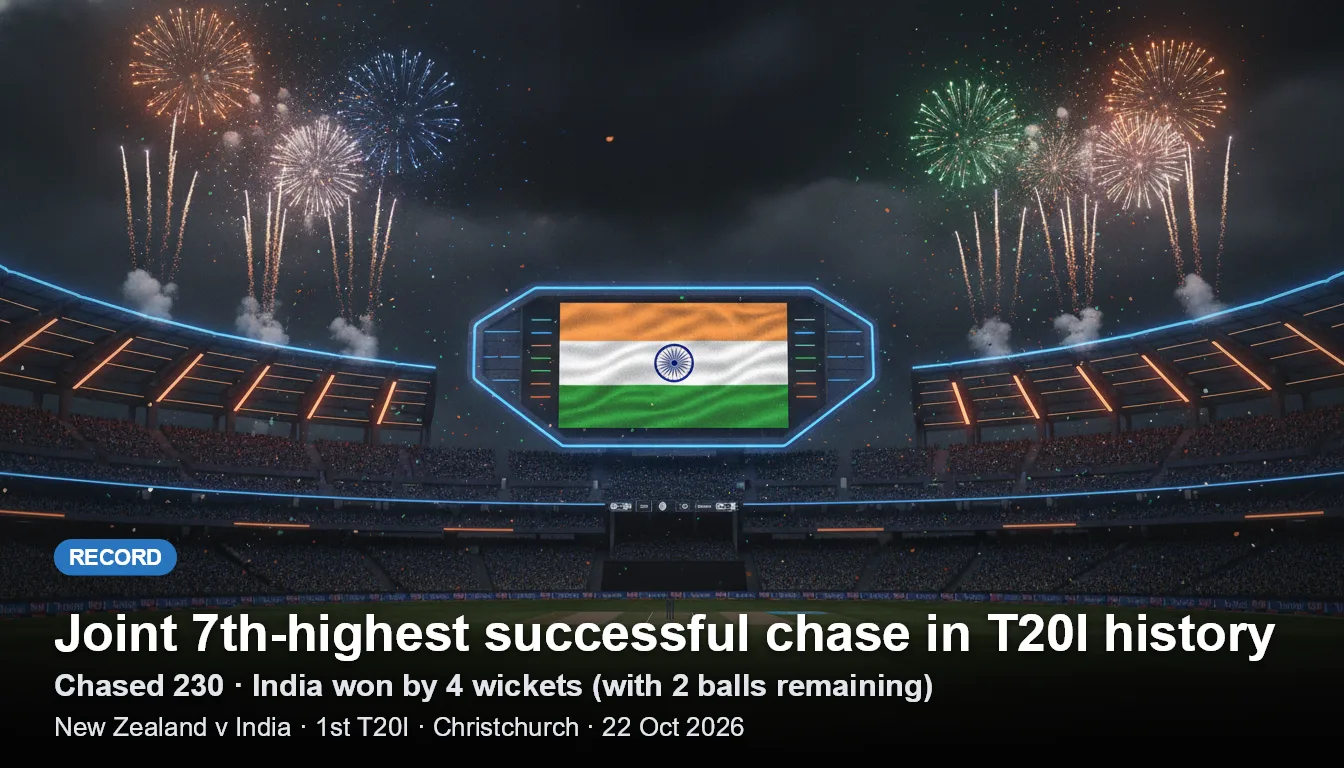
India have chased down 230 in Christchurch, winning the opening T20I against New Zealand by 4 wickets with just 2 balls to spare. The finish was tight and the numbers are huge. According to CricStats data, it is the joint 7th-highest successful run chase in T20I history.
A Chase That Went Down to the Wire
The match was the 1st T20I of the India in New Zealand T20I Series at Hagley Oval on 22 October 2026. India finished the job with 2 balls remaining, which means the chase was completed in the 20th over.
A target of 230 is the kind of total that usually decides a T20I before the second innings begins. India chased it down anyway. They lost 6 wickets along the way and still had 4 in hand at the finish.
That thin margin is what makes the result so dramatic. Two deliveries separated India from a very different story, and the series now opens with a statement win.
Where the Chase Ranks in T20I History
CricStats ranks India’s 230 as the joint 7th-highest successful chase in T20I history. It sits level on runs with England’s chase of 230 against South Africa in 2016.
The two chases even finished alike. England won that game by 2 wickets with 2 balls remaining, and India have now matched the same total with the same number of balls left.
All-Time Top 10: Highest Successful Chases in T20Is
| Rank | Runs Chased | Result | Match |
|---|---|---|---|
| 1 | 259 | South Africa won by 6 wickets (7 balls remaining) | West Indies v South Africa, 2023 |
| 2 | 252 | West Indies won by 6 wickets (9 balls remaining) | India v West Indies, 2026 |
| 3 | 246 | Bulgaria won by 6 wickets (2 balls remaining) | Serbia v Bulgaria, 2022 |
| 4 | 245 | Australia won by 5 wickets (7 balls remaining) | New Zealand v Australia, 2018 |
| 5 | 244 | Bulgaria won by 6 wickets (34 balls remaining) | Gibraltar v Bulgaria, 2025 |
| 6 | 236 | West Indies won by 4 wickets (4 balls remaining) | South Africa v West Indies, 2015 |
| =7 | 230 | England won by 2 wickets (2 balls remaining) | England v South Africa, 2016 |
| =7 | 230 | India won by 4 wickets (2 balls remaining) | New Zealand v India, 2026 |
| 9 | 229 | Bulgaria won by 6 wickets (3 balls remaining) | Serbia v Bulgaria, 2022 |
| 10 | 226 | England won by 5 wickets (5 balls remaining) | South Africa v England, 2020 |
What the Numbers Tell Us
The gap to the top is still wide. South Africa’s 259 chase against West Indies in 2023 is 29 runs more than India managed in Christchurch.
India’s chase also edges out several others in the top ten on tightness. Only Bulgaria’s 246 chase against Serbia in 2022 and England’s 230 chase in 2016 matched the 2 balls remaining in this finish. The 6-wicket wins and the 34-ball cushion in other chases show how much closer this one was.
Quick Stats From the Chase
| Stat | Value |
|---|---|
| Target chased | 230 |
| Result | India won by 4 wickets |
| Balls remaining | 2 |
| All-time rank | Joint 7th |
| Venue | Hagley Oval, Christchurch |
A Table With a Few Twists
The top ten holds some surprising patterns. Bulgaria appear three times, with chases of 246, 244 and 229. West Indies feature twice, with 252 and 236, and England also feature twice, with 230 and 226.
India’s name is now in the table in an unusual way. They were the opposition when West Indies chased 252 in 2026, which sits second on the list. Now India have a chase of their own in the top ten, in the same year.
Why It Matters for the Series
Winning the first match of a T20I series from a 230 target is a significant opening result. It shows how much batting depth it takes to finish a chase this size, with 4 wickets still in hand at the end.
For New Zealand, the result is a reminder that no total is safe at Hagley Oval. The series continues, and with scoring like this the next game promises to be just as intense.
The Bottom Line
India’s 230 chase is not the biggest the format has seen, but it is firmly in elite territory. At joint 7th on the all-time list, it is level with England’s 2016 effort and ahead of the 229 and 226 chases that follow. A 4-wicket win with 2 balls to spare is the sort of finish that gets remembered.
The question now is how long it stays in the top ten, and whether another team can push past it soon.