
Now Reading: India’s Bowling Plan Questioned After Draw with Sri Lanka
-
01
India’s Bowling Plan Questioned After Draw with Sri Lanka


A Missed Opportunity in Colombo
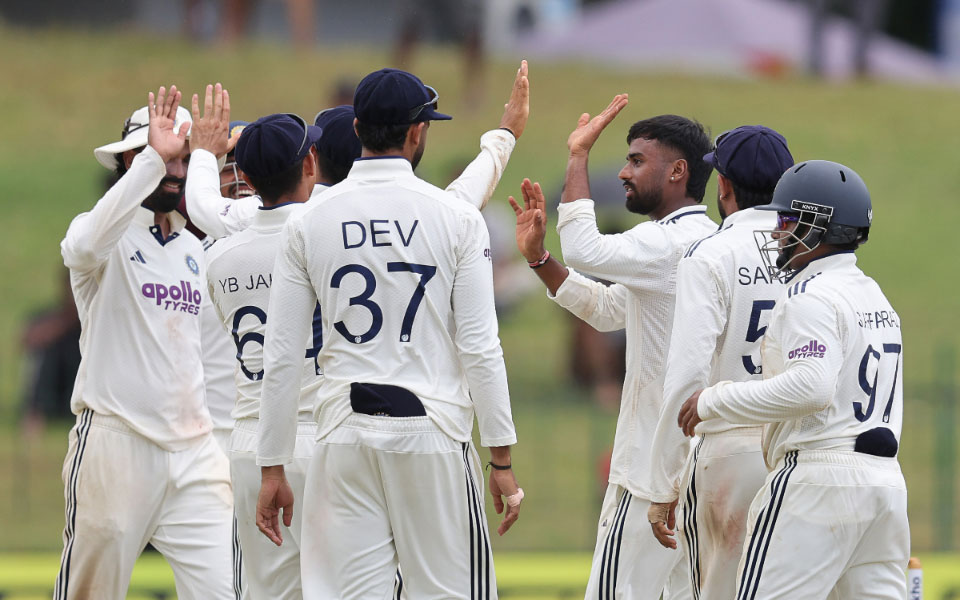
India’s hopes of a victory slipped away on Day 5 of the second Test against Sri Lanka in Colombo. Despite having the upper hand for most of the match, the Indian bowlers faltered when it mattered most, allowing Sri Lanka’s lower order to salvage a hard-fought draw. This result leaves India with unanswered questions about their bowling strategy.
Sonal Dinusha’s Heroics
Sri Lankan batsman Sonal Dinusha was at the helm of this unexpected resistance, scoring a remarkable century to lead his side’s fight. He stood firm throughout the day, finishing with 103 runs and securing his position as the series’ standout performer. This was his second century of the match and his third of the series, demonstrating a level of skill and composure that couldn’t be undermined.
Turning Points of the Match
The turning point came after lunch when India managed to make two breakthroughs. However, Dinusha, along with Lahiru Kumara, showcased admirable grit, stretching their overall lead to 170 runs. India’s bowlers struggled to capitalize on their initial breakthroughs, raising doubts about their execution plans.
| Player | Runs | Wickets |
|---|---|---|
| Sonal Dinusha | 103* | – |
| Keshara Nuwantha | 46 | – |
| Ravindra Jadeja | – | 3 |
Fan Reactions and Critiques
Fans took to social media to express their frustration. One user emphasized the inadequacies in India’s bowling plans, stating that allowing the lower order to bat out nearly 50 overs was unacceptable for a team with high aspirations. Cricket journalist Vikrant Gupta echoed this sentiment, labeling the draw a psychological setback for India amidst their quest for WTC qualification.
Strategic Gaps Exposed
This match exposed a deeper issue within India’s bowling strategy. The inability to take crucial wickets in the latter stages raises questions about the tactical adaptability of the bowlers. As they relied too heavily on their initial game plans even when faced with resistance, they missed out on exploiting the deteriorating pitch conditions effectively.
The shortcomings showcased against Sri Lanka could have lasting ramifications for India’s WTC final ambitions. As the team looks ahead to pivotal fixtures, it becomes essential to reassess their approach to lower-order batting and strategize for similar upcoming challenges.
Looking Ahead
With qualification for the WTC final hanging in the balance, missed victories like this will impact the team’s morale and tactics. It’s clear that India’s bowling attack must evolve to address these challenges effectively. Reflecting on this performance, fans and analysts alike will be keenly observing India’s strategies moving forward.