
Now Reading: Why Bhuvneshwar Kumar Could Be India’s New Zealand X-Factor
-
01
Why Bhuvneshwar Kumar Could Be India’s New Zealand X-Factor


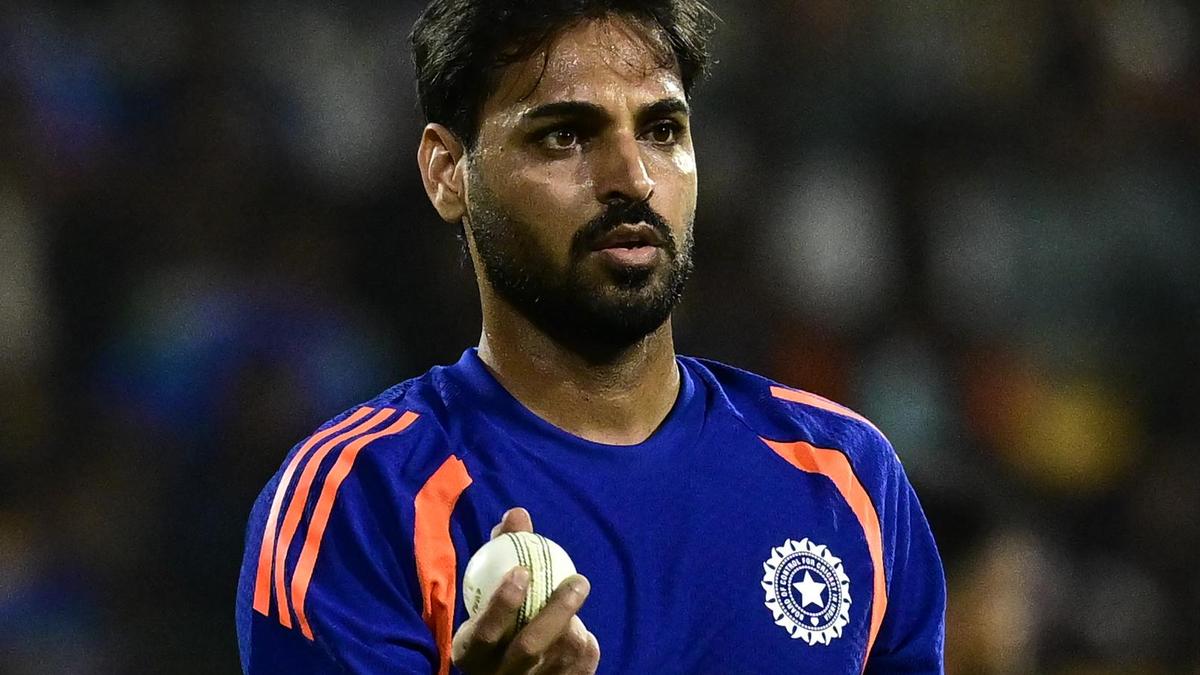
India’s bowling balance could get a timely upgrade in New Zealand, and Bhuvneshwar Kumar is right at the center of it. His return to T20Is arrives at a moment when India have been stretching their seam resources, leaning heavily on Arshdeep Singh and searching for more control at both ends of the innings.
The timing matters. New Zealand’s conditions often reward discipline, swing and good lengths, and Bhuvneshwar has shown he can still deliver all three. If India want more flexibility in their attack, his comeback could end up being more than just a selection call.
A return that solves more than one problem
One of the biggest pressures on India’s attack has been the workload on Arshdeep Singh. With Jasprit Bumrah not consistently available, Arshdeep has had to bowl more upfront, which has reduced India’s options later in the innings. That issue becomes even sharper when Hardik Pandya is not available to share the load.
This season, the numbers tell the story clearly. Arshdeep has bowled 60.63% of his overs in the powerplay without Bumrah, compared to 54.35% with him. His economy rate in the powerplay also rises from 8.52 to 9.45 runs per over when Bumrah is absent.
The impact is not limited to the opening overs. Arshdeep’s share of death overs drops from 32.61% with Bumrah to 25.09% without him, forcing India to patch together the final overs through less familiar options. That has at times pushed Axar Patel deeper into the innings, even though his greatest value still comes early.
Why Bhuvneshwar changes the shape of the attack
Bhuvneshwar gives India the chance to share the new ball more evenly. Instead of overloading Arshdeep early, India can use Bhuvneshwar to attack the first six overs and preserve more flexibility for the middle and death phases.
That matters because the early overs in New Zealand are often where matches are shaped. Under lights, with fresh pitches and the new ball offering movement, a bowler like Bhuvneshwar can create wicket-taking chances simply by landing the ball in the right areas.
As one analyst familiar with India’s white-ball setup put it, “Bhuvneshwar doesn’t need wild movement to be effective. In the right conditions, his discipline is enough to force errors.”
New Zealand could suit Bhuvneshwar perfectly
Recent IPL form suggests that Bhuvneshwar still has more to offer than just swing. In IPL 2026, he averaged 0.94 degrees of swing in the first six overs, but the more impressive change has been his reliance on hit-the-deck lengths.
He bowled 52.94% of his powerplay deliveries between six and eight meters, the highest proportion among bowlers with at least 60 deliveries. Those lengths brought him seven wickets at an average of 19.29, showing that his ability to pressure batters is still intact.
His spell against Mumbai Indians in Raipur was a strong example of that approach. By consistently hitting a hard length and using the little seam movement available, he unsettled the batters and removed three key wickets in the powerplay.
Bhuvneshwar’s numbers for Royal Challengers Bengaluru underline the point even more strongly. He bowled 53.97% of his deliveries in the powerplay, taking 17 wickets in that phase at an average of 13.88 and an economy rate of 6.94 in IPL 2026.
| Metric | IPL 2026 Output |
|---|---|
| Powerplay share of deliveries | 53.97% |
| Powerplay wickets | 17 |
| Powerplay average | 13.88 |
| Powerplay economy | 6.94 |
| 6-8m powerplay deliveries | 52.94% |
| Wickets from 6-8m lengths | 7 |
| Average from 6-8m lengths | 19.29 |
How India could use their pace options
If Bhuvneshwar adapts quickly, India could finally get a cleaner bowling structure. He and Arshdeep Singh can split the new-ball overs, while the seam-friendly conditions also allow India to keep spin in reserve rather than using it too early.
That would also open a clearer role for Nitish Kumar Reddy, whose ability to generate movement through the air could help in the middle overs. His natural shape and floatier lengths can draw batters into mistakes, especially in a country where edges are often in play.
Mayank Yadav, meanwhile, could be used as an enforcer. Rather than asking him to do all the damage with the new ball, New Zealand’s bounce could allow India to deploy him with the older ball, where his pace and hard lengths might be even more dangerous.
He has already shown that role suits him at Lucknow Super Giants, with 58.17% of his IPL overs coming in the middle phase. In New Zealand, the extra bounce could make him a nightmare for batters trying to force pace from the pitch.
The bigger picture for India
India’s recent overseas matches have shown how quickly the bowling plans can become stretched when early wickets do not arrive. In Southampton, Arshdeep was used for three of the first five overs, and India still struggled to keep control once England’s batters got going.
That is exactly why Bhuvneshwar’s role matters. He is not just another returning veteran. He is a bowler who can calm the innings, buy time for the captain, and let India use their younger quicks in more specific roles.
If he can replicate his IPL 2026 form in New Zealand, India may finally get the kind of bowling balance they have missed in Bumrah’s absence. That would not just strengthen the attack; it could redefine how India structure their T20I overs in challenging overseas conditions.
For India, the equation is simple. A dependable new-ball option, more freedom for Arshdeep, a clearer role for Mayank and better control through the innings. Bhuvneshwar Kumar’s comeback may be the key that unlocks all of it.