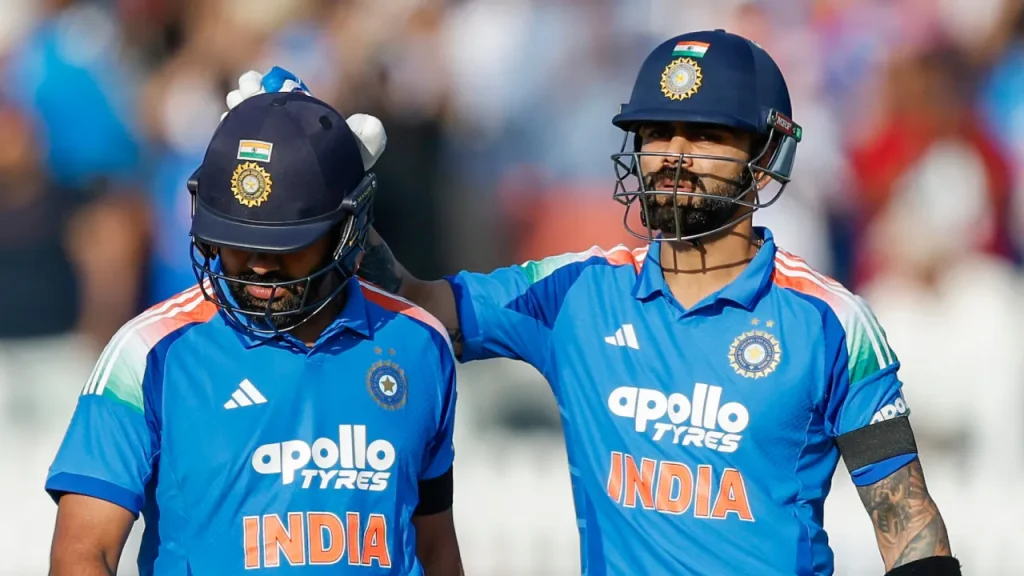

Now Reading: New Zealand v India 5th ODI Preview: Can the Black Caps Flip the Numbers at Bay Oval?
-
01
New Zealand v India 5th ODI Preview: Can the Black Caps Flip the Numbers at Bay Oval?


Bay Oval is set to host the 5th ODI between New Zealand and India on Sunday, 15 November 2026, and the numbers lean one way. India own a clear head-to-head edge, recent form is dead level, and the series has already produced a no result. Here is the CricStats preview and prediction.
Head-to-Head: India Hold the Historical Edge
India lead the all-time ODI rivalry between these sides, which stretches back to 1975. Across 126 meetings, they have won 65 to New Zealand’s 52, with 9 matches ending as ties, draws or no results.
The recent picture tilts even further. In the last 10 decisive meetings, CricStats data shows India winning 80% and New Zealand 20%.
| Head-to-Head (ODIs) | Figure |
|---|---|
| Matches played | 126 |
| India wins | 65 |
| New Zealand wins | 52 |
| Tied / drawn / no result | 9 |
| Last 10 decisive meetings | NZ 20% – India 80% |
| Previous meetings at Bay Oval | 3 |
Recent Meetings: Momentum Swings and a Washout
The latest chapter has been tight and chaotic. India won by 5 wickets with 56 balls remaining (DLS method) at Eden Park on 4 November, then edged a 4-run result (DLS method) on 7 November.
The 10 November game at Seddon Park was abandoned with a toss. Before that, New Zealand had the better of January, winning by 7 wickets and then by 41 runs.
| Date | Result |
|---|---|
| 10 Nov 2026 | No result (abandoned with a toss), Seddon Park |
| 7 Nov 2026 | India won by 4 runs (DLS method) |
| 4 Nov 2026 | India won by 5 wickets, 56 balls remaining (DLS method), Eden Park |
| 18 Jan 2026 | New Zealand won by 41 runs, Holkar Cricket Stadium |
| 14 Jan 2026 | New Zealand won by 7 wickets, 15 balls remaining, Saurashtra Cricket Association Stadium |
Form Guide: Two Sides, One Identical Record
Form offers no separation. Both teams have won 5 and lost 4 of their last 10 completed ODIs, giving each a recent win rate of 56%.
New Zealand’s last 10 reads NR L L L W W W L W W. India’s reads NR W W L W W L L W L. Both include a recent series against West Indies that produced a split of results.
Why the Form Line Matters
Level form means the head-to-head record becomes the main tiebreaker in the data. That is where India’s 80% share of recent decisive meetings pushes the lean in their favour.
Bay Oval: A Chasing Ground
History at this venue favours the side batting second. Of 17 completed ODIs at Bay Oval, 10 were won chasing and 7 won batting first. The average first-innings total is 244.
| Bay Oval ODIs | Figure |
|---|---|
| Completed matches | 17 |
| Won batting first | 7 |
| Won chasing | 10 |
| Average first-innings total | 244 |
That makes the toss decision a talking point. Squads for this match are not confirmed, so the numbers can only point to the trend, not to a plan.
Players Who Have Been in Form
Squads are not yet confirmed, so the names below are players who have been in form over the last 12 months, not certain starters.
New Zealand
Daryl Mitchell has 675 ODI runs in 9 innings with a best of 137. Will Young has 458 in 14 innings, and Tom Latham has 244 in 10. With the ball, Kyle Jamieson and Jayden Lennox have 17 wickets each, while Jacob Duffy has 13.
India
Virat Kohli leads the way with 935 runs in 14 innings, best 139. Shubman Gill has 694 runs in 11 innings including a best of 223, and Rohit Sharma has 630 in 14. Kuldeep Yadav has 19 wickets, Prasidh Krishna 18 and Gurnoor Brar 15.
| Last 12 months | New Zealand | India |
|---|---|---|
| Top run-scorer | Daryl Mitchell, 675 runs | Virat Kohli, 935 runs |
| Second | Will Young, 458 runs | Shubman Gill, 694 runs |
| Third | Tom Latham, 244 runs | Rohit Sharma, 630 runs |
| Top wicket-taker | Kyle Jamieson / Jayden Lennox, 17 wkts | Kuldeep Yadav, 19 wkts |
Head-to-Head Heavyweights Since 2021
In this fixture since 2021, Daryl Mitchell tops the run chart with 824 runs in 13 innings. Shubman Gill follows on 779 in 15 and Virat Kohli has 600 in 12. Among bowlers, Mohammed Shami has 17 wickets, Kuldeep Yadav 16 and Kyle Jamieson 12.
CricStats Prediction: India Slight Favourites
The CricStats data lean suggests India are slight favourites, at New Zealand 35% and India 65%. This is a read of the numbers, not a certainty.
India’s head-to-head dominance in decisive meetings drives the lean, while level recent form and Bay Oval’s chasing trend keep New Zealand firmly in the contest. One insight stands out: with form identical at 56% each, history is doing the heavy lifting.
Whichever side handles the chase better could decide it. The numbers have spoken, but ODI cricket rarely follows the script.