


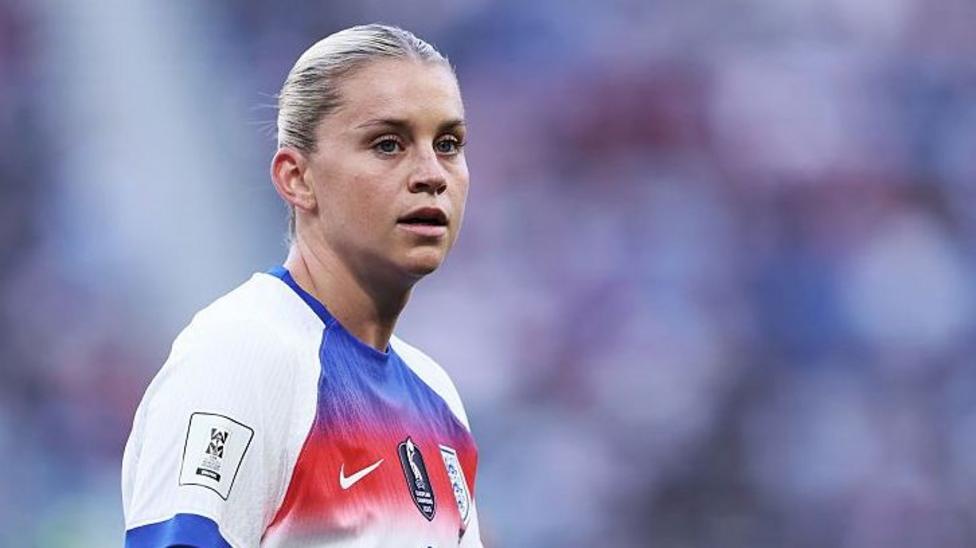
England’s job on Tuesday should be straightforward on paper: protect their first-leg lead against Greece and move a step closer to the Women’s World Cup. But beneath that routine task lies a bigger issue. Sarina Wiegman’s team are still searching for the right balance, the right combinations and, in some areas, the right identity.
The European champions have another eight months to sharpen their game before the tournament in Brazil, but the warning signs are already clear. England are winning enough to stay on track, yet not always convincing enough to look like a side ready to chase a first world title. That tension runs through every selection debate and every tactical tweak.
Defence remains the clearest concern
England created pressure in Greece, with 58 touches in the opposition box and three goals to show for it. Yet the hosts still found a way to score from just two touches in England’s area and even hit the crossbar. For a side targeting a world title, that is the kind of detail that cannot be ignored.
Wiegman was blunt about her dissatisfaction after Friday’s 3-1 win. The issue is not just isolated lapses, but a broader problem when opponents break quickly. England were also exposed in June’s 4-0 defeat by Spain and had similar trouble against Belgium earlier in 2025.
As one source close to the camp put it, England’s challenge is no longer simply to dominate possession. It is to learn how to defend transitions with the same authority they show on the ball.
Centre-back remains unsettled
Leah Williamson’s partner at centre-back is still not fixed, and that uncertainty matters. The captain is a constant, but the player alongside her has yet to become equally certain.
England have options, but no obvious long-term answer has emerged. That is a problem Wiegman must solve quickly if the team are to tighten up before Brazil.
The attack is creating, but not finishing cleanly
England’s issue at the other end of the pitch is different, but just as persistent. They are finding strong areas, getting into dangerous positions and then failing to make the final action count.
Against Greece, the execution in the final third was uneven. Wiegman highlighted the details that separate decent attacks from decisive ones: the right pass, the right run, the right timing and the right choice between a cross or a cutback.
That problem has appeared before. In England’s qualifying matches against Iceland, they won both games but did not always fully capitalise on control. Against elite opposition, that sort of wastefulness can become costly.
“We got in good positions, but then it’s about the right pass at the right moment.” — Sarina Wiegman
The No 10 race has become crowded
Perhaps the biggest selection puzzle is in attacking midfield. For much of the past year, England have rotated through options without settling on a clear starter in the No 10 role. Jess Park, Lucia Kendall, Laura Blindkilde Brown and Lauren James have all been used there in different ways.
Ella Toone has been dropped and recalled, while Grace Clinton’s late addition to the squad only adds to the sense that Wiegman is still testing every possible answer. On Friday, Erica Meg Parkinson made her debut, bringing another name into the discussion.
Wiegman’s view is that competition is a strength rather than a problem. The variety gives England tactical flexibility, but it also means the team are still defining what their best version actually looks like.
Laurens, wingers and wide options
Lauren Hemp looks close to a permanent starting role on the left. Her form for Manchester City has been strong, and that side of England’s attack feels the most secure.
The right wing is much less settled. Chloe Kelly has been left out, while James can play centrally or wide, and Freya Godfrey is another emerging option after impressing for London City Lionesses. On Friday, Blindkilde Brown started on the right before Mead took over at half-time.
With only a handful of matches left before the World Cup, England need more than talent. They need chemistry.
Youth is pushing into the conversation
The squad is starting to reflect a broader transition. Lexi Potter, 20, has attracted growing calls for a debut, while 21-year-old Freya Godfrey could get her first cap on Tuesday. Eighteen-year-old Grace Clinton and 18-year-old Erica Meg Parkinson also highlight the depth of young talent around the setup.
Keira Walsh has spoken positively about Potter’s intelligence and defensive awareness, while Esme Morgan praised Parkinson’s movement and tidy work on the ball. Those comments matter because they show the younger players are not being viewed as passengers. They are being considered as genuine options.
That creates an interesting dilemma for Wiegman. Does she lean on experience to stabilise the team, or use this period to accelerate development and build for the future?
| Player | Age | Context |
|---|---|---|
| Lexi Potter | 20 | Strong calls for debut |
| Freya Godfrey | 21 | Possible first cap |
| Grace Clinton | 18 | Late squad inclusion |
| Erica Meg Parkinson | 18 | Made debut on Friday |
Wiegman’s future hangs over everything
Off the pitch, the biggest unanswered question is the one that won’t go away: will Wiegman still be in charge after the World Cup? Her contract runs until the end of the tournament, and while there is no sign of immediate unrest, the uncertainty is already part of the conversation.
Walsh made the sentiment clear. “Obviously I’d want her to stay,” she said. “I think everyone in England would love her to stay.”
Wiegman, for her part, is keeping the focus firmly on football. “We’re only focused on Greece and I don’t want to talk about me,” she said. That answer may satisfy the manager, but it will not end the speculation.
England’s bigger test is still ahead
Tuesday’s match is important, but it is only one checkpoint on the road to Brazil. England do not merely need to qualify for the next round. They need to emerge with clearer answers about defence, midfield structure, wide balance, attacking efficiency and leadership beyond this cycle.
If they can solve even half of those questions, they will look far more dangerous by the time the World Cup comes around. If not, the pressure will only grow on a team that already knows how high expectations can rise.
For now, the mission is simple enough. Beat Greece, move on and keep building. The real test is whether England can turn all those unanswered questions into something much more certain by next summer.