
Now Reading: Sri Lanka Pull Off 430 Chase to Stun England in Rawalpindi
-
01
Sri Lanka Pull Off 430 Chase to Stun England in Rawalpindi


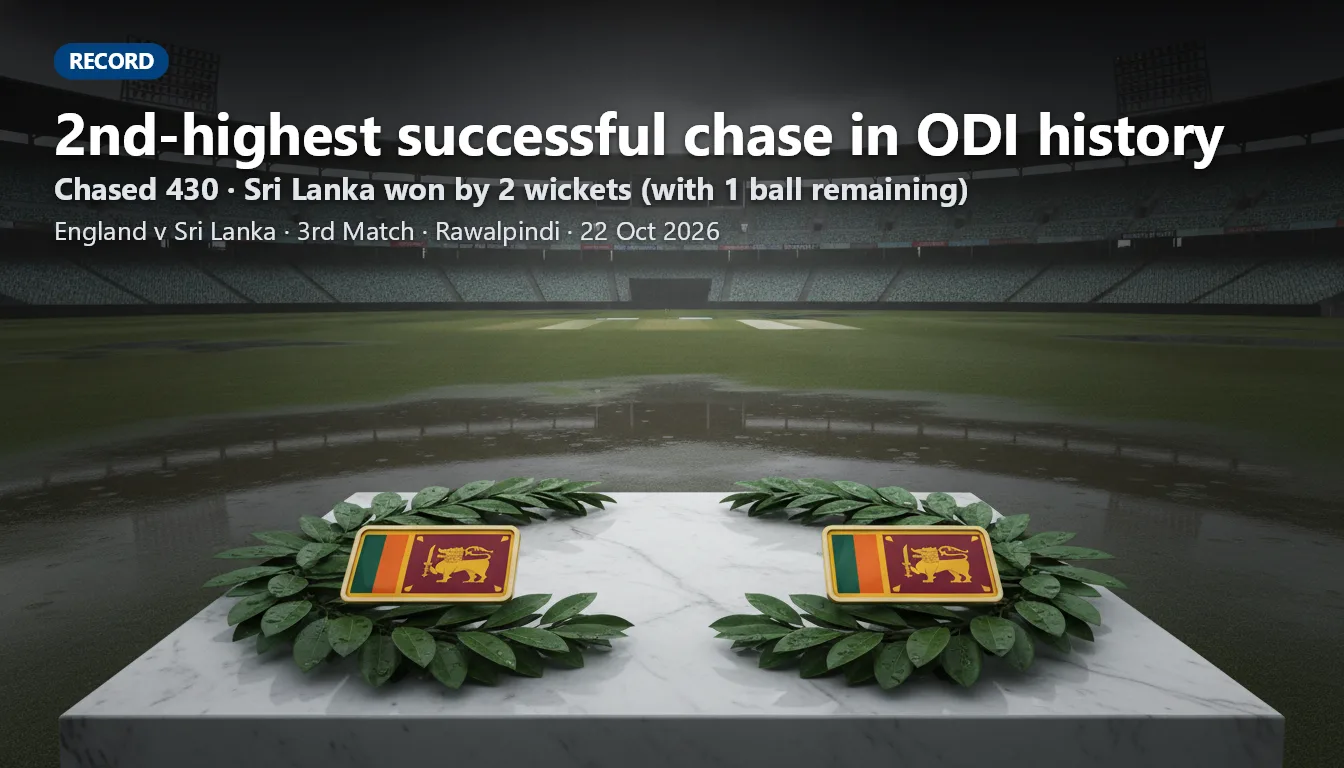
Rawalpindi witnessed a chase for the ages. Sri Lanka beat England by 2 wickets with just 1 ball remaining in the Pakistan Triangular Series, completing a 430 chase. According to CricStats data, it is the 2nd-highest successful run chase in ODI history.
A Finish That Went to the Final Over
The 3rd Match of the Pakistan Triangular Series at Rawalpindi Cricket Stadium on 22 October 2026 went down to the wire. Sri Lanka won by 2 wickets, with a single ball to spare.
That is about as tight as a chase of this size can get. Only one delivery separated Sri Lanka from a heartbreaking near-miss and a place in the record books.
The Key Numbers at a Glance
| Stat | Value |
|---|---|
| Chase total | 430 |
| Result | Sri Lanka won by 2 wickets |
| Balls remaining | 1 |
| All-time rank (highest successful ODI chase) | 2nd |
| Venue | Rawalpindi Cricket Stadium |
Where It Ranks in ODI History
Only one successful chase in ODI history is higher. South Africa hold the top spot with 438, achieved against Australia in 2006, when they won by 1 wicket with 1 ball remaining.
Sri Lanka’s 430 sits 8 runs behind that mark. It is the 2nd-highest successful chase in ODI history, not the record, and the CricStats database confirms the gap.
The similarities between the top two are striking. Both chases ended with 1 ball remaining, and both were won with wickets in hand only by the barest of margins: 1 wicket for South Africa, 2 for Sri Lanka.
A Big Gap to the Chasing Pack
Sri Lanka’s chase also towers over everything below it. The 3rd-highest successful chase is India’s 406 against West Indies in 2026, which means Sri Lanka finished 24 runs clear of it.
It also means two of the top three successful chases in ODI history have come in 2026. Targets that once looked untouchable are being reached more often.
The All-Time Top 10 Highest Successful ODI Chases
Here is how the full list looks after Sri Lanka’s win in Rawalpindi, based on CricStats data.
| Rank | Score | Result | Match (Year) |
|---|---|---|---|
| 1 | 438 | South Africa won by 1 wicket (1 ball remaining) | South Africa v Australia (2006) |
| 2 | 430 | Sri Lanka won by 2 wickets (1 ball remaining) | England v Sri Lanka (2026) |
| 3 | 406 | India won by 8 wickets (39 balls remaining) | India v West Indies (2026) |
| 4 | 372 | South Africa won by 4 wickets (4 balls remaining) | South Africa v Australia (2016) |
| 5 | 364 | England won by 6 wickets (8 balls remaining) | West Indies v England (2019) |
| 6 | 362 | India won by 9 wickets (39 balls remaining) | India v Australia (2013) |
| 7 | 362 | South Africa won by 4 wickets (4 balls remaining) | India v South Africa (2025) |
| 8 | 359 | Australia won by 4 wickets (13 balls remaining) | India v Australia (2019) |
| 9 | 359 | England won by 6 wickets (31 balls remaining) | England v Pakistan (2019) |
| 10 | 356 | Bermuda won by 8 wickets (9 balls remaining) | Bermuda v Uganda (2009) |
Patterns Behind the List
South Africa appear three times in the top 10, at ranks 1, 4 and 7. India and England each feature twice, while Australia, Bermuda and now Sri Lanka appear once each.
The pressure level also varies sharply. India’s 406 and 362 chases finished with 39 balls to spare, while Sri Lanka’s chase needed every ball but one.
Why This Chase Matters
Chasing 430 and winning with 1 ball left is the definition of a turning-point result. For Sri Lanka, it is a landmark win in the Pakistan Triangular Series. For England, it is a reminder that a huge total is never enough in a modern ODI.
The data tells the story clearly. Of the ten highest successful chases ever recorded, Sri Lanka’s is the only one besides South Africa’s 438 to cross 410, and it is the only other one to end with a single ball remaining.
What to Watch Next
With the Pakistan Triangular Series still under way, every team now knows what is possible in Rawalpindi. The question is whether this chase becomes a one-off thriller or a sign that the all-time list is due another shake-up.
Either way, 22 October 2026 now has a permanent place in the ODI record books as the day Sri Lanka took the 2nd-highest successful chase of all time.