Now Reading: Will Haris Rauf Be Banned for the Final vs Sri Lanka? ICC Demerit Points Explained
-
01
Will Haris Rauf Be Banned for the Final vs Sri Lanka? ICC Demerit Points Explained

Will Haris Rauf Be Banned for the Final vs Sri Lanka? ICC Demerit Points Explained

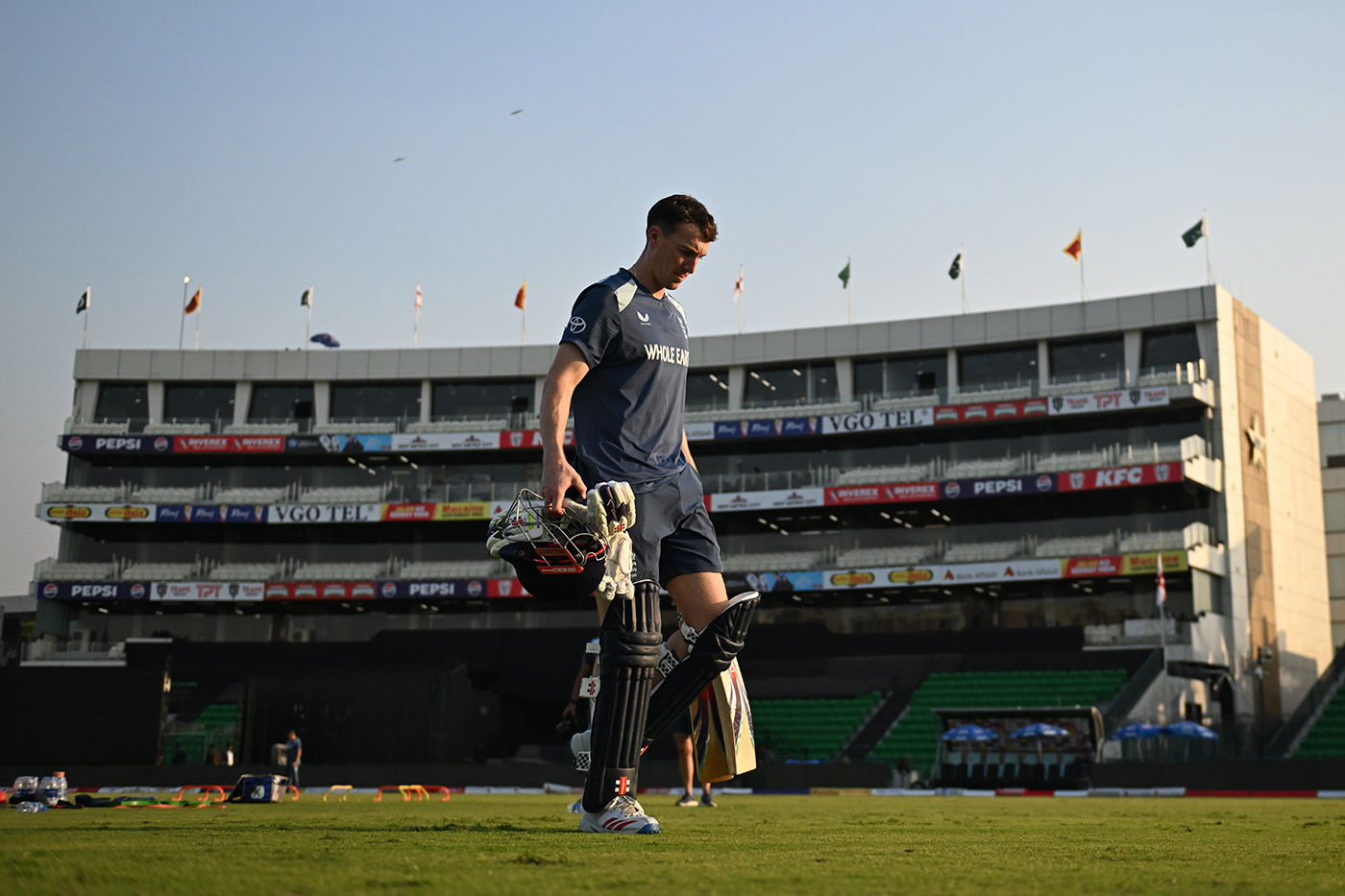
Haris Rauf has dodged a suspension, but only just. The Pakistan quick was reprimanded and fined after a heated row with England’s Will Jacks, and the ICC has added another demerit point to his record. He can play the final, but the margin for error is now razor thin.
What Happened Between Rauf and Jacks?
The trouble started at the end of the 46th over of Pakistan’s innings. Rauf, at the non-striker’s end, appealed for a wide, and that sparked an argument with England all-rounder Will Jacks.
Rauf raised his bat during the exchange. He kept arguing even after umpire Sharfuddoula Ibne Shahid gave him a warning, and then brushed past the umpire as he walked towards Jacks.
The ICC found him guilty of a Level 1 breach under Article 2.2 of the Code of Conduct, which covers conduct against the spirit of the game. He received an official reprimand and a 20 per cent match fee deduction.
England were also sanctioned in the same match. They were fined 15 per cent of their match fee for a slow over-rate, finishing three overs short of the target after time allowances.
Will Rauf Miss the Final vs Sri Lanka?
No. Rauf will not miss a match for this offence and is available for the ODI tri-series final against Sri Lanka on October 31.
The reason is simple. A suspension only kicks in once a player reaches four or more demerit points in a rolling 24-month window. Rauf had already crossed that line earlier in this cycle and served the ban, so one extra point simply moves him from four to five without triggering a new one.
The Background: A Third Offence in 24 Months
This was his third offence in two years, which is why it carries more weight than a routine fine. In November 2025, Rauf missed the first ODI against South Africa and was set to miss the second as well. That ban followed two Asia Cup 2025 offences against India that took him to four points.
Both of those were breaches of Article 2.21, bringing the game into disrepute. Rauf did not accept the charge either time, so formal hearings were held before sanctions were decided.
How the ICC Suspension Thresholds Work
Demerit points convert into suspension points, and suspension points convert into missed matches. Here is how the system works inside a 24-month window.
| Demerit Points | Suspension Points | Ban |
|---|---|---|
| 4 | 2 | 1 Test, 2 ODIs or 2 T20Is |
| 8 | 4 | 2 Tests or 4 limited-overs internationals |
Points stay on a player’s record for 24 months from the date of the incident. Until the oldest ones expire, every on-field flare-up carries risk.
Rauf’s Current Record
| Stat | Value |
|---|---|
| Demerit points | 5 |
| Offences in 24 months | 3 |
| Match fee fine | 20% |
| Points to next ban threshold | 3 |
The Danger Zone: When Could a Ban Arrive?
The next ceiling is eight demerit points, where a second suspension would begin. With five on the board, Rauf is only three away.
A Level 2 breach, which typically carries three to four points, would push him to eight or beyond. That means a ban of two Tests or four limited-overs internationals.
Even smaller offences could do the damage. Successive Level 1 breaches worth one to two points each could still carry him over the line before his earlier points expire.
Time to Cool Down
Rauf is among the quickest and most exciting bowlers in Pakistan’s squad, which is exactly why the pattern is so frustrating. A bowler who can turn a match with one spell should not be spending energy on arguments with opponents or walking past umpires.
Taken alone, the Jacks incident looks small. Taken with his record, it suggests a habit rather than a one-off. The fine and the extra point are essentially a final warning.
Pakistan’s team management has a role here too. They need to make it clear that the next lapse could cost more than a match fee, at a time when the team needs its best attack available. The ability is there. The focus just needs to stay on the ball, not the opposition.