
Now Reading: Ashwin Backs Axar Patel Over Jadeja in White-Ball Cricket
-
01
Ashwin Backs Axar Patel Over Jadeja in White-Ball Cricket


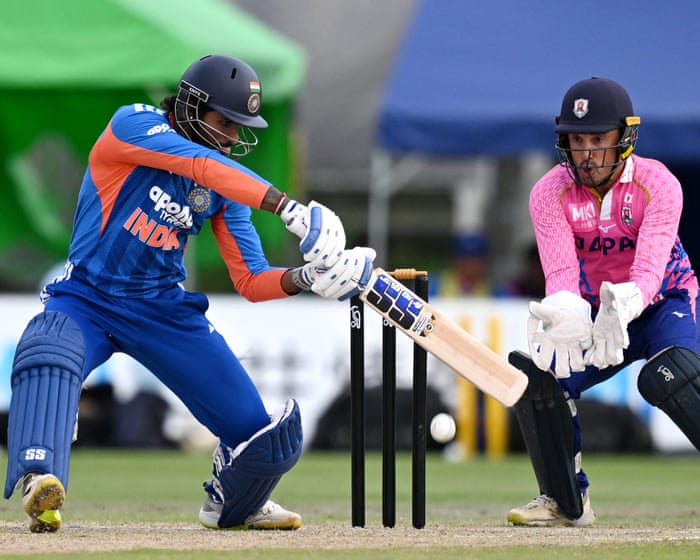
Former India spinner Ravichandran Ashwin has sparked a fresh debate in Indian cricket by backing Axar Patel over Ravindra Jadeja in the current white-ball setup. With the 2027 ODI World Cup build-up already in motion, the discussion around India’s left-arm all-round options is heating up fast.
Speaking on his YouTube channel, Ashwin praised Axar’s role as a finger spinner in modern white-ball cricket and argued that he is currently ahead of Jadeja. He also made a strong case for Washington Sundar to receive more consistent bowling opportunities, calling for better use of the all-rounder’s skills.
Axar Gets Ashwin’s Nod In White-Ball Cricket
Ashwin’s comments came at a time when selection debates around India’s ODI and T20I combinations are becoming increasingly competitive. Jadeja has returned to the ODI setup after an eight-month absence, while Axar Patel and Washington Sundar continue to fight for regular roles across formats.
“Because of the subtleties, Axar is ahead of Jadeja at this point,” Ashwin said. “Axar the white-ball bowler is right up there. It will always be up and down for a finger spinner and you may not get as many wickets all the time.”
The remark reflects how highly Ashwin values Axar’s all-round utility, especially in situations where captains need control in the powerplay and flexibility in the middle overs.
Why Axar’s Role Stands Out
Axar has become one of India’s most reliable white-ball options because of his ability to adapt. Even without a long list of variations, he has shown that accuracy, discipline, and tactical awareness can still make a big impact in modern cricket.
That point was reinforced by his recent performances. In the Asian Games 2026 final against Pakistan, Axar returned figures of 2/29 in four overs and played a key part in India’s bowling effort. He finished the tournament with four wickets from two matches, at an average of 9.25 and an economy rate of 5.28.
His broader T20I record also underlines his value. Axar has taken 109 wickets in 107 matches, with an average of 22.04 and an economy rate of 7.44. His best figures of 3/9 show that he can still deliver decisive spells when the conditions suit him.
| Player | Matches | Wickets | Average | Economy |
|---|---|---|---|---|
| Axar Patel | 107 T20Is | 109 | 22.04 | 7.44 |
| Asian Games 2026 Final | 4 overs | 2/29 | – | 5.28 |
Jadeja’s Position Remains Under The Scanner
Jadeja remains a proven match-winner and one of India’s most experienced all-rounders, but his recent ODI numbers have kept the conversation alive. In India’s recent ODI series against the West Indies, he took only two wickets in two matches, finishing with an average of 64.50 and an economy rate of 6.45.
He was later left out of the playing XI for the final ODI, a selection call that further intensified the debate around his role in the next cycle of Indian white-ball cricket. With India looking ahead to major global tournaments, every performance from the left-arm spin department is likely to come under close scrutiny.
For selectors, the question is not just about reputation. It is also about current form, role clarity, and the ability to fit into fast-changing team combinations.
Ashwin’s Warning On Form Across Formats
Ashwin also cautioned against comparing IPL form directly with international T20 performances. In his view, the pressure, roles, and conditions differ significantly between franchise cricket and India duty.
“I will also give a lot of credit to Axar,” Ashwin said. “In this day and age, for a finger spinner without a lot of variations, he comes and bowls in the powerplay and later comes and does the job wherever the team requires it. His form dipped a bit in the IPL last year but we cannot confuse it with T20Is. IPL and international T20 is very different.”
That observation is timely, especially for Axar, who remains one of the few Indian bowlers trusted to operate in multiple phases of a match. His ability to handle the powerplay, contain the scoring rate, and offer late-overs control keeps him firmly in the white-ball conversation.
Washington Sundar Pushes For More Overs
Ashwin also turned attention to Washington Sundar, saying the all-rounder should bowl more regularly if India wants to unlock his full value. He believes Sundar has the tools to improve significantly, but only if he receives more chances with the ball.
“I would love to watch Washi bowling more. I want him to develop those subtleties as a bowler. He has the skills but he is underselling them. He is getting less opportunities and he can really go up as a bowler,” Ashwin said.
Sundar also made his mark in the Asian Games 2026 final against Pakistan, returning figures of 2/29 in four overs and dismissing Sahibzada Farhan and Abdul Samad. That spell hinted once again at his all-round upside, particularly in pressure situations.
Selection Battle Before 2027 Gets Tighter
With Axar, Jadeja, and Sundar all offering different strengths, India’s white-ball planning is becoming a genuine selection puzzle. Each player brings value, but the exact balance depends on conditions, opposition, and the role assigned by the team management.
As Ashwin’s comments show, form alone does not settle the debate. The bigger question is who can deliver the most consistent impact across phases, while adapting to the demands of international cricket.
For now, Ashwin has made his preference clear: Axar Patel leads the pack in white-ball cricket, Jadeja still has plenty to prove after his return, and Sundar deserves a longer run. That conversation is unlikely to fade anytime soon.