
Now Reading: Why Indian Cricketers Wear That GPS Vest Bulge
-
01
Why Indian Cricketers Wear That GPS Vest Bulge

Why Indian Cricketers Wear That GPS Vest Bulge

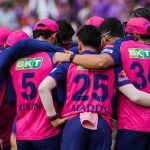
Fans watching India’s ODI series against West Indies noticed something unusual on several players’ backs: a visible bulge under their training vests. The mystery gadget, however, is not new at all. It is a GPS performance-tracking unit widely used in elite cricket to monitor fitness, manage workload and reduce injury risk.
The device is typically fitted inside a pouch on a compression vest and positioned between the shoulder blades. It has become a familiar part of modern cricket preparation, even if television cameras make it look more noticeable during matches and training sessions.
What is the device and why is it used?
The unit is generally manufactured by STATSports, one of the best-known names in sports tracking technology. It collects multiple data points at once, including distance covered, speed, acceleration, heart rate and overall workload. That information is transmitted in real time to team management and support staff.
As one performance analyst might put it, the aim is simple: “Measure the load before the body starts sending warning signs.” In a packed international schedule, that kind of monitoring can be the difference between maintaining peak performance and risking a breakdown.
How the tracker helps India’s management
For a team playing across formats, the value of live data is significant. Coaches can assess which players are being overworked, which bowlers need lighter sessions and which batters are handling the intensity comfortably. It also allows medical staff to make faster decisions around recovery and workload balance.
The broader purpose is to keep players fit through a long season. Instead of relying only on observation, the tracker provides measurable evidence about how hard an athlete is pushing in a given session or match.
That is why similar technology has become standard across elite cricket environments in recent years. From domestic setups to national squads, the emphasis on sports science has grown sharply as teams try to squeeze out every possible advantage.
West Indies tour adds context to the buzz
The curiosity around the gadget came during the West Indies tour of India 2026-27, which features three ODIs and five T20Is from September 27 to October 17, 2026. India’s ODI side is led by Shubman Gill, while Shreyas Iyer captains the T20I team. West Indies are being led by Shai Hope across both formats.
India already made a statement in the first ODI at the Greenfield International Stadium in Thiruvananthapuram on September 27. West Indies posted 295/7 in 50 overs, but India chased the target down by eight wickets with 50 balls remaining.
That chase had a headline act of its own. Virat Kohli smashed 126 off 85 balls, including 10 fours and 7 sixes, while Kuldeep Yadav’s 4/40 earned him Player of the Match honours. Kohli’s hundred also drew him level with Sachin Tendulkar’s record of 60 List-A centuries.
| Match | West Indies | India | Result |
|---|---|---|---|
| 1st ODI, Thiruvananthapuram | 295/7 | 297/2 | India won by 8 wickets |
Why the tracker matters beyond curiosity
The device may have sparked fan debate online, but for teams it is now a routine piece of performance infrastructure. It helps answer practical questions: How hard did a bowler work? Is a batter recovering well between matches? Is a player nearing fatigue after repeated high-intensity efforts?
With India’s international calendar stretching across formats, those questions matter more than ever. The data can influence training plans, rest days and even match selection, especially when a side is trying to protect fast bowlers and manage all-rounder workloads.
In other words, the visible bulge is less a mystery gadget than a sign of how modern cricket is evolving. The game still runs on skill, pressure and big moments, but now it is also guided by sensors, metrics and real-time analysis.
The road ahead in the series
After the ODI leg, attention now shifts to the five-match T20I series, which runs through October 17, 2026. India’s T20I squad includes Shreyas Iyer, Abhishek Sharma, Vaibhav Sooryavanshi, Ishan Kishan, Sanju Samson, Tilak Varma, Shivam Dube, Kuldeep Yadav, Axar Patel, Ravi Bishnoi, Nitish Kumar Reddy, Arshdeep Singh, Prince Yadav, Mayank Yadav and Naman Dhir.
West Indies may be chasing results, but the off-field technology story has already captured attention. For fans, it is a small glimpse into the science behind modern elite cricket. For teams, it is a reminder that the margins between freshness and fatigue are now measured in data.