
Now Reading: BCCI chief backs fitness over age in Kohli-Rohit debate
-
01
BCCI chief backs fitness over age in Kohli-Rohit debate


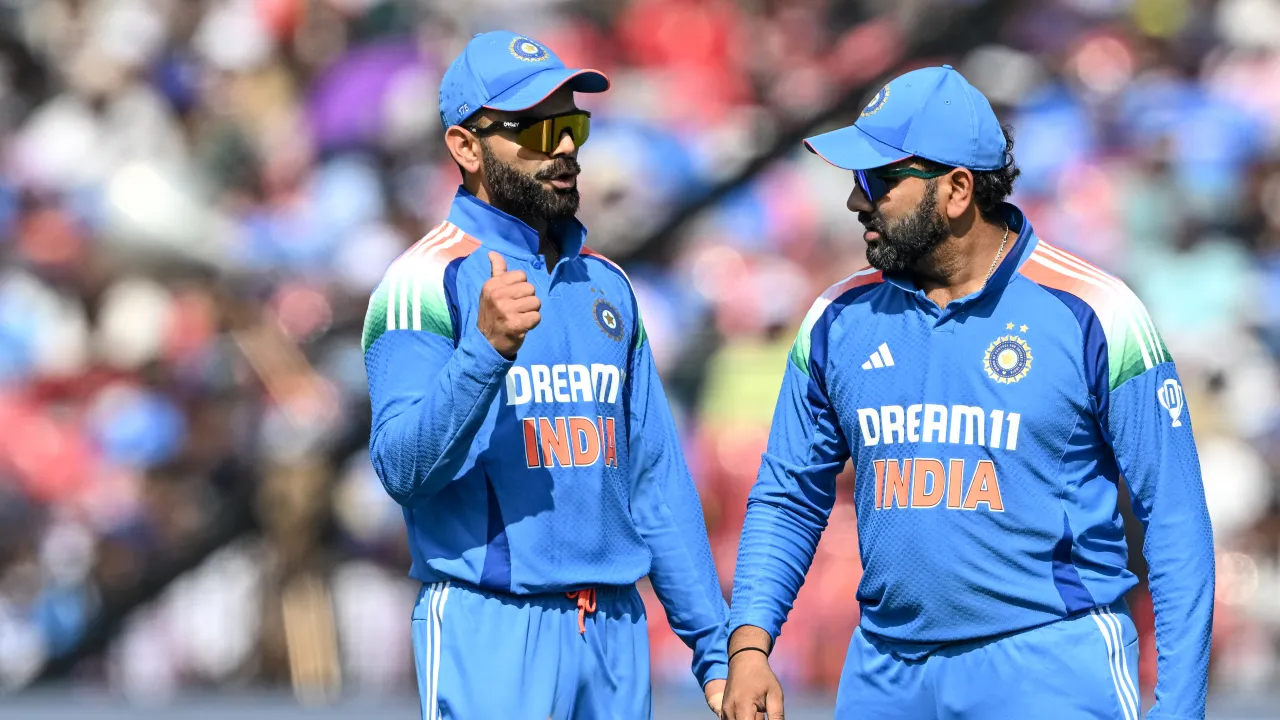
As India looks ahead to the ICC Men’s Cricket World Cup 2027, the biggest selection conversation remains the future of Virat Kohli and Rohit Sharma. BCCI president Mithun Manhas has now stepped into that debate with a clear message: age should not be the deciding factor. Fitness, performance and the ability to win matches must take priority.
The discussion around the two modern greats has only intensified because both have shaped Indian cricket for years. While their long-term future will ultimately be decided by selectors and team management, Manhas believes the conversation should stay grounded in form, fitness and value to the side rather than birth certificates.
Fitness and performance over age
Manhas made it clear that the BCCI will not publicly draw lines around senior players based on age alone. His view was direct and uncomplicated. If a player is fit and continuing to deliver, he deserves to remain in the frame.
“As far as the BCCI is concerned, we are not in a position to comment because it all depends on the selectors and the coaches. But from how I look at it, fitness and performance should be the criteria for selection, and definitely not age,” Manhas told Sportstar.
That line reflects the wider challenge facing India as they plan for the next World Cup cycle. Transition is necessary, but not every transition needs to come at the expense of proven performers. For Manhas, the balance is simple: if Kohli or Rohit are still contributing at a high level, their experience remains an asset.
He added, “If somebody is fit to play, and you see him performing and winning games for the country, that is the only criterion we should focus on.”
Why experience still matters for India
Manhas also stressed that India’s next phase will need more than just young talent. The next World Cup campaign will demand calm decision-making, pressure handling and leadership support, especially in high-stakes matches. That is where the presence of senior players can still make a difference.
He pointed to the value of having experienced campaigners around emerging leaders such as Shubman Gill, who is widely seen as one of the central figures in India’s long-term plan. According to Manhas, a dressing room featuring Kohli, Rohit and Hardik Pandya would give any captain a strong support system.
“Having Virat, Hardik and Rohit in the side will definitely help him,” he said, referring to Gill. “Then there are the likes of Bumrah, who could lead, who can be the bowling captains, and then somebody who will be the fielding captain. So, it is all about the distribution of workload.”
A leadership group, not a one-man show
That idea of shared leadership appears central to Manhas’ thinking. In modern international cricket, captains rarely carry every responsibility alone. The tactical burden, bowling changes, field placements and dressing-room management often depend on several senior voices working together.
Manhas suggested that India can benefit from building a more layered leadership structure. With Rohit and Kohli providing experience in batting, Pandya bringing all-round leadership value, and Bumrah offering authority in the bowling unit, the team can create a more balanced environment for the next generation.
His comments are also a reminder that veteran players do not only contribute through runs or wickets. They bring composure in tense moments, something India has repeatedly valued in major tournaments.
“They have been under pressure, and they have delivered so many times in crunch situations. So, it is a good combination,” Manhas said.
India’s bench strength is now a major advantage
Beyond the Kohli-Rohit debate, Manhas also highlighted a broader positive for Indian cricket: depth. With multiple formats running alongside a packed international calendar, India needs a squad that can absorb injuries, rotation and workload pressure without losing quality.
He said the crowded schedule makes bench strength essential, especially when players are moving in and out of formats. For a team trying to stay competitive across Tests, ODIs and T20Is, having multiple options is no longer a luxury.
“With so many tournaments taking place and injuries being a concern, having bench strength helps us manage all these challenges. It is good for Indian cricket to have so much competition. Competition pushes players to perform better, so it is a healthy sign for the game,” he said.
That point also ties into the selectors’ long-term planning. India’s next World Cup squad will likely need a mix of youth, experience and role clarity. A stronger reserve pool gives the team flexibility if injuries strike or form dips at the wrong time.
The bigger picture for 2027
For now, the 2027 World Cup is still some way off, and no final decision is close. But Manhas’ stance has given the debate a sharper frame. Rather than treating Rohit and Kohli’s future as a question of age, he wants the focus to remain on whether they can still perform at the level India requires.
That is a significant message because it leaves room for both continuity and change. India can groom the next generation while still keeping the door open for proven winners, provided they remain fit and effective.
In that sense, the selection debate is no longer just about two players. It is about how India wants to build for the future: with hard numbers, clear performance standards and a support structure that allows leaders to share the load.
If Kohli and Rohit continue to deliver, Manhas’ comments suggest their names will remain part of the conversation. If not, India will move on knowing the standard was always defined by output, not age.