


India and West Indies entered the third T20I with the series finely poised, and the match quickly became a study in timing, pressure and specialist roles. On a night when India piled up 223 and still had to defend hard in the final overs, the key battles came exactly where this format is often decided: the powerplay and the death.
Abhishek Sharma’s blazing start gave India the platform, but West Indies kept the chase alive deep into the game. In the end, India held on for a 14-run win in Indore to take a 2-1 lead in the five-match series, underlining just how important the opening overs and final overs were to the result.
India’s powerplay edge set the tone
India’s best powerplay weapon remained Abhishek Sharma, whose fearless batting has become a major talking point in the format. He has now scored 1,406 runs in 62 powerplay innings, striking at 193.4 overall, while his 2026 numbers have climbed even higher with 657 runs and four fifties at a strike rate of 204.7.
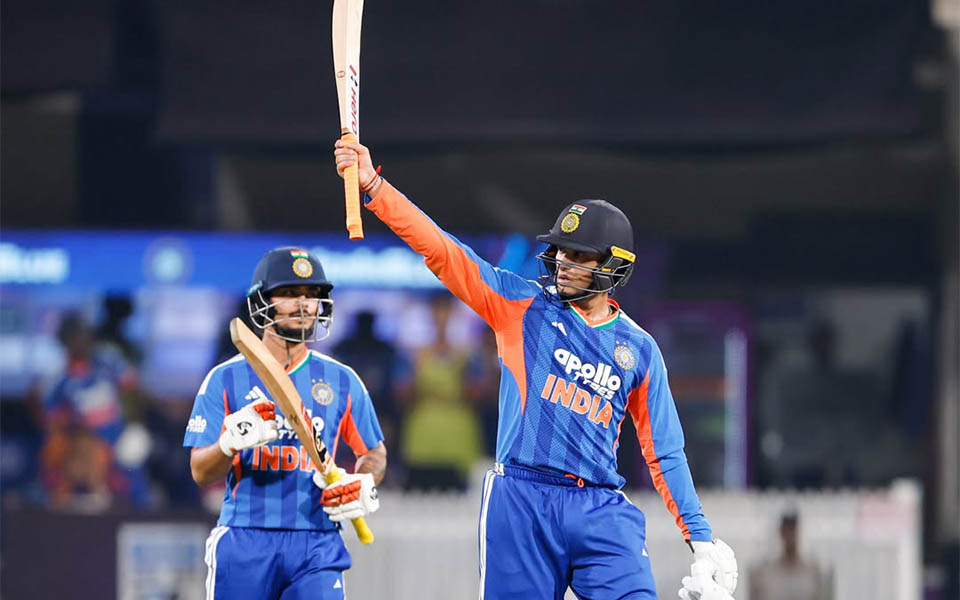
That explosiveness was on full display in the third T20I. Abhishek smashed 69 off 30 balls, including six fours and five sixes, striking at 230 and giving India the sort of start that instantly changes match pressure.
Mayank Yadav’s early breakthroughs matter
If Abhishek supplied the batting surge, Mayank Yadav offered India a powerplay bowling threat. Across seven powerplay innings, he has taken seven wickets, with an overall average of 16.4 and a strike rate of 12.0. His dot-ball percentage of 64.3 shows how often he can choke scoring options while hunting wickets.
Against West Indies in the second T20I, Mayank removed Kamil Pooran, Shimron Hetmyer and Rovman Powell during his powerplay spell, showing why he is such a valuable early-overs weapon when India want immediate control.
West Indies had their own opening-overs anchors
For West Indies, Shai Hope remains the most reliable powerplay batter. He has scored 1,019 runs across 63 innings in the phase, averaging 39.2, and his 2026 output of 258 runs at a strike rate of 141.0 reflects his ability to steady innings before the hitters arrive.
Hope’s role is not built on chaos. It is built on control, and against India, that matters. As one team analyst put it, “A good powerplay is not always about scoring fastest. Sometimes it is about ensuring the chase stays alive long enough for your finishers.”
With the ball, Akeal Hosein is West Indies’ best powerplay disruptor. He has taken 42 wickets across 81 innings, while keeping an economy rate of 7.59 and forcing dot balls in 47 percent of his deliveries. That combination allows him to slow the game and create pressure even without constant wickets.
Death overs brought the real drama
The final overs in Indore were where the contest tightened. India’s death-overs batting option Tilak Varma has been one of their most dependable finishers, scoring 411 runs from 203 balls in 25 innings at a strike rate of 202.5. His 2026 surge has been even more striking, with 229 runs at a strike rate of 238.5 and 22 sixes already this year.
Tilak’s overall average of 51.4 highlights why India trust him when the innings needs a late lift. In the closing overs, clean hitting and fast decision-making matter more than patience, and he has shown both in abundance.
Arshdeep Singh remains India’s closing specialist
At the bowling end, Arshdeep Singh continues to be India’s most dependable death-overs strike bowler. He has collected 61 wickets in 76 innings in the closing phase of T20Is, with an average of 16.2 and a strike rate of 10.5.
His 2024 season was especially sharp, with 17 wickets at an average of 10.0 and an economy rate of 7.79. In 2026, he has taken 10 wickets in 19 innings, and although his economy has risen to 9.68, he still offers the kind of wicket-taking threat that can break a chase open.
In the third T20I, Arshdeep led the way again, finishing with three wickets for 44 runs as India protected their total. That intervention mattered, especially once the West Indies middle and lower order began to swing freely.
West Indies’ late-overs punch kept the chase alive
West Indies had plenty of firepower at the back end. Rovman Powell has been their standout death-overs hitter, scoring 546 runs at a strike rate of 173.3 across 46 innings, with 44 sixes showing how often he looks to clear the ropes. His strike rate rose to 197.3 in 2025, which only reinforces his reputation as a finisher.
Shamar Joseph, meanwhile, offers wicket-taking threat rather than batting muscle in the closing phase. He has taken 16 wickets in 20 innings at an average of 16.1, and while his economy rate of 9.23 is expensive, his pace and attacking mindset make him a genuine danger when batters try to accelerate.
West Indies fell just short at 209/7, with Kamil Pooran, Shimron Hetmyer and Sherfane Rutherford all contributing, while Shamar Springer’s unbeaten 35 off 11 balls nearly turned the game. But India’s early dominance and crucial wicket bursts proved decisive.
What the result means for both teams
The match highlighted the exact template both sides will keep revisiting in this series. India’s winning formula is built on an explosive opening act from Abhishek Sharma and wicket pressure from Mayank Yadav and Arshdeep Singh. West Indies, meanwhile, rely on Shai Hope and Akeal Hosein to stabilize the powerplay before leaning on Powell and Joseph to swing the final overs.
With India now leading the series 2-1, the margin for error is shrinking. Every powerplay over and every death over carries more weight, and in a format this short, those phases often decide everything.
If the third T20I was any indication, both teams have the tools to win. The question is which set of specialists can execute better when the pressure is highest.
| Result | India | West Indies |
|---|---|---|
| Score | 223/5 | 209/7 |
| Margin | India won by 14 runs | |
| Top India batter | Abhishek Sharma 69 off 30 | |
| Top India bowler | Arshdeep Singh 3/44 | |