
Now Reading: Is the Premier League’s Big Six Era Over?
-
01
Is the Premier League’s Big Six Era Over?


The Premier League’s long-standing “Big Six” is looking less like a fixed club and more like a moving target. For years, Arsenal, Chelsea, Liverpool, Manchester City, Manchester United and Tottenham Hotspur dominated both the headlines and the table. Now, with several of those sides stuttering and ambitious challengers closing the gap, the old order feels less certain than ever.
Why the Big Six no longer looks untouchable
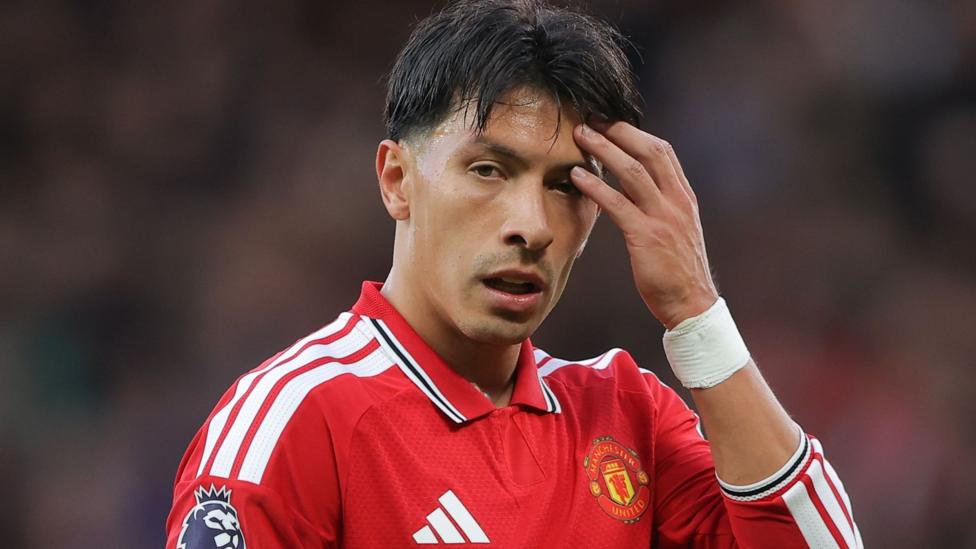
There was a time when finishing inside the top six seemed almost reserved for the traditional powerhouses. That period has clearly changed. Tottenham and Manchester United have both endured difficult spells, Chelsea have struggled for consistency, and Liverpool have also experienced swings in form that once would have been unusual for one of the league’s most reliable giants.
At the same time, clubs such as Aston Villa, Brighton, Brentford and Newcastle have surged into the conversation. Their rise has made the league’s upper reaches more competitive, and in some seasons, far less predictable.
The numbers behind the shift
The evidence is hard to ignore. In only one of the last six seasons have all six of the traditional giants finished in the top six. Before that, the pattern was far more stable, with the “Big Six” repeatedly locking down the highest places in the table.
Since the Premier League’s early years, the concept itself has evolved several times. It began as a “Big Five,” moved into a “Big Two” during the United and Arsenal era, then grew into a “Big Four” before eventually becoming the widely accepted “Big Six.” That history shows the label was never permanent. It was always shaped by performance, power and momentum.
| Season trend | What changed |
|---|---|
| 2010-11 to 2018-19 | Traditional top clubs frequently filled the leading positions |
| Last 6 seasons | All six traditional giants finished in the top six only once |
| Last 3 seasons | Five top-six places went to clubs outside the traditional six |
The numbers tell a story of a more open league, not just a brief dip from a few heavyweights.
New money, smarter recruitment and changing expectations
One major reason for the shift is that other clubs have become richer, sharper and more aggressive in the transfer market. Newcastle’s Saudi-backed takeover transformed the scale of their ambition almost immediately, while Brighton have become a benchmark for smart recruitment and player development.
Brighton’s model has been especially influential. They have signed players such as Moises Caicedo for £4m and later sold him to Chelsea in a British-record deal worth £115m. Marc Cucurella arrived for £15m and left for £62m, while Alexis Mac Allister moved for £7m before later joining Liverpool for £55m. That kind of efficiency has allowed clubs outside the old elite to compete with far greater confidence.
“It’s an important component, it helps us identify talent from around the world in a really efficient way,” Brighton sporting director Mike Cave said of the club’s data-led approach.
That model is now being copied, refined and challenged across the league. As a result, the gap that once protected the traditional powers has narrowed considerably.
Patience versus pressure
Another factor is continuity, or the lack of it. Manchester United have cycled through several permanent managers since Sir Alex Ferguson retired, while Chelsea and Tottenham have also repeatedly changed direction in search of a formula that works.
By contrast, Arsenal’s rise under Mikel Arteta has shown the value of patience. The Spaniard was given time to build a squad and identity, and that stability has helped the Gunners return to the top of the competition after a long wait for a title.
That contrast matters. In a league where margins are small, consistent planning often beats constant rebuilding. And for clubs under pressure, the churn can become a costly cycle.
What the Premier League looks like now
The strongest conclusion is not that the traditional Big Six no longer exists at all, but that it no longer behaves like an exclusive group on the pitch. Financially, these clubs remain among the biggest in world football. But in sporting terms, the barriers have come down.
Currently, Brighton, Brentford and Everton are among the clubs finding themselves in the top six, a sign of how wide open the race has become. Manchester City remain the league’s dominant force over the last decade, but even they are facing uncertainty off the field after being found guilty of breaching financial rules over nine years.
That combination of on-pitch volatility and off-field questions has created one of the most open top-flight races in years. The title may still come from one of the traditional giants, but the top six itself is no longer theirs alone.
If anything, that is what makes this era more compelling. The Premier League has entered a phase where history still matters, but it no longer guarantees hierarchy. The old names remain powerful, but the challengers are no longer waiting politely at the door.
And that may be the clearest sign yet that the Big Six, as a footballing certainty, is no more.