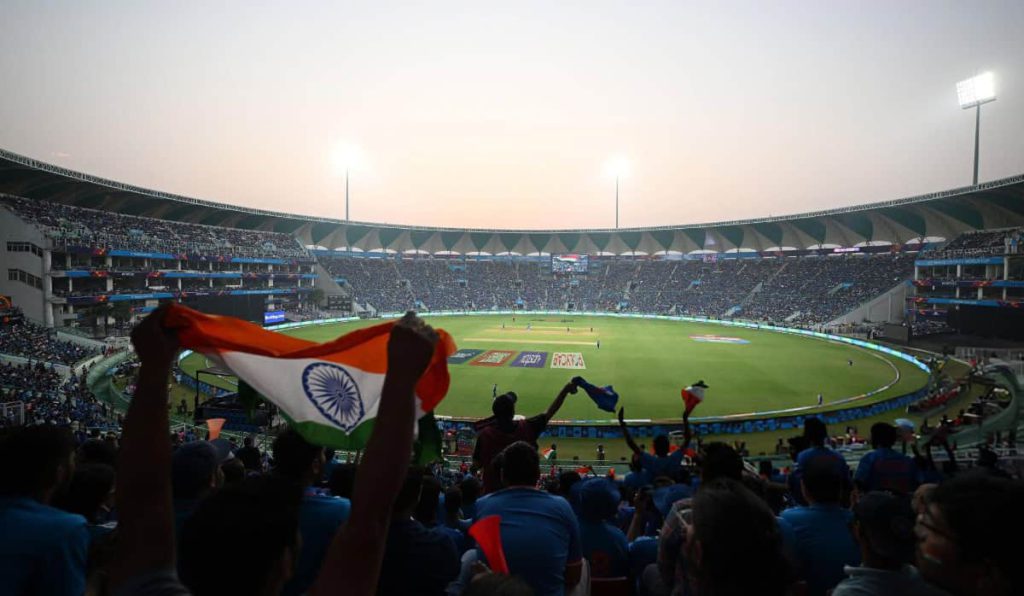
West Indies delivered one of the most extraordinary chase in T20I cricket history, hunting down 252 against India at the JSCA International Stadium Complex in Ranchi on 9 October 2026. The six-wicket win, sealed with nine balls remaining, now stands as the 2nd-highest successful run chase in T20I history according to CricStats’ own database of international scorecards.
A chase that changed the record book
In a format built for chaos, this was still a remarkable number to complete. West Indies did not just win a high-scoring game; they chased a target that only one team has bettered in T20I history. The result places this performance just behind South Africa’s 259 against West Indies in 2023.
The Ranchi contest now sits firmly in elite company, with West Indies moving past several landmark pursuits that had previously defined the format’s most extreme run chases. The victory was recorded as West Indies won by 6 wickets, with 9 balls remaining, a margin that underlines how aggressively and efficiently the target was handled.
Where this chase ranks in T20I history
This was not merely a memorable result. It was a statistical milestone that reshapes the conversation around the biggest successful chases in men’s T20 internationals.
| Rank | Target | Result | Match |
|---|---|---|---|
| 1 | 259 | South Africa won by 6 wickets (with 7 balls remaining) | West Indies v South Africa, 2023 |
| 2 | 252 | West Indies won by 6 wickets (with 9 balls remaining) | India v West Indies, 2026 |
| 3 | 246 | Bulgaria won by 6 wickets (with 2 balls remaining) | Serbia v Bulgaria, 2022 |
| 4 | 245 | Australia won by 5 wickets (with 7 balls remaining) | New Zealand v Australia, 2018 |
| 5 | 244 | Bulgaria won by 6 wickets (with 34 balls remaining) | Gibraltar v Bulgaria, 2025 |
That table shows just how rare these pursuits are. Even among the top five, the numbers are separated by only a few runs, yet each one represents a very different kind of chase pressure. West Indies’ 252 now belongs at the top end of T20I batting feats, and it does so in a chase that finished with time to spare.
Why the number matters so much
Successful chases above 240 are almost always remembered for one reason: they demand sustained batting intent from start to finish. A single slowdown, a cluster of wickets, or one tight over can derail the entire effort. West Indies managed to stay on course well enough to complete the job with nine balls remaining, which adds another layer to the achievement.
At the top of the all-time list, South Africa’s 259 remains untouched, but West Indies have now moved into the second spot and pushed every other chase further down the ladder. In practical terms, that means this Ranchi result becomes one of the reference points whenever the biggest T20I run chases are discussed.
Inside the top 10 all-time T20I chases
There is also a broader statistical pattern worth noting. The top 10 list includes multiple entries from Bulgaria and England, alongside elite finishes from Australia and West Indies. It is a reminder that the T20 format can produce iconic chase scenarios in unexpected places as well as in major cricketing contests.
| Rank | Target | Winning team | Remaining balls |
|---|---|---|---|
| 6 | 236 | West Indies | 4 |
| 7 | 230 | England | 2 |
| 8 | 229 | Bulgaria | 3 |
| 9 | 226 | England | 5 |
| 10 | 226 | England | 1 |
The presence of West Indies twice in the top six also gives this result extra significance. Their 252-run chase in Ranchi joins the 236-run pursuit against South Africa in 2015, giving them a strong footprint in one of cricket’s most dramatic statistical categories.
A landmark built on pace and pressure
The finishing margin of six wickets often suggests control, but the size of the target tells a bigger story. Chasing 252 in a T20I is not simply about one innings; it is about maintaining the required tempo across 20 overs while absorbing pressure from the opposition and the scoreboard alike.
That balance is what makes this result so striking. West Indies crossed the line with nine balls remaining, a detail that separates this chase from many others where teams scrape through in the final over. In this case, the target was not just reached — it was conquered with a degree of breathing room.
For CricStats, the significance lies in the data itself. This is now part of the historical architecture of T20I cricket, a match that will be cited whenever the sport’s most improbable successful chases are revisited. The numbers are clear: 252, six wickets, nine balls remaining, and the 2nd-highest successful run chase in T20I history.
What this means for T20I history
Every high-scoring chase rewrites expectations, but very few move directly into the top tier of the all-time list. West Indies have done exactly that in Ranchi. Their victory is now one of the defining data points in T20I batting history, and it will stand as a benchmark for future chase attempts.
With the top chase mark still belonging to South Africa’s 259, this result sits just one rung below the summit. Even so, the scale of the achievement is unmistakable. In a format where margins are tiny and momentum changes rapidly, a 252-run chase is the kind of performance that leaves a permanent imprint on the record books.